Why Milk Sector Recovery Hinges On Working Capital, Not Just Rising Prices
By Joan Wanja
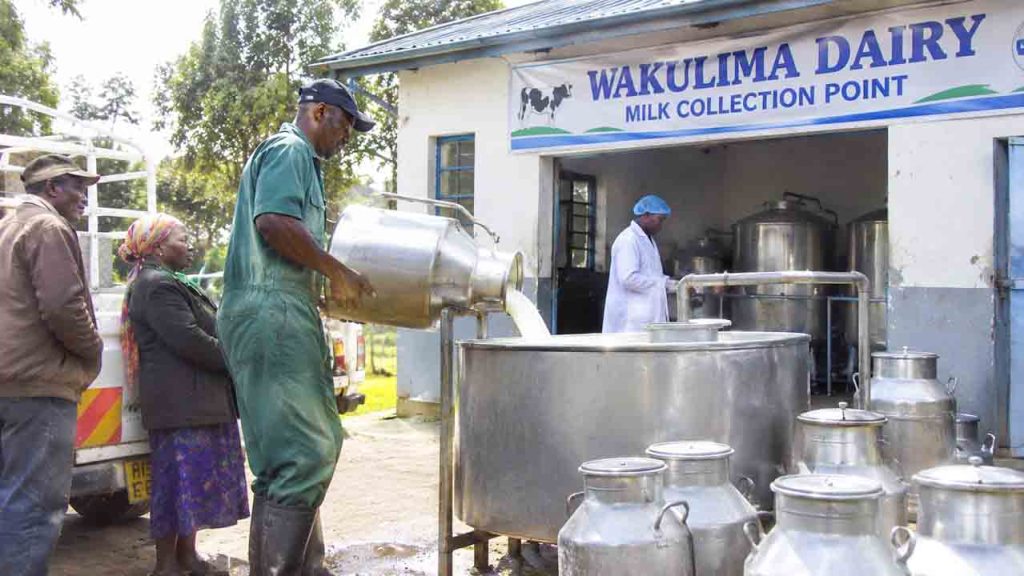
At six in the morning at a milk collection center on the outskirts of Nakuru, deliveries are already coming in. Volumes are rising, but the manager faces a familiar challenge: keeping the business running while waiting for payments from a dairy processor.
The center has delivered its milk and submitted invoices, but payment is expected in several weeks. In the meantime, it must continue buying milk from farmers, operating cooling equipment and meeting transport costs.
For a collection center handling 5,000 liters daily, an increase in the purchase price from Sh65 to Sh75 per liter raises daily procurement costs from Sh250,000 to Sh325,000. This translates into an additional Sh75,000 a day, or Sh2.25 million over 30 days.
Although illustrative, these figures reflect a wider challenge facing businesses across the dairy value chain. Even with established buyers and growing demand, suppliers can struggle to fulfil new orders when their cash is tied up in unpaid invoices.
As Head of Credit at Avenews Kenya, I believe the conversation about dairy sector recovery must go beyond production volumes and farm-gate prices. We must also examine whether businesses have the working capital needed to sustain growth.
The working capital challenge
Nakuru is at the heart of Kenya’s dairy industry, with milk collection centers and aggregators playing a critical role in connecting smallholder farmers to processors.
These businesses consolidate milk from numerous suppliers, manage quality and cooling, coordinate transportation and ensure consistent deliveries to processors.
However, their operating expenses often fall due before they receive payment for completed deliveries. While milk is collected and supplied daily, payments from processors may take several weeks.
As volumes increase, so does the amount of working capital required to keep operations running.
In many cases, therefore, the problem is not a shortage of orders or customers. It is the financing gap between delivering milk and receiving payment.
Growth alone does not guarantee creditworthiness
Higher delivery volumes are an important indicator of business activity, but they do not tell the whole story when assessing a supplier for invoice financing.
The assessment must begin with the underlying transaction. Has the milk been delivered? Has the processor acknowledged the invoice? When is payment expected, and what is the buyer’s payment history?
The buyer is as important as the supplier because the buyer’s payment ultimately settles the financing. A reliable buyer should have predictable payment cycles, issue clear invoices with minimal disputes and maintain consistent relationships with suppliers.
We also assess suppliers against four key indicators: invoice payment terms and cycles, registration status for companies or personal identification for individual businesses, collections history and our internal credit scoring model.
Suppliers with stronger repayment records qualify for more favorable pricing. New applicants generally begin in the middle pricing tier and can progress after completing a full repayment cycle.
Ultimately, a sound credit decision is not about how much a business wants to borrow. It is about how much financing the underlying transaction can reasonably support.
Who qualifies for invoice financing?
Registered and operational businesses supplying approved buyers, with clean or improving repayment records, are generally well positioned to qualify.
However, businesses without approved buyers, those with poor collections histories, disputed invoices or incomplete deliveries may not qualify immediately.
An order alone is insufficient. The milk must first be delivered and the invoice confirmed.
This does not mean such businesses are permanently excluded from financing. Maintaining accurate milk intake records, delivery notes, confirmed invoices and evidence of buyer payments can help establish the transaction history needed to qualify.
These records also enable businesses to understand and manage their cash flow more effectively.
Borrow to bridge the gap, not finance losses
At Avenews, our invoice financing facility allows eligible suppliers to access up to 85 per cent of an approved invoice’s value before the buyer pays, for periods ranging from seven to 60 days, subject to assessment.
The facility does not require suppliers to pledge land or vehicle logbooks. Instead, financing is anchored on the strength of the buyer or offtaker, the reliability of payment terms and the underlying transaction.
The funds can help collection centers purchase more milk from farmers, meet transportation costs and maintain deliveries as they await payment from processors.
However, financing is not a solution to every business challenge. A company consistently operating at a loss cannot borrow its way into profitability.
My advice to agribusinesses is straightforward: use credit to bridge a timing gap, not to finance an underlying business loss.
Financing the next phase of dairy recovery
Improved farm-gate prices and a recovering production season present opportunities for Kenya’s dairy industry, particularly across Nakuru and the wider Rift Valley region.
But sustaining this recovery requires more than increased production. The businesses responsible for collecting, aggregating, transporting and supplying milk must also have the financial capacity to maintain operations as demand grows.
At Avenews, we have financed more than 800 agribusinesses across 38 counties, with 84 per cent of our disbursements going to returning customers.
This demonstrates the importance of financing solutions that respond to the actual cash flow cycles of agricultural businesses.
Getting milk back on supermarket shelves and sustaining supply to processors is not just about farmers producing more. It is also about ensuring that the businesses connecting farmers to markets have the working capital to keep buying, transporting and delivering milk.
The next phase of dairy sector recovery will depend as much on the financial health of the supply chain as it does on production.

Joan Wanja is Head of Credit at Avenews Kenya, an agri-fintech licensed by the Central Bank of Kenya as a Digital Credit Provider.
About The Author