Formal Milk Deliveries Fall 3.7% As Drought Hits Dairy Sector
By Staff Writer
Formal milk deliveries to processors fell from 84.4 million litres in June to 81.3 million litres in July 2026, and the Kenya Dairy Board has warned that declines could continue as seasonal production conditions persist.
The drop amounts to 3.7 per cent, with early signs suggesting continued pressure on milk intake in August as dairy farmers face dry and cold conditions in key milk-producing areas.
The Kenya Dairy Board (KDB) said the decline is mainly due to seasonal factors affecting milk production, while assuring consumers that milk is still available in the market despite temporary supply constraints in some parts of the country.
“Kenya Dairy Board wishes to reassure the public, consumers and dairy industry stakeholders that milk continues to be available in the market, despite temporary supply constraints being experienced in some parts of the country,” said Dr William Maritim, Managing Director of the Kenya Dairy Board.
The board’s latest assessment shows that supply conditions vary across the country, with some areas under more pressure than others.
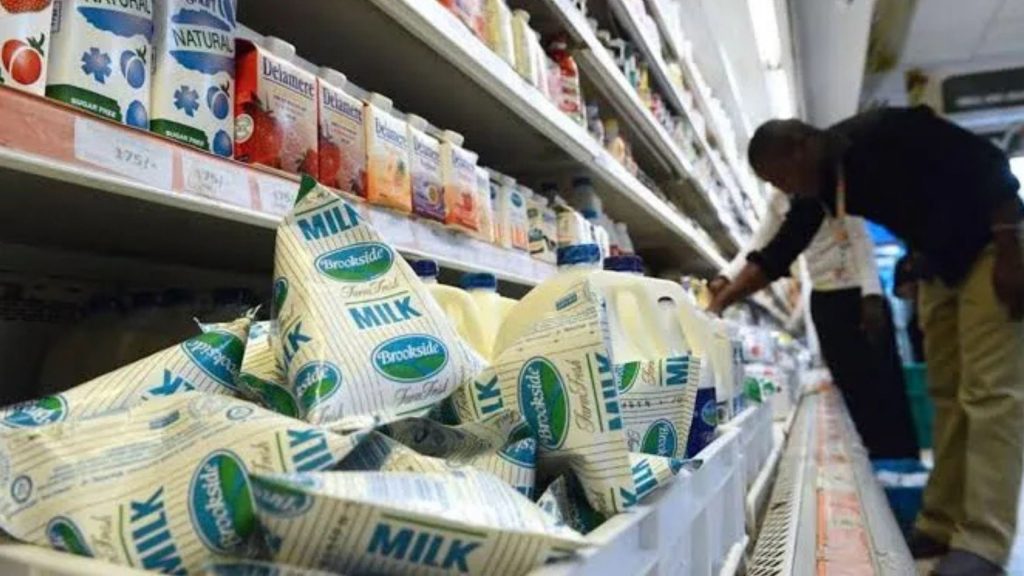
Recent market surveillance by the board found different levels of supply constraints, including low stock levels, reduced availability of some milk brands and pack sizes, and delays in restocking at some retail outlets.
Pasteurised milk has generally been more affected, while long-life milk, including extended shelf-life (ESL) and ultra-high-temperature (UHT) milk, has remained relatively more available.
The changes come amid seasonal shifts in dairy production, with the board linking the current situation to dry and cold conditions in key milk-producing regions.
Preliminary August data is expected to give a clearer picture of the extent of the decline in formal milk intake. However, the board said production may remain under pressure in the short term if the unfavourable weather continues.
“The current situation is largely associated with seasonal factors, particularly the prevailing dry and cold conditions in key milk-producing areas,” said Maritim.
Despite the supply constraints, retail milk prices have remained generally stable across the country. The board, however, noted some price increases in areas facing tighter supplies.
The expected onset of the October-November-December 2026 rains could bring relief to dairy farmers by improving pasture and fodder availability.
According to the board, better pasture and fodder conditions are expected to support milk production and increase supplies as weather conditions improve.
The government is also putting in place measures to strengthen milk production and improve the resilience of the dairy value chain.
These include procuring and distributing milk coolers to improve milk aggregation and preservation, as well as supporting dairy herd improvement through subsidised sexed semen.
The measures are meant to raise production capacity and help stabilise milk supplies over time.
The board said better milk aggregation and preservation will also help reduce losses and ensure more milk reaches processors and the formal market.
“These interventions among others will contribute to increased production and more stable milk supplies over time,” he revealed.
The KDB said it will continue monitoring milk production, formal deliveries, market availability and retail prices as the situation develops.
The board is also working with industry stakeholders to maintain milk supply and reduce the effects of the current seasonal constraints on consumers and others across the dairy value chain.
The outlook still depends on weather conditions, with the expected October-December rains likely to improve pasture and fodder availability and support a recovery in milk production.
For consumers, the board said the current constraints should not be seen as a nationwide milk shortage, but as a temporary supply challenge affecting specific areas, products and outlets.
The government, through the Ministry of Agriculture and Livestock Development, is expected to continue supporting measures aimed at maintaining adequate and stable milk supplies as the country moves through the current seasonal production cycle.
About The Author