Maasai Race To Build 50,000 Earth Dams Ahead Of El Niño Rains
The initiative is being implemented by Big Life Foundation in partnership with restoration nonprofit Justdiggit Foundation and the TWENDE project, as communities seek sustainable solutions to recurring droughts, declining pasture and environmental degradation.
default
By Staff Writer
As pastoralist communities brace for anticipated El Niño rains, a community-led restoration initiative in the Greater Amboseli ecosystem is seeking to transform the threat of destructive flooding into an opportunity for pasture regeneration through the construction of 50,000 miniature earth dams.
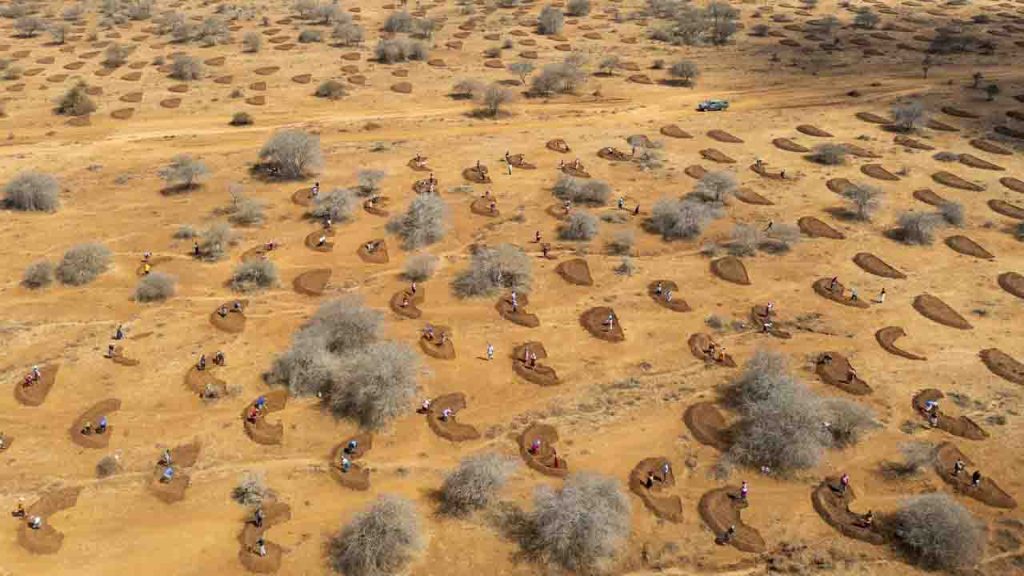
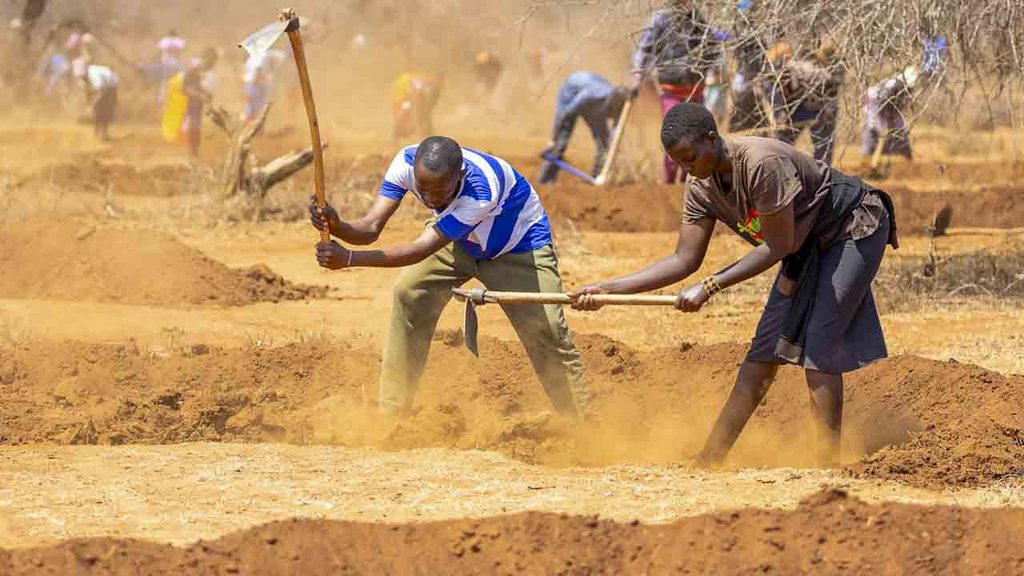
More than 600 Maasai residents are involved in the ambitious exercise, which targets degraded grazing lands across Mbirikani Ranch in Kajiado County, where workers are digging more than 1,000 semi-circular earth structures daily at four active sites.
The structures, commonly known as bunds, are designed to capture rainwater, slow surface runoff and allow moisture to seep gradually into the soil, creating favorable conditions for indigenous grasses to regenerate.
The initiative is being implemented by Big Life Foundation in partnership with restoration nonprofit Justdiggit Foundation and the TWENDE project, as communities seek sustainable solutions to recurring droughts, declining pasture and environmental degradation.
The bunds, measuring approximately 2.5 meters by five meters, are strategically dug along natural water-flow paths, where they act as miniature dams that prevent rainwater from washing away valuable topsoil and forming destructive gullies.
Indigenous grass seeds are then scattered around the structures, allowing vegetation to take root and gradually regenerate the surrounding landscape.
Ernest Lenkoina, Rangelands Restoration Manager at Big Life Foundation, said degraded land and pasture scarcity had become major challenges for pastoralist communities, particularly as hardened soils struggle to absorb heavy rainfall.
“One of the biggest crises facing pastoralist communities today is pasture scarcity caused by degraded land,” said Lenkoina.
He explained that when heavy rains fall on bare, compacted ground, much of the water runs off instead of replenishing the soil, making it difficult for vegetation to recover.
They’re preparing the land now so that when the rains come, they can make the most of every drop and give grass the best possible chance to grow.
The intervention is also providing an important economic lifeline to drought-affected households, with more than KSh9 million being paid to 657 casual workers engaged in digging the bunds.
Many of those employed are local Maasai women, including widows and residents whose households lost livestock during previous droughts.
Beyond the temporary employment opportunities, the restoration program is strengthening women’s participation in the local economy through eight community grass seed banks coordinated by Big Life Foundation and managed by women’s groups across group ranches in Kajiado County.
The seed banks supply indigenous grass seeds for restoration activities while creating additional income opportunities through seed sales, hay baling and integrated beekeeping enterprises.
Caroline Kerichu, Southern Landscape Manager at Justdiggit Foundation, said restoring degraded landscapes required practical action and stronger community participation rather than prolonged discussions.
“We cannot afford to spend more time talking about restoring our landscapes than actually restoring them,” Kerichu said.
She emphasized the importance of combining indigenous knowledge with scientific approaches and innovation to accelerate environmental regeneration, adding that nature could recover when communities were supported to create the right conditions.
The current campaign builds on a five-year rangeland restoration program undertaken by Big Life and partners, including Conservation International and Justdiggit, with support from Apple Inc. and the TWENDE project, among other partners.
The program has already facilitated the construction of more than 278,000 bunds across 2,300 acres of degraded land, an area comparable in size to Nairobi’s Karura Forest.
Combined with natural regeneration and controlled grazing, the interventions have helped restore more than 17,500 acres of rangelands that support pastoralist livelihoods and wildlife conservation.
Previous restoration sites, including Ilchalai, Loosikitok and Olngosua, have recorded significant improvements in pasture availability, with regenerated areas retaining greener vegetation for longer and providing forage for livestock and wildlife during dry periods.
To protect the recovering grasslands, communities have introduced temporary grazing restrictions to allow newly established grasses sufficient time to mature, produce seeds and spread naturally before livestock are reintroduced.
Community Land Management Committees (CLMCs), supported by dedicated rangeland scouts, monitor the restoration zones and enforce the temporary grazing agreements.
The Greater Amboseli ecosystem supports Maasai pastoralist communities alongside elephants and other wildlife, with both livestock production and conservation heavily dependent on the health of shared grazing landscapes.
However, recurring droughts, changing land-use patterns and increasing environmental degradation have placed growing pressure on the semi-arid ecosystem, threatening pasture availability and the livelihoods of communities that depend on it.
By restoring communal grazing areas, the initiative seeks to improve livestock forage, strengthen the resilience of pastoralist households and support wildlife conservation.
Big Life Foundation says its community-based conservation approach is anchored on ensuring that protecting wildlife and natural habitats delivers tangible benefits to the people who share the landscape with them.
The latest restoration drive is therefore intended not only to prepare degraded land for anticipated heavy rainfall but also to create longer-term economic and environmental benefits for communities whose livelihoods depend on healthy rangelands.
About The Author