Naivasha Breeder Champions Technology-Led Dairy Farming At Nakuru ASK Show
Muturi said technology-driven farming is no longer optional for breeders who want to maintain high genetic standards and improve milk yields. He said Tassells Farm has invested in systems that support better breeding, feeding, disease management and overall animal welfare.
By Elijah Cherutich
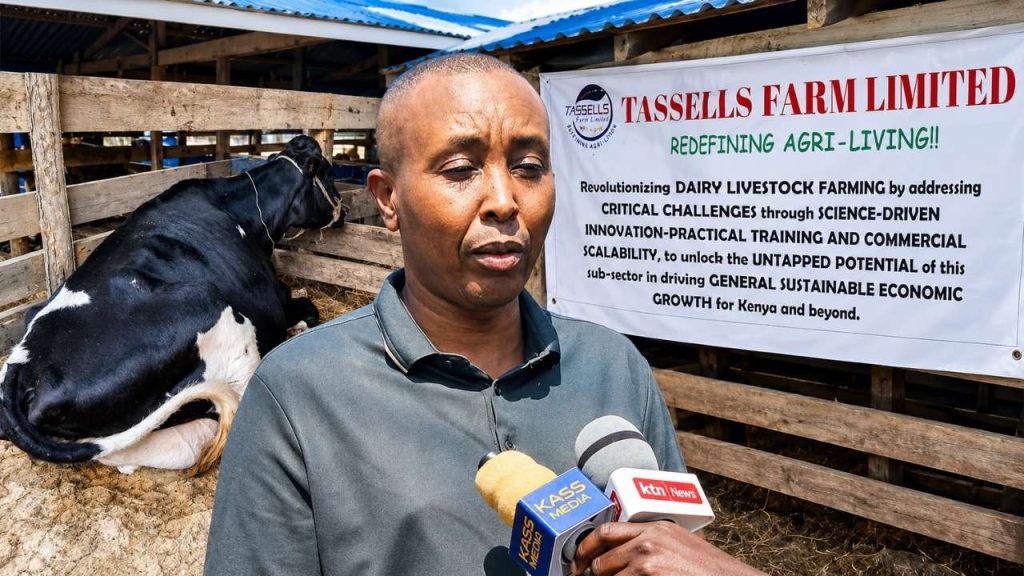
Muturi Njoroge is not an ordinary livestock breeder. For more than 25 years, the co-founder and chief executive officer of Tassells Farm Ltd has built a career around pedigree dairy farming, genetic improvement and livestock agribusiness.
At the Nakuru ASK National Show, Muturi is showcasing pedigree cows and other animals from Tassells Farm in Naivasha, using the platform to highlight the potential of modern dairy farming in improving production, incomes and food security.
Speaking to journalists during the opening of the show, Muturi said his interest in the dairy industry started more than two decades ago and has since grown into a major breeding enterprise.
He said climate change had forced serious farmers to rethink how they manage feeds, breeding, animal health and milk production.
According to him, rising temperatures are affecting the quality of feeds both in farms and storage facilities, exposing animals to nutritional stress and higher disease risks.
“The climate challenges not only affect the quality of feeds but also have devastating effects on the quality of animals due to insufficient feeds, diseases and many other factors,” he said.
Muturi said technology-driven farming is no longer optional for breeders who want to maintain high genetic standards and improve milk yields. He said Tassells Farm has invested in systems that support better breeding, feeding, disease management and overall animal welfare.
The breeder, who plans to establish a multibillion-shilling dairy agro-industrial complex on a 12,000-acre farm in Laikipia, said dairy farming has the potential to transform Kenya’s economy if farmers embrace agribusiness and value addition.
He said many farmers still focus on raw production without fully exploiting opportunities in processing, branding and marketing, which can help them earn better returns from milk and other dairy products.
Muturi said Kenya has room to grow beyond its current milk production levels, estimated at about 5.7 billion litres annually, if farmers adopt better breeding practices, improve animal nutrition and invest in value addition.
“You cannot look at the cow and see money first. You must first look at the process, including breeding, feeding and disease management. Once you produce quality milk, then you can make money,” he said.
He added that one of the biggest challenges in agriculture across Africa is the dominance of middlemen, who often take control of markets after farmers have invested heavily in production.
Muturi said Tassells Farm’s growth had taken years of learning, experimentation and persistence, especially because there were few mentors in the dairy breeding sector when he started.
He said the situation is now changing, with technology giving farmers better access to knowledge, breeding information, production systems and market opportunities.
Muturi urged farmers to treat dairy farming as a business, saying Kenya’s growing demand for milk and dairy products presents a major opportunity for producers who are willing to invest in quality, consistency and value addition.
About The Author