Kihika Seeks Alternative Financing To Improve Water Services In Nakuru
According to the latest sector performance reports by the Water Services Regulatory Board (WASREB), non-revenue water remains one of the biggest challenges facing utilities nationwide, with about 44 to 45 per cent of treated water produced by service providers failing to generate revenue because it is lost through leakages, illegal connections, metering inaccuracies, and other operational inefficiencies. The losses translate into billions of shillings in foregone revenue annually and significantly constrain investments in network expansion and maintenance.
By Suleiman Mbatiah
The County Government of Nakuru is exploring alternative financing mechanisms to bridge funding gaps and accelerate investments in water infrastructure as it seeks to reduce water losses, expand coverage, and improve service delivery across the county.
Governor Susan Kihika said the county is engaging development partners, investors, and water sector institutions to identify sustainable financing models capable of supporting rising demand for water services in both urban and rural areas.
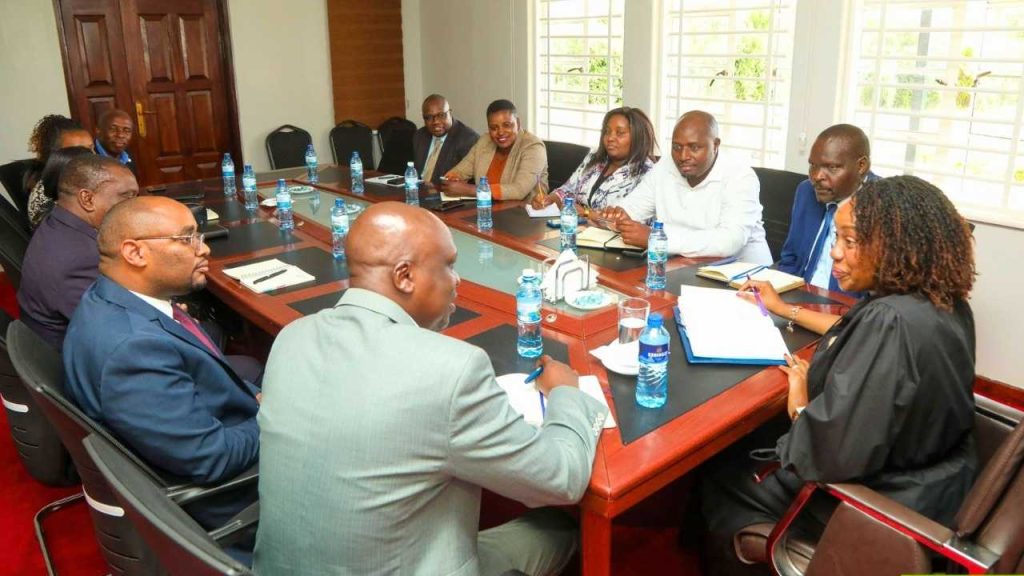
She made the remarks during a meeting in Naivasha between county officials and representatives of the Water Service Providers Association ahead of the Non-Revenue Water Conference scheduled for June 30 to July 3.
“As water remains a top priority in our development agenda, I look forward to supporting this important forum,” she said, adding that her administration would use the forum to explore the range of financing options available to the water sector.
Nakuru is among Kenya’s fastest-growing counties, driven by rapid urbanization, industrial expansion, and population growth. The increasing demand for water and sanitation services has placed pressure on existing infrastructure, prompting county leadership to seek new funding sources beyond traditional government allocations.
According to the latest sector performance reports by the Water Services Regulatory Board (WASREB), non-revenue water remains one of the biggest challenges facing utilities nationwide, with about 44 to 45 per cent of treated water produced by service providers failing to generate revenue because it is lost through leakages, illegal connections, metering inaccuracies, and other operational inefficiencies. The losses translate into billions of shillings in foregone revenue annually and significantly constrain investments in network expansion and maintenance.
She noted that improved financing is essential for expanding water coverage, modernizing infrastructure, and strengthening operational efficiency amid growing economic activity across Nakuru.
Stakeholders attending the upcoming conference are expected to examine innovative approaches to reducing non-revenue water, a problem that continues to undermine the financial sustainability of water utilities across the country. Kenya’s water sector regulator estimates that nearly half of treated water produced by utilities is either lost or unaccounted for before it reaches paying customers.
The Governor said the County is exploring Public-Private Partnerships, Green Bonds, and other investment instruments that could help mobilize capital for long-term infrastructure development and system modernization.
Green bonds are debt instruments through which governments or organizations raise funds from investors to finance projects that deliver environmental or climate-related benefits. In the water sector, such financing can support projects aimed at water conservation, climate resilience, wastewater management, and the rehabilitation of aging infrastructure.
“I will engage with partners on sustainable financing strategies and other investment mechanisms aimed at improving water service delivery,” she pledged, arguing that reducing water losses while attracting long-term investment would help secure reliable water access for all residents.
The financing push aligns with the Nakuru County Integrated Development Plan (CIDP) 2023-2027, which identifies water access, environmental sustainability, climate resilience, and improved sanitation as key priorities for economic growth and public health.
Nationally, the government has also intensified efforts to curb non-revenue water through regulatory reforms, technology adoption, and infrastructure upgrades. The Ministry of Water, Sanitation and Irrigation has repeatedly cited NRW reduction as a critical pathway to increasing water availability without necessarily developing new water sources.
Industry representatives are also expected to use the Naivasha conference to assess emerging technologies, policy reforms, financing models, and investment opportunities that could help utilities reduce losses, improve operational efficiency, strengthen revenue collection, and enhance the long-term sustainability of water service provision across Kenya.
About The Author