Family Seeks US Accountability Over Death Of Journalist Linked To Kabuga Manhunt
The request comes against the backdrop of Kabuga’s death in international custody in May 2026, bringing renewed attention to unresolved questions surrounding individuals who assisted investigators during the decades-long hunt for the genocide suspect.
By Staff Writer
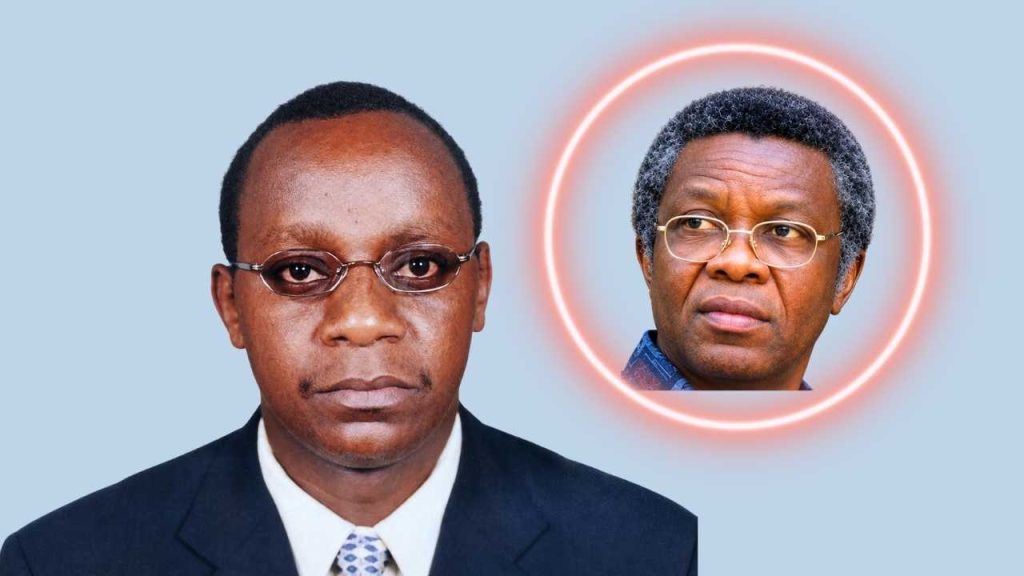
The family of Kenyan journalist William Munuhe Gichuki has asked the United States government to disclose whether any investigations into his death identified those responsible, arguing that more than two decades after American officials linked his killing to the pursuit of accused Rwandan genocide financier Félicien Kabuga, critical questions remain unanswered.
In a petition addressed to the President of the United States and transmitted through the U.S. Embassy in Nairobi, the family is seeking accountability, disclosure and clarification regarding the circumstances surrounding Munuhe’s death in January 2003.
The appeal comes shortly after Kabuga’s death on May 16, 2026, in international custody, an event the family says removes any remaining barriers to releasing information about a case that has remained unresolved for more than 23 years.
At the centre of the family’s request is an official U.S. Embassy statement issued on February 13, 2003, in which American authorities publicly asserted that they believed Munuhe’s death was directly connected to his decision to provide information on Kabuga’s whereabouts in Kenya.
The statement, released by the embassy’s Public Affairs Section in Nairobi, described Munuhe’s death as “tragic and unfortunate” and acknowledged that while the exact circumstances remained mysterious and unresolved, the embassy believed it was directly related to his willingness to come forward with information on the fugitive Rwandan businessman.
The embassy also revealed that Munuhe had voluntarily approached investigators from the International Criminal Tribunal for Rwanda (ICTR) with information on Kabuga and had remained in regular contact with both ICTR investigators and embassy officials because of concerns about his safety.
According to the statement, American officials considered Munuhe a key source in efforts to locate Kabuga and praised the courage he displayed in assisting investigators.
The disclosure has become a central pillar of the family’s latest appeal.
“For more than two decades, the United States government has maintained that William’s death was linked to his cooperation in the Kabuga investigation. If that position still stands, then the public deserves to know what investigations were conducted, what conclusions were reached and whether anyone was ever held accountable,” said Josephat Muriithi, Munuhe’s brother, who authored the petition on behalf of the family.
The family wants the U.S. government to clarify whether it still maintains its 2003 position that Munuhe’s death was connected to the Kabuga investigation and whether any investigations conducted by U.S. authorities, the ICTR or other international agencies established who was responsible.
The petition also seeks the release of any investigative findings that may have remained confidential while Kabuga was still a fugitive.
In its 2003 statement, the embassy noted that both the current and previous Kenyan governments had been kept informed about the Kabuga investigation and said senior officials had repeatedly assured Washington of their commitment to bringing the genocide suspect to justice and investigating Munuhe’s death.
The embassy further disclosed that it had provided administrative and logistical support to ICTR investigators after the tribunal established an office in Kenya during the search for Kabuga. It also coordinated contacts with Kenyan government officials as part of the multinational manhunt.
Muriithi said these acknowledgements suggest that significant information may exist within official records.
“The embassy publicly stated that there were concerns for William’s safety and that investigators remained in close contact with him. We are simply asking whether any protective measures were considered, what happened after his death and whether those records can now be released,” he said.
The family is also seeking clarification on whether Munuhe’s contribution was ever formally assessed under the U.S. Rewards for Justice programme.
The embassy’s 2003 statement referenced the programme, which offered rewards for information leading to the capture of individuals sought by international tribunals, including Kabuga. At the time, U.S. officials said decisions on distributing reward money would only be made once the fugitive had been captured.
Kabuga remained at large until May 2020, when he was arrested near Paris after more than two decades on the run. He was subsequently transferred to the International Residual Mechanism for Criminal Tribunals, the successor institution to the ICTR, to face charges of genocide and crimes against humanity arising from the 1994 genocide against the Tutsi in Rwanda.
Proceedings against him were later suspended after judges determined that he was suffering from advanced dementia and was no longer fit to participate meaningfully in a trial.
The Munuhe family now wants to know whether Kabuga’s arrest triggered any review of reward eligibility, compensation or recognition for the journalist who helped investigators pursue one of the world’s most wanted fugitives.
“William took enormous personal risks in support of international justice efforts. If his information contributed to the pursuit of Kabuga, then his family deserves to know whether any recognition, compensation or humanitarian support was ever considered,” Mr Muriithi said.
The petition also asks whether Kabuga’s death effectively closes the matter from the perspective of the United States government or whether any accountability, recognition or compensation efforts connected to the case remain active.
Munuhe’s death has long been regarded as one of the most mysterious episodes connected to the international hunt for Kabuga. Contemporary reports indicated that he had provided information that investigators believed could help locate the fugitive, who was accused of financing and supporting the 1994 genocide in Rwanda that claimed more than 800,000 lives.
His body was later discovered at his Nairobi home under circumstances that have never been fully explained.
The U.S. Embassy’s statement issued weeks later urged Kenyan authorities to continue pursuing both the investigation into Munuhe’s death and efforts to apprehend Kabuga. It described Munuhe as a courageous individual who had voluntarily assisted investigators despite fears for his safety.
More than 23 years later, the family says the questions raised by that statement remain unanswered.
“We are not seeking speculation or assumptions. We are seeking the truth,” said Mr Muriithi. “The United States government publicly recognised William’s courage and publicly linked his death to the Kabuga investigation. After all these years, we believe there should be transparency about what was discovered, what actions were taken and whether his sacrifice was ever formally acknowledged.”
For the family, Kabuga’s death has closed one chapter of a decades-long international pursuit. Their hope is that it will finally open another: a full accounting of what happened to the Kenyan journalist whose information placed him at the centre of one of the world’s most significant genocide investigations.
About The Author