NFDK Disburses Sh 4.8 Million To 24 Rift Valley Disability Institutions
The National Fund for the Disabled of Kenya was established following a national fundraising drive in 1980 and supports socioeconomic empowerment initiatives for persons with disabilities nationwide.
By Elijah Cherutich
The National Fund for the Disabled of Kenya has disbursed KSh 4.8 million in grants to 24 institutions across the Rift Valley region, strengthening support for children with disabilities through improved educational facilities, assistive services, and inclusive learning environments.
The funding, announced during a regional launch at the Rift Valley headquarters, targets schools and institutions serving learners with disabilities, with officials saying the grants will address priority needs identified through applications submitted to the fund.
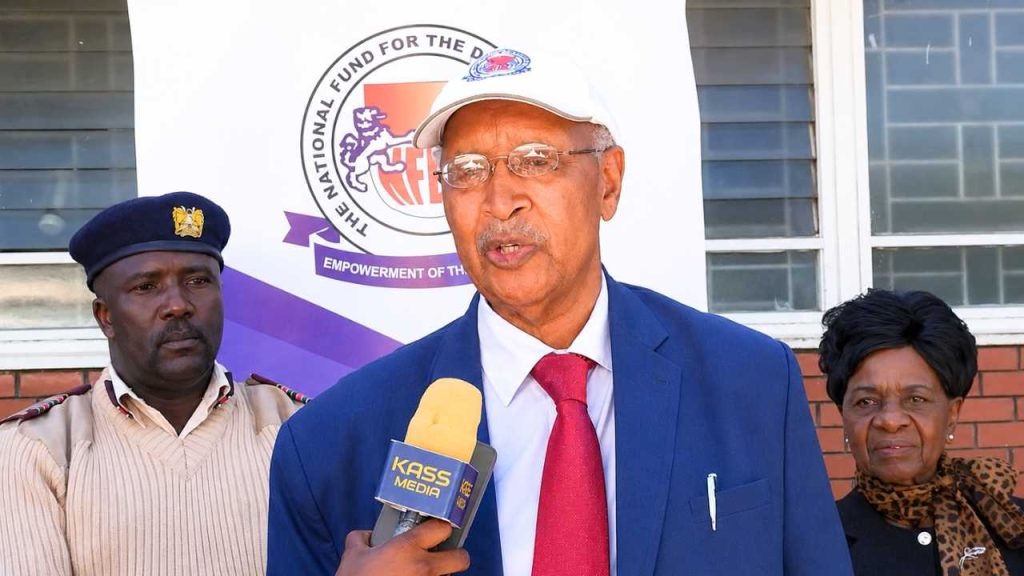
Chairman of the Board of Trustees Prof. Francis Kibera said the initiative forms part of ongoing efforts to expand assistance to institutions supporting vulnerable learners across the country.
“Any institution can apply for those flagship projects, and it’s enough for a serious project. We want to ensure that the disabled can have an opportunity to empower themselves and make a living without challenges,” he said.
Kibera noted that the fund has decentralized grant launches to regional levels, enabling wider outreach and improving access for institutions seeking financial assistance for disability-related programs.
He encouraged eligible institutions to pursue larger flagship grants of up to KSh 3 million for infrastructure development, including classrooms, dormitories, and other facilities supporting learners with disabilities.
The chairman also announced distribution of 21 livelihood toolkits to beneficiaries from Nakuru Town East, Nakuru Town West, and Bahati constituencies to promote economic independence.
The National Fund for the Disabled of Kenya was established following a national fundraising drive in 1980 and supports socioeconomic empowerment initiatives for persons with disabilities nationwide.
“Don’t hide your children, bring them out so that they can benefit from these resources that the government has allocated for empowering people with disabilities,” said Prof. Julia Ojiambo.
Ojiambo urged toolkit recipients to use the equipment productively and said trustees were documenting beneficiary experiences to showcase positive outcomes and encourage wider participation.
According to the fund, institutions receive grants for projects that improve accessibility, infrastructure, and sustainable income-generating activities benefiting learners and persons living with disabilities.
The grants complement broader government disability support programs, including assistive device provision, educational assistance, and economic empowerment initiatives administered through disability-focused agencies.
Recent funding initiatives have continued across several regions, with the fund supporting schools, vocational centers, rehabilitation facilities, and community-based programs serving persons with disabilities.
Trustees called on families and community leaders to identify and support children with disabilities, ensuring they access available government resources, while institutions continue submitting applications for future funding opportunities.
About The Author