Nakuru Bets On Agro-Processing As Njoro CAIP Nears Completion
The project is part of the government’s wider strategy to decentralize manufacturing, strengthen agricultural value chains and expand industrial activities beyond major urban centers.

By Suleiman Mbatiah
The Nakuru County Aggregation and Industrial Park (CAIP) in Njoro is nearing completion, with the facility expected to become operational early next year, paving the way for farmers to access modern storage, processing and marketing facilities aimed at reducing post-harvest losses and increasing agricultural earnings.
Located at Ngongongeri Farm in Njoro Sub-County, the agro-industrial hub is expected to transform the county’s agricultural sector by providing farmers with infrastructure to preserve their produce, undertake value addition and access organized markets without relying heavily on middlemen.
During a progress inspection tour of the project, Governor Susan Kihika said the nearing completion of the warehouses and cold storage facilities marked a significant step towards strengthening agricultural value chains and improving the livelihoods of farming households.
“Our farmers in Njoro Ward and surrounding areas will soon start leveraging on value addition to increase farm incomes and improve livelihoods,” the governor said.
She said the facility would provide a structured market environment where farmers could store their produce, maintain quality and negotiate better prices.
The governor said farmers had for years struggled to preserve their harvests and secure competitive prices because of post-harvest losses and dependence on brokers.
“For too long, our farmers have watched their hard work diminish due to post-harvest losses and exploitation by middlemen. This modern hub directly addresses these challenges by providing safe, temperature-controlled storage that preserves produce quality and keeps harvests fresh for longer,” she said.
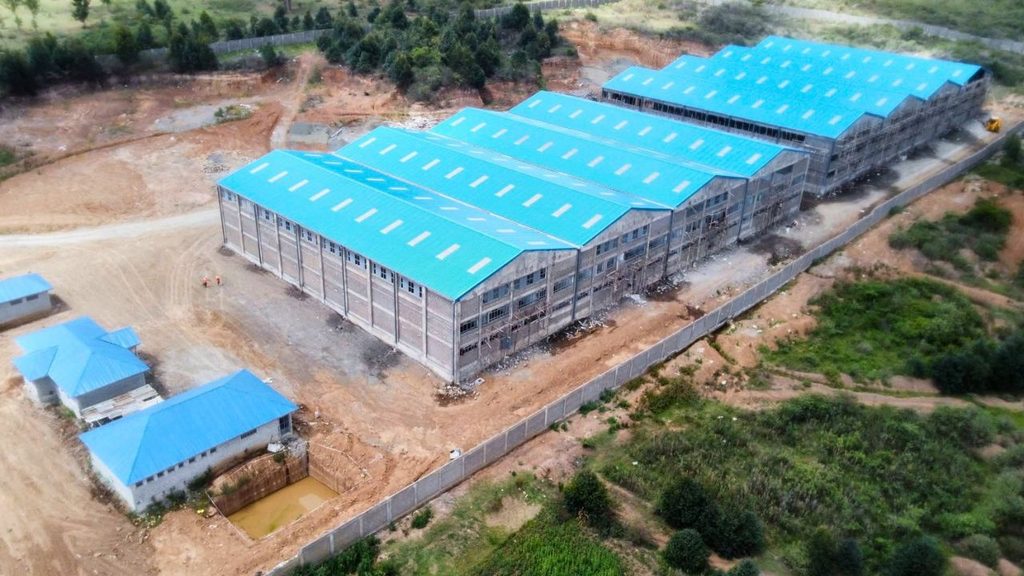
The facility is designed to serve as a one-stop center for the collection, storage, processing and marketing of agricultural produce, with eight warehouses, aggregation units, cold storage facilities and modern processing lines.
Its infrastructure also includes administrative and utility blocks to support the operations of businesses and investors expected to establish processing activities at the park.
The project is expected to benefit farmers producing tomatoes, sweet potatoes, maize and horticultural crops by providing facilities to aggregate their produce, preserve quality and undertake value addition closer to their farms.
Through agro-processing, farmers are expected to gain opportunities to supply processed products to domestic and export markets instead of depending solely on the sale of raw agricultural produce.
Kihika said the investment would help farmers retain greater value from their harvests while creating opportunities for businesses involved in processing, packaging, transportation and distribution.
“More importantly, this facility empowers our farmers to bypass brokers, access organized markets, and negotiate fair, competitive prices for their hard work,” she said.
She added that the county was investing in infrastructure intended to make agriculture a more commercially viable enterprise and strengthen household incomes.
“By embracing value addition and agro-processing right here at home, our farming community will unlock higher profit margins and build lasting household wealth,” the governor said.
The Nakuru CAIP is being implemented jointly by the National Government, through the State Department for Industry, and the County Government of Nakuru under the Bottom-Up Economic Transformation Agenda (BETA).
The project is part of the government’s wider strategy to decentralize manufacturing, strengthen agricultural value chains and expand industrial activities beyond major urban centers.
The two levels of government are collaborating in financing and developing the infrastructure, with the county having previously allocated funds towards the construction of the facility.
The site, situated on land provided by Egerton University at Ngongongeri Farm, is intended to support agro-industrial development and attract private investors interested in establishing processing and manufacturing enterprises.
Beyond supporting agricultural production, the industrial park is projected to generate more than 4,000 direct and indirect employment opportunities once fully operational.
The anticipated jobs are expected to emerge from agricultural processing, manufacturing, warehousing, transportation, logistics and other businesses that will operate within and around the facility.
The investment is also expected to stimulate economic activity in Njoro and neighboring areas by creating demand for agricultural raw materials, transport services and other supporting enterprises.
Its development is part of Nakuru County’s broader industrialization ambitions, which include attracting investors, expanding manufacturing capacity and strengthening the county’s position as an agro-industrial and commercial hub.
Kihika said the county would continue working with the National Government and other stakeholders to deliver infrastructure that supports enterprise development and economic growth.
“We remain fully committed to turning agriculture into a reliable, high-earning enterprise. We are delivering the infrastructure our farmers need to prosper and driving sustainable economic growth across Nakuru County,” she said.
About The Author