Leaders Back Dr Kinity’s 2027 Presidency, Cite Decades Of Activism, Service And Constitutionalism
His campaign proposals include reducing the cost of living by 40 percent within two years, restoring free education, implementing universal healthcare and improving workers’ welfare.
By Staff Writer
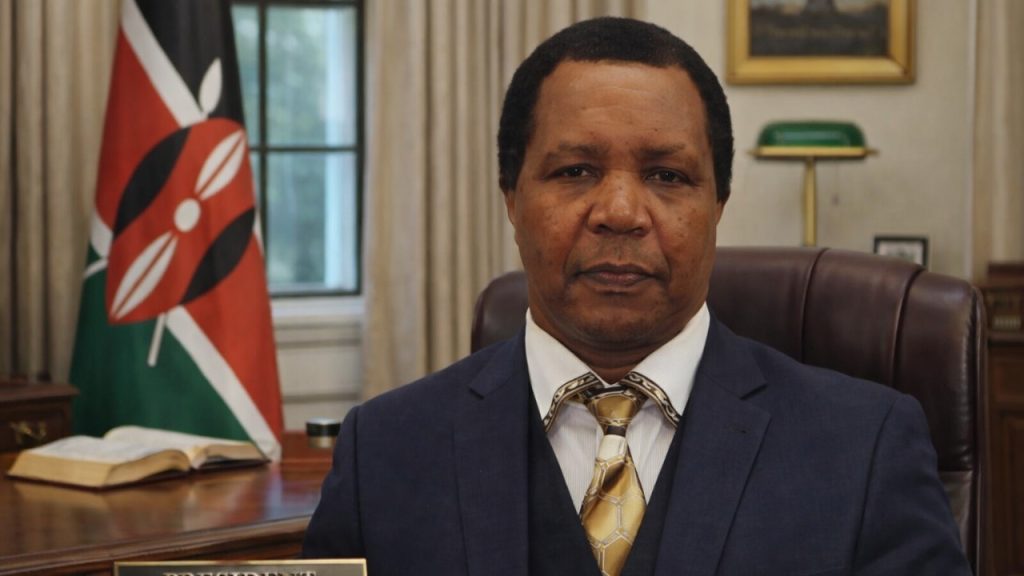
Former councilors have rallied behind Dr. Isaac Newton Kinity’s 2027 presidential bid, citing his nearly four decades of advocacy for workers’ rights, social justice and the protection of vulnerable citizens as evidence of his commitment to public service.
Led by former Nakuru County Council Vice Chairman Joram Kariuki, the leaders said Kinity had consistently championed the rights of ordinary Kenyans, citing his interventions in helping citizens stranded in Saudi Arabia return home, facilitating access to national identity cards, settling medical bills and defending communities against alleged land grabbing.
Kariuki said Kinity’s record of activism distinguished him from established politicians who had held positions of power across successive administrations without resolving the country’s persistent governance challenges.
He cited the former Kenya Civil Servants Union secretary-general’s involvement in workers’ rights, human rights advocacy and land justice, including his support for residents of Ndabibi in Naivasha over alleged land grabbing.
“I am here today to inform Kenyans that I have heard Dr Isaac Newton Kinity. And surely, the way Kinity speaks is the truth,” Kariuki said.
He challenged voters to reject recycled political leadership, arguing that successive changes of government had done little to address corruption, tribalism and weak accountability.
Recalling the political campaigns that preceded the end of former President Daniel arap Moi’s rule, Kariuki said Kenya had continued to grapple with similar governance problems despite changes in leadership.
“We started in 1992 with the slogan, Moi must go. Since Moi went, it has been 24 years. Until now, we have not changed. There is corruption. There is tribalism. What is the problem? The problem is that we have been recycling leaders,” he said.
Kariuki also questioned the effectiveness of the current one-term campaign, arguing that political slogans alone could not deliver meaningful reforms.
He maintained that Kenya’s central challenge was the failure to fully implement the Constitution, urging voters to prioritize institutional reforms over personality-driven political campaigns.
“The only problem in Kenya is failing to implement the Constitution to the letter. That is the problem,” he said.
Kinity’s activism dates back to the early 1980s, when he opposed the dissolution of the Kenya Civil Servants Union and challenged corruption in public institutions in his capacity as a trade unionist.
He has previously said his activism exposed him to threats and persecution, forcing him to flee Kenya for the United States in December 1998. He has also recounted an alleged poisoning incident in January 1998, which he says left him with serious health complications.
Despite living abroad, Kinity has remained engaged in Kenyan affairs through advocacy for workers’ rights, constitutionalism, anti-corruption reforms and human rights.
He formally declared his intention to contest the 2027 presidential election in March 2026, placing the fight against corruption at the center of his proposed agenda.
His campaign proposals include reducing the cost of living by 40 percent within two years, restoring free education, implementing universal healthcare and improving workers’ welfare.
He has also pledged to eradicate corruption within two years of taking office, promising to resign if he fails to meet the target.
Kinity has repeatedly cautioned Kenyans against relying on political slogans such as “Ruto Must Go” and “One Term,” arguing that meaningful change requires dismantling corruption networks and recovering stolen public resources.
Kariuki, meanwhile, dismissed the prospect of meaningful political change under established figures, including President William Ruto, former Deputy President Rigathi Gachagua and Nairobi Senator Edwin Sifuna, whom he accused of being part of the country’s governance problem.
“There’s no change Ruto, Gachagua and Sifuna can bring to this country. They’re part of the problem,” he said.
He urged Kenyans to examine Kinity’s history of activism, arguing that his continued advocacy despite alleged persecution demonstrated his commitment to public service.
Kariuki also called on former public officials to contribute to finding solutions to the country’s governance challenges and encourage voters to prioritize the future of the country.
“As former leaders, let us help Kenyans look for a solution to our problems,” he said, urging the older generation to help secure a better future for their children by listening to Kinity.
About The Author