Dr Kinity Puts Corruption, Accountability At Centre Of 2027 Presidential Bid
He has urged voters, particularly young people, to assess candidates based on their records, integrity and ability to account for public resources as Kenya moves towards the August 2027 election.
By Our Correspondent
With the 2027 General Election drawing closer, presidential hopeful Dr Isaac Newton Kinity is calling for a shift in Kenya’s political leadership.
He argues that the country needs leaders who can confront corruption and strengthen accountability in government.
Kinity, a Kenyan-born human rights activist, anti-corruption campaigner and former trade union leader, is seeking to position himself as an alternative to established political figures expected to contest the presidency in August 2027.
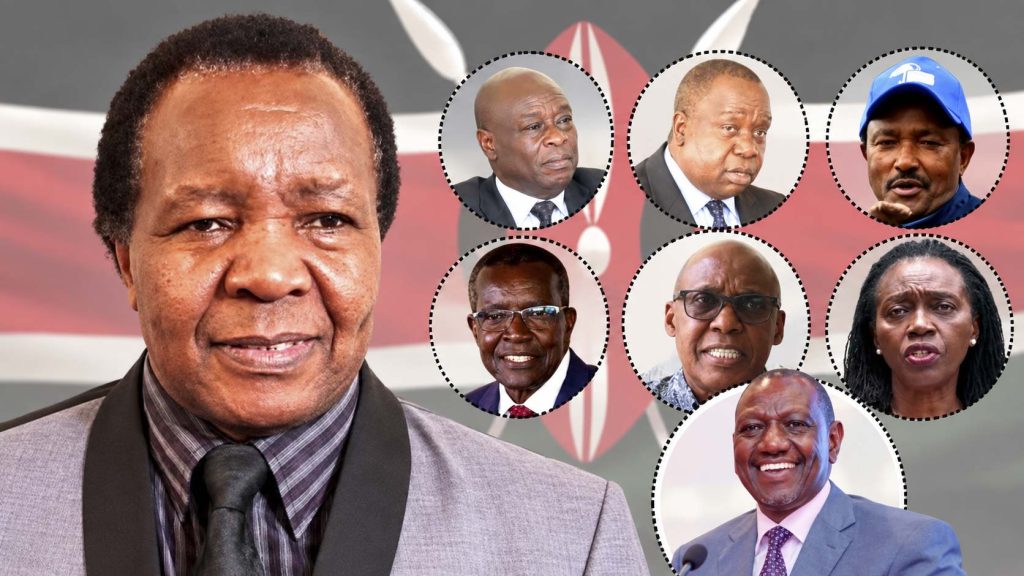
The emerging field includes President William Ruto, Kiharu MP Ndindi Nyoro, former Interior Cabinet Secretary Fred Matiang’i, Narc-Kenya leader Martha Karua, Nairobi Senator Edwin Sifuna, former ICT Cabinet Secretary Eliud Owalo, former Attorney-General Justin Muturi, former Defence Cabinet Secretary Eugene Wamalwa and former Deputy President Rigathi Gachagua, among others.
Kinity’s campaign is expected to focus heavily on corruption, governance and accountability. These issues have been central to his public activism for several decades.
From the United States, he has continued to comment on Kenya’s political and governance affairs.
He has regularly criticised corruption and what he regards as failures by successive administrations to protect public resources and improve citizens’ welfare.
His campaign comes as corruption remains a major issue in Kenya’s political debate.
Successive governments have faced pressure to strengthen accountability, recover public resources and improve the management of public funds.
Kinity has also criticised the political opposition.
He argues that some politicians presenting themselves as alternatives to the government previously held positions of influence and should be judged on their records in office.
“It is unfortunate in Kenya today because those in governance and those in opposition are all responsible for the unbearable situation Kenyans are in. They are the same people who have looted public funds and crippled the nation and cause the suffering and the agony Kenyans find themselves in today,” he stated in a recent press release.
Kinity says voters should scrutinise the records of all presidential aspirants.
He has urged voters not to automatically support politicians simply because they belong to the opposition.
His message is also targeting young Kenyans, who played a prominent role in the nationwide protests against the Finance Bill, 2024.
The protests brought renewed attention to demands for accountability, transparency and changes in governance.
Kinity is seeking support among university students and young professionals.
He says these groups are increasingly demanding a different approach to politics.
His supporters describe him as a candidate whose long involvement in governance advocacy could offer an alternative to politicians who have served in previous administrations.
Kinity, however, faces the challenge of translating his activism and diaspora profile into a nationwide political organisation.
He currently lives in Connecticut in the United States.
He chairs the Kikimo Foundation for Corruption and Poverty Eradication and serves as Global Vice-Chairman of the Diaspora Movement of Kenya.
He has also participated in international anti-corruption forums and continued to advocate for governance reforms in Kenya.
As he prepares to unveil his campaign strategy, Kinity has argued that Kenya cannot resolve its longstanding problems simply by replacing one group of established politicians with another.
He maintains that political experience should not, on its own, be treated as proof of leadership ability.
He has particularly questioned the records of politicians whose administrations have faced allegations of corruption, land grabbing and human rights abuses.
“We want a clean person and that is why we believe that Dr. Kinity is the best of all,” said Faith Moraa, a university student in Nakuru’s Subukia Sub County.
Other young people supporting Kinity have also linked their backing to his anti-corruption platform.
Armon Kamau, a member of the student leaders’ association in Nakuru, said Kinity had demonstrated a commitment to fighting corruption and reducing the loss of public resources.
Kisumu-based young professional Japheth Oduor Simba also said Kenya needed leadership capable of addressing corruption and ensuring public funds were used for their intended purposes.
Kinity is expected to face a competitive presidential field as political parties and prospective candidates position themselves ahead of the 2027 polls.
The contest is likely to focus on issues including the economy, unemployment, the cost of living, corruption, public debt, service delivery and accountability.
For Kinity, however, the central argument is that Kenya requires a fundamental change in its political culture rather than simply a change of personalities.
“Don’t go the way your parents have gone, looking for people with political experience and leadership skills. Because the political experience and the leadership skills they go for are those of looting public funds and grabbing land,” he urged.
He has urged voters, particularly young people, to assess candidates based on their records, integrity and ability to account for public resources as Kenya moves towards the August 2027 election.
About The Author