Dr Kinity Warns Leaders Over Ethnic Hate Speech Ahead Of 2027 Polls
The worst episode, the post-election violence of 2007 and 2008, left more than 1,100 people dead and displaced hundreds of thousands across the country, becoming the benchmark against which all subsequent political tensions are measured.
By Our Correspondent
Politicians making threats against ethnic communities or sponsoring ethnically driven violence could face arrest and prosecution outside Kenya, a human rights activist has warned amid sharply rising political tensions ahead of the 2027 General Election.
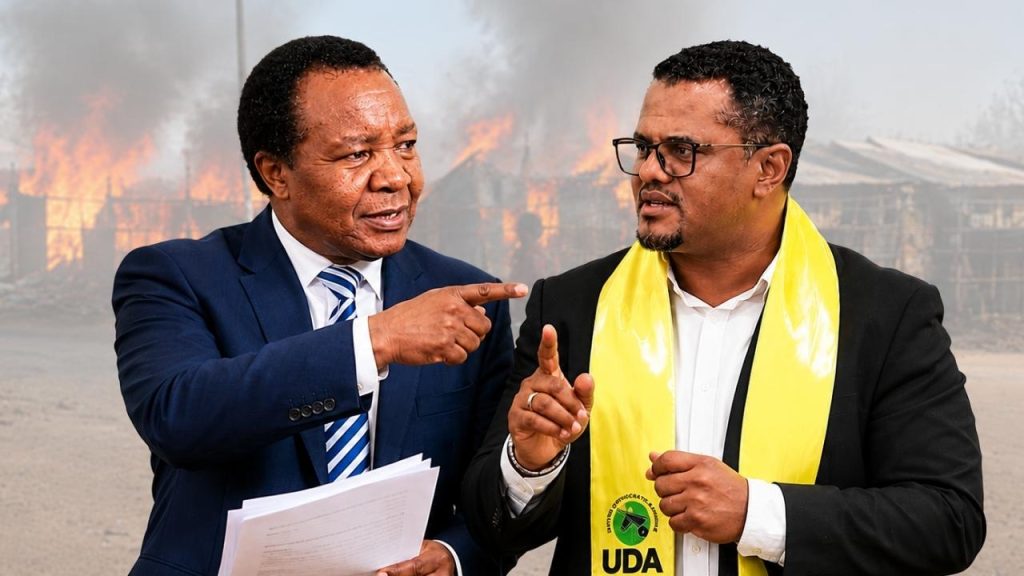
Dr. Isaac Newton Kinity issued the warning in an address, condemning remarks he attributed to United Democratic Alliance Secretary General Hassan Omar Hassan, accusing him of directly threatening the Kikuyu community over electoral participation.
Dr Kinity alleged that Omar had openly stated that members of the Kikuyu community should never be elected if any of them sought vied, describing the remarks as a declared intent to violate community sovereignty.
The activist warned that politicians responsible for such threats would not escape accountability through domestic political protection, arguing that international legal mechanisms had evolved and the era of impunity for those inciting violence was closing.
“If any mass killings take place in Kenya, I promise some people will languish in jail in their lifetime outside Kenya,” he said, drawing a direct line between inflammatory political rhetoric and criminal culpability.
Kenya has experienced repeated cycles of politically linked ethnic violence since the reintroduction of multiparty democracy in the early 1990s, with historians citing political instigation, unresolved land grievances, and ethnic mobilisation as primary drivers of communal conflict.
The worst episode, the post-election violence of 2007 and 2008, left more than 1,100 people dead and displaced hundreds of thousands across the country, becoming the benchmark against which all subsequent political tensions are measured.
Dr Kinity argued that sections of the political class appeared to be rehearsing a familiar script, warning that deliberate ethnic framing of political competition had historically served as a precursor to organised communal violence in Kenya.
He further alleged that firearms and weapons were being supplied to individuals positioned to carry out violence, though he offered no documentary evidence to support the claim.
Omar, a lawyer by training and former commissioner of the Kenya National Commission on Human Rights, has previously defended his political commentary as legitimate participation in national discourse on governance and constitutional affairs.
His office had not issued a formal response to Dr Kinity’s remarks at the time of publication. Omar has remained a prominent figure in public debate throughout his career, often wading into contentious national conversations.
Dr Kinity was direct in warning that no political rank or geographic location would shield individuals from international pursuit, insisting that accountability mechanisms had strengthened considerably since Kenya’s last major post-election crisis.
“This time it’s not about being asked to go, they’ll be picked from Kenya. It’s not hard to pick anyone even in State House, leave alone in Mombasa, and they’ll serve jail time outside Kenya,” he said.
The warning echoes Kenya’s most consequential accountability episode, when the International Criminal Court opened investigations into senior political figures following the 2007 and 2008 post-election crisis over crimes against humanity allegations.
Those cases eventually collapsed amid claims of witness interference and insufficient evidence, but the process permanently altered Kenya’s political culture, embedding the concept of international scrutiny into national debate around election violence and impunity.
Civil society organisations and political analysts have in recent months raised concern about a resurgence of ethnic mobilisation, as competing political camps begin repositioning themselves aggressively ahead of the 2027 electoral cycle.
Several groups have issued public appeals urging leaders across party lines to avoid statements that assign collective political identity along ethnic lines or deepen communal suspicion between communities with historically tense relations.
Dr Kinity urged communities not to allow themselves to be drawn into cycles of retaliation, framing external accountability not as foreign interference but as a protective mechanism for communities that have historically borne the heaviest cost of political violence.
“Kenyans, just keep your peace. This time we have to take the mantle of saving our people from outside Kenya,” he said, appealing directly for calm amid the escalating political rhetoric.
His remarks have renewed scrutiny of Kenya’s political discourse, with critics warning that without consistent institutional responses to ethnic incitement, inflammatory language risks reopening fault lines the country has spent nearly two decades trying to close.
About The Author