Kenya’s Investment Climate Is Right, Says Trade CS Kinyanjui
The CS cited President Ruto’s attendance at the G7 meeting, saying Kenya’s representation had opened doors in economies such as France and Norway, which are showing greater interest in doing business with the country.
By Suleiman Mbatiah
The Kenya Kwanza administration has taken deliberate policy, energy, trade and infrastructure measures to stabilize the shilling, reduce import pressure and position the country as a more predictable destination for business and investment.
Trade, Investment and Industry Cabinet Secretary Lee Kinyanjui said President William Ruto’s administration is pursuing long-term reforms in value addition, energy security, infrastructure, export expansion and investment facilitation to strengthen Kenya’s competitiveness.
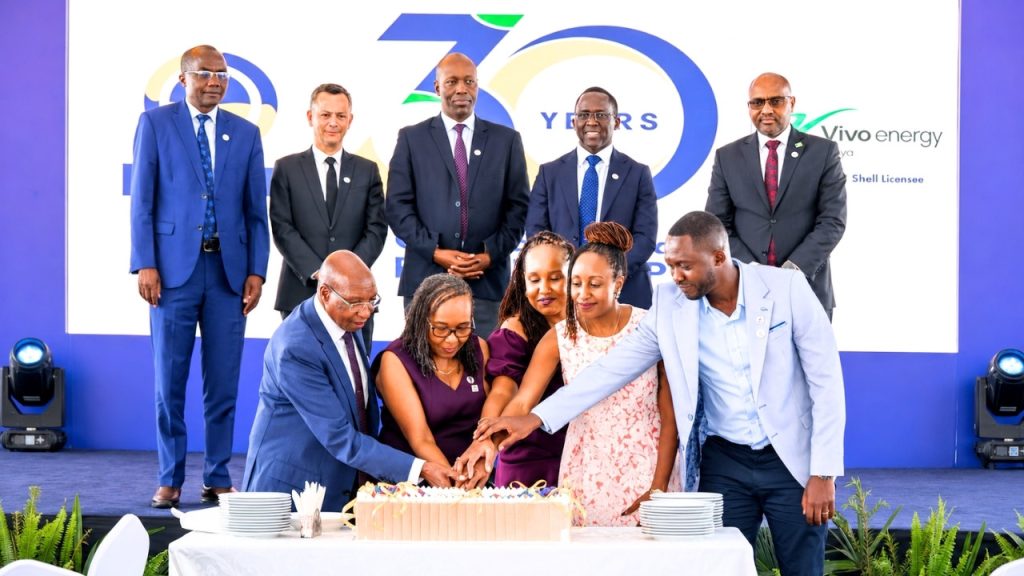
Speaking during RIVA Petroleum’s 30th anniversary celebrations in Nakuru, Kinyanjui said the country must reduce pressure from high import bills, especially petroleum, while expanding local production and regional trade opportunities.
“This matters because petroleum remains one of Kenya’s biggest import bills. If we can reduce that burden, even by 20 or 30 per cent, we will significantly strengthen our economy and ease pressure on the shilling,” Kinyanjui said.
Economic stability, he noted, will not be achieved through short-term interventions, but through consistent implementation of policies that support production, expand exports, reduce imports and attract long-term capital.
Among the opportunities identified are value addition, local blending and the possible use of Turkana oil for base oil and bitumen production, which could reduce imports, create jobs and strengthen the economy.
Vivo Energy is already involved in blending in Mombasa, with further expansion of production and blending expected to help Kenya build more domestic capacity in the petroleum value chain.
“Economic solutions are not found overnight. There are no quick fixes in the economy. Whether we are dealing with energy, healthcare, infrastructure or production, we must take a long-term view and remain consistent in implementing the right policies,” he said.
The Government-to-Government energy arrangement, though challenged in its initial stages, helped shield Kenya from severe currency shocks experienced elsewhere during the global energy crisis, according to the Cabinet Secretary.
The same principle, he added, applies to other reforms, including healthcare, where results may not be immediate but can be achieved through policy consistency and disciplined implementation.
On infrastructure, Kinyanjui described the Rironi-Mau Summit corridor as a strategic trade corridor that will open up movement, trade and investment in Nakuru and other regions along the route.
The project’s 30-year concession by a Chinese company, he said, should encourage Kenyans and local investors to take a long-term view of the country’s economic prospects.
He said major investors, including Vivo Energy, KCB and other institutions, were not looking at Kenya for six months or one year, but are positioning themselves for long-term growth.
On transport, the Cabinet Secretary said Kenya’s transition to electric mobility presents new investment opportunities, especially after the President provided a duty-free waiver for 100,000 electric vehicles.
Counties such as Nakuru, he advised, must begin planning for charging infrastructure, energy solutions, vehicle servicing and local assembly to ensure they benefit from the emerging mobility economy.
“In short, the country’s investment climate is right. The opportunity is now,” Kinyanjui said.
Kenya’s policy realignments, trade agreements, visa reforms and growing international visibility have changed how the country is perceived by major economies and investors.
The CS cited President Ruto’s attendance at the G7 meeting, saying Kenya’s representation had opened doors in economies such as France and Norway, which are showing greater interest in doing business with the country.
Kenya’s hosting of the Africa-France Summit, despite not being a Francophone country, further showed that the country has positive indicators that the world is noticing.
Trade agreements with major economies such as China, with a population of about 1.4 billion people, could create new markets for Kenyan avocado, tea, coffee, flowers and other products.
The visa waiver for people from African countries is also positioning Kenya as a more open investment destination for Africans from countries such as Egypt, South Africa and Nigeria.
Such policy shifts can transform how a country is viewed, Kinyanjui said, citing Nairobi’s housing market, where investors and foreigners are increasingly taking up property.
At the RIVA Petroleum anniversary, Kinyanjui also highlighted the role of family-managed businesses in building national brands, creating jobs and sustaining local wealth.
RIVA’s growth from a local Nakuru enterprise into a nationally recognised petroleum brand, he said, showed what persistence, discipline, partnerships and long-term planning can achieve.
Founder Engineer Peter Njeru was praised for staying consistent in the petroleum business while others tried different ventures, with the RIVA story presented as a lesson for young entrepreneurs.
RIVA’s 30-year milestone, according to the CS, should be seen not only as a celebration of one company, but as a model for how Kenyan enterprises can grow through persistence, partnership and continuity.
About The Author