NAWASSCO Wins Appeal Over Disputed Nakuru Water Works Land
The legal battle dates back to 2008 when Shah moved to court seeking to stop interference with his claimed ownership after his attempts to develop the property were disrupted.
By Suleiman Mbatiah
A buyer who acquires land through an illegal title cannot claim protection under the innocent purchaser doctrine, the Court of Appeal has ruled in a landmark dispute involving land reserved for water works in Nakuru.
The three-judge appellate bench dismissed an appeal by Prakash Shantilal Shah, upholding the cancellation of his title to Nakuru Municipality Block 11/672 after finding that the property had been illegally carved out of public land designated for water treatment infrastructure.
The court ruled that Shah could not claim legitimate ownership because the person who sold him the property had no valid title to transfer. It further held that constitutional protection of private property under Article 40 could not extend to land acquired through an unlawful allocation.
In a judgment delivered in Nakuru today, the judges found that Shah had failed to establish the legal foundation of his ownership despite producing a certificate of lease and a sale agreement.
The dispute concerns land originally granted to the defunct Nakuru Municipal Council on February 23, 1956, under title LR No. 451/648, also known as Nakuru Municipality Block 11/56, for water works.
The original grant contained special conditions restricting the property’s use exclusively to water works and prohibiting its subdivision, sale or transfer without prior written government consent.
The court established that the original grant had never been surrendered for subdivision and remained in the possession of the County Government of Nakuru, which inherited the municipal council’s assets following the establishment of devolved governments.
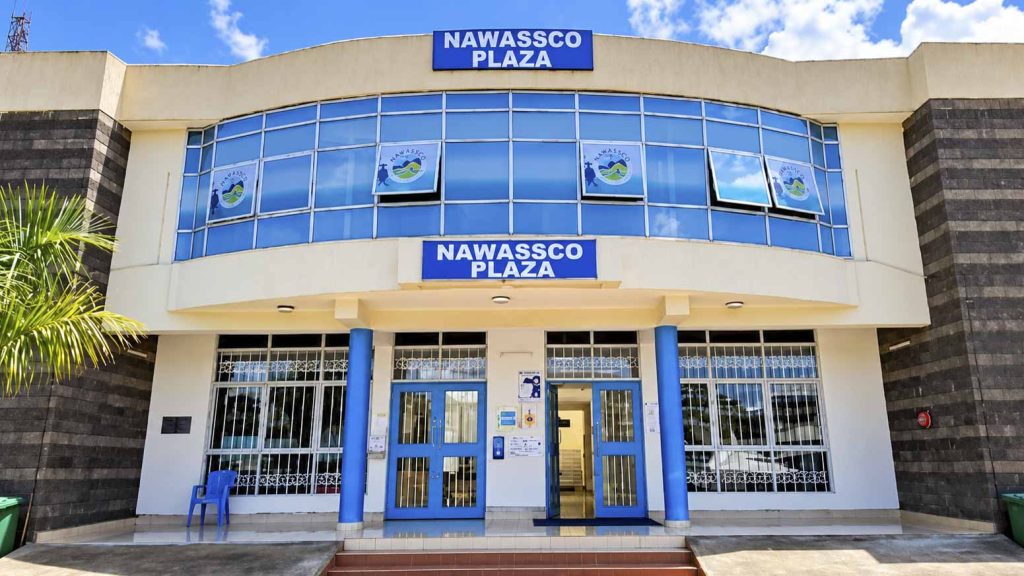
The Nakuru Water and Sanitation Services Company Limited (NAWASSCO, which operates a water treatment plant on the disputed property, opposed Shah’s ownership claim, arguing that the land had been unlawfully converted from public utility use into private property.
According to the water company, the original water works property was illegally renamed Nakuru Municipality Block 11/674 in 1998 before being subdivided into 14 parcels, including the disputed Block 11/672.
The resulting parcel was allegedly allocated to J.C. Cheluget, who subsequently sold it to Shah.
NAWASSCO maintained that the subdivision and subsequent transfers were undertaken without the mandatory government consent, rendering the resulting titles invalid.
The dispute arose in 2008 after Shah brought construction materials onto the property with the intention of developing a residential house. NAWASSCO intervened, prompting the legal battle over ownership and the protection of the land for public utility purposes.
Representing NAWASSCO, lawyer Kipkoech Ng’etich argued that Shah had failed to explain how he acquired a title derived from a parent title that remained intact.
“The disputed title was superimposed on an existing public land title that had never been subdivided or lawfully transferred,” Kipkoech told the court.
He further argued that the innocent purchaser defense could not be used to legitimize an illegally acquired title, describing the appeal as an attempt by private investors to sanitize an unlawful land transaction.
The water company urged the appellate judges to dismiss the appeal, uphold the cancellation of the title and preserve the property for its intended public use.
The Government of Nakuru of County also opposed the appeal, arguing that the disputed property remained public land belonging to the county government and the water sector.
Representing the county, lawyer Steve Biko challenged the root of Shah’s ownership, arguing that Cheluget had no valid title to transfer in the first place.
The county maintained that Shah could not acquire legitimate ownership through a transaction involving a seller who had no lawful interest in the property.
However, Shah, through his lawyer Stephen Mwenesi, maintained that he was an innocent purchaser for value without notice of any irregularities in the property’s ownership history.
Mwenesi told the court that his client had purchased the property from Cheluget through a sale agreement dated October 6, 1999, which was produced as evidence during the trial.
He argued that Shah had sufficiently explained how he acquired the property and that his ownership should not be invalidated merely because the respondents questioned the historical acquisition of the land.
Mwenesi also challenged NAWASSCO’s legal standing to pursue the dispute, arguing that the company had not produced documents demonstrating ownership of the property.
However, he conceded that the issue had not been raised before the trial court and could therefore not be entertained by the appellate court.
In independently reviewing the evidence, the Court of Appeal identified significant gaps in the documentation Shah relied on to establish ownership.
The judges found that there was no approved subdivision scheme, no evidence of government consent to subdivide the original property and no instrument showing how the land was transferred from the municipal council to Cheluget.
They also noted that Shah had not produced a transfer document from Cheluget to himself, relying principally on a sale agreement and a certificate of lease issued for 99 years from 1999.
The court further observed that the purported lease would run beyond the term of the original grant, which was for 99 years with effect from 1933.
The judges agreed with the Environment and Land Court that the certificate of lease and sale agreement were insufficient to establish the legal origin of Shah’s title.
“We agree with the trial court that it was not enough for the Appellant to tender the certificate of lease and the sale agreement to prove the root of his title,” the judges ruled.
They found that the respondents had sufficiently demonstrated that the disputed property had been illegally carved out of land reserved for public use without complying with the conditions attached to the original grant.
The appellate court consequently rejected Shah’s argument that he deserved protection under the innocent purchaser for value without notice doctrine.
It held that a purchaser could not obtain a valid interest in land from a seller who had no legitimate ownership rights, regardless of whether the buyer was aware of the irregularities.
The legal battle dates back to 2008 when Shah moved to court seeking to stop interference with his claimed ownership after his attempts to develop the property were disrupted.
He sought a permanent injunction restraining NAWASSCO from interfering with his possession and compensation for alleged trespass.
About The Author