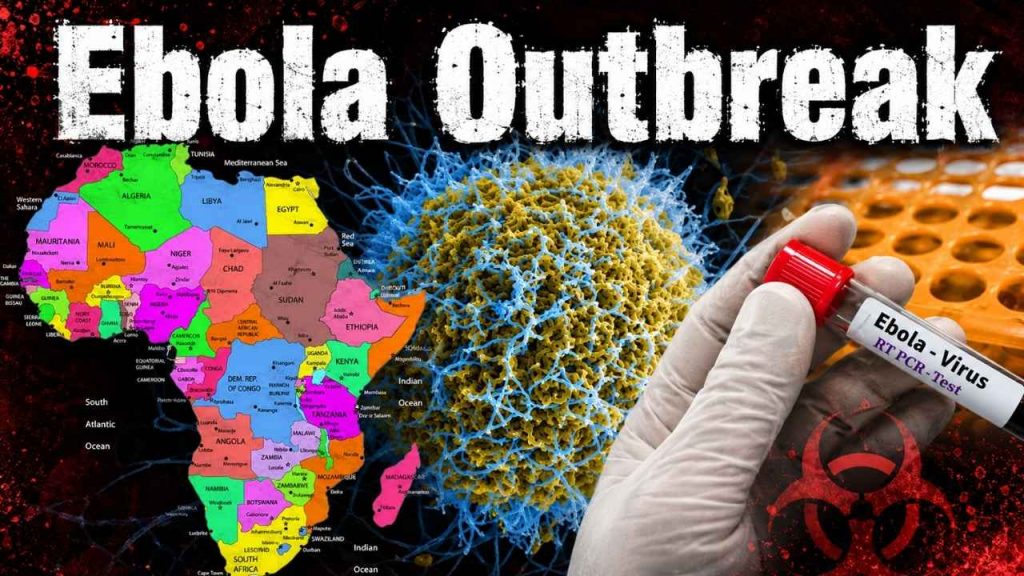
Deadly Ebola Outbreak Spreads Across Borders As Rare Virus Defies Vaccines
Unlike previous Ebola outbreaks that were fought using licensed vaccines and monoclonal antibody treatments, the current epidemic is caused by the Bundibugyo virus, a rarer Ebola strain for which no approved vaccine or targeted therapy exists. Existing Ebola vaccines, including the widely used Ervebo vaccine developed after the devastating West African epidemic of 2014 to 2016, are only approved against the Zaire strain of the virus.
By Suleiman Mbatiah
By the time authorities officially declared the latest Ebola outbreak in eastern Democratic Republic of Congo, dozens of people had already died. Now, health workers are confronting an even greater challenge: the virus behind the outbreak is a rare strain with no approved vaccine, no proven treatment, and limited testing capacity.
The outbreak, officially declared by the DRC Ministry of Health on May 15, has already spread across several health zones in the country’s northeast and crossed into neighboring Uganda, raising fears of a wider regional health emergency. Health authorities have reported nearly 500 suspected cases and more than 130 deaths, while the World Health Organization has activated its highest alert level in response to the rapidly evolving crisis.
Unlike previous Ebola outbreaks that were fought using licensed vaccines and monoclonal antibody treatments, the current epidemic is caused by the Bundibugyo virus, a rarer Ebola strain for which no approved vaccine or targeted therapy exists. Existing Ebola vaccines, including the widely used Ervebo vaccine developed after the devastating West African epidemic of 2014 to 2016, are only approved against the Zaire strain of the virus.
John Johnson, Médecins Sans Frontières’ medical lead for epidemic response and vaccination, said the absence of approved vaccines and treatments has significantly complicated efforts to contain the outbreak.
“There are currently two approved vaccines against Ebola disease, but neither is approved for use in cases of infection with the Bundibugyo virus,” Johnson said.
Health experts say the lack of medical countermeasures means authorities must rely heavily on traditional outbreak control methods, including isolation of patients, contact tracing, strict hygiene measures, safe burials, and community engagement to slow transmission.
MSF said discussions are already underway within the WHO to determine whether experimental vaccine candidates could be deployed in emergency clinical trials, similar to those conducted during previous Ebola outbreaks in the DRC. Those earlier trials helped pave the way for the approval of two Ebola vaccines and antibody-based therapies.
The outbreak has exposed significant weaknesses in disease detection systems in the region. PCR diagnostic tests for Ebola require virus-specific cartridges, but supplies for detecting the Bundibugyo strain remain limited, slowing laboratory confirmation and delaying contact tracing operations.
Public health experts warn that delayed detection may have allowed the virus to spread undetected for weeks before authorities formally recognized the outbreak. According to MSF, more than 50 people had already died since early April before the epidemic was officially declared in mid-May.
The first alerts were reported on May 9 and 10 in the Mongwalu health zone in Ituri province, northwest of Bunia. Additional cases were later identified in Bunia and Rwampara before the virus spread into neighboring North Kivu province, including the city of Goma, a densely populated regional hub near the Rwandan border. Uganda later confirmed its first fatal case on May 14.
The DRC has experienced 17 Ebola outbreaks since the virus was first identified near the Ebola River in 1976. However, this marks only the third outbreak linked to the Bundibugyo strain, following previous epidemics in Uganda in 2007 and in eastern Congo in 2012. Historical data from those outbreaks showed fatality rates ranging between 25 and 40 percent.
Although no approved treatment currently exists for Bundibugyo Ebola, healthcare workers are continuing to provide supportive care aimed at improving survival chances. Patients are being treated with fluids, oxygen support, symptom management, and intensive monitoring of blood and cardiac functions. Researchers are also assessing experimental antiviral drugs and monoclonal antibodies, though their effectiveness against the strain remains unproven.
Johnson said the outbreak response depends not only on medical interventions, but also on public trust and cooperation in communities where insecurity and weak healthcare systems continue to hamper humanitarian operations.
“None of this can function without sustained community engagement — informing people and building trust,” Johnson said. “A far more difficult task in contexts marked by insecurity and limited access to healthcare.”
The WHO has previously described Ebola as one of the world’s deadliest infectious diseases, with some strains recording fatality rates of up to 90 percent in past outbreaks. The virus spreads through direct contact with bodily fluids of infected people or contaminated materials, making healthcare facilities and funeral gatherings particularly high-risk environments.
The current outbreak is also unfolding at a time when humanitarian agencies are already stretched by conflict, displacement, and repeated disease emergencies across eastern Congo. Aid groups warn that maintaining routine healthcare services alongside Ebola containment measures will be critical to preventing additional deaths from non-Ebola illnesses.
MSF, which has responded to multiple Ebola epidemics over the past decade, including outbreaks in West Africa, Uganda, and the DRC, says rapid international support and accelerated research into vaccines and treatments will be essential if the Bundibugyo outbreak is to be contained before it spreads further across the region.
About The Author