Murkomen Alleges Sabotage As KNCHR Questions Police Response To Protests
The unrest renewed scrutiny over Kenya’s handling of public demonstrations and underscored growing public frustration over the rising cost of living, highlighting an increasingly tense political and economic confrontation between the government and opposition-linked activists over the country’s economic direction.
By Staff Writer
The Kenya National Commission on Human Rights urged accountability from both protesters and police on Monday after nationwide demonstrations over rising fuel prices left at least four people dead, disrupted transport networks and triggered violent confrontations across several Kenyan towns.
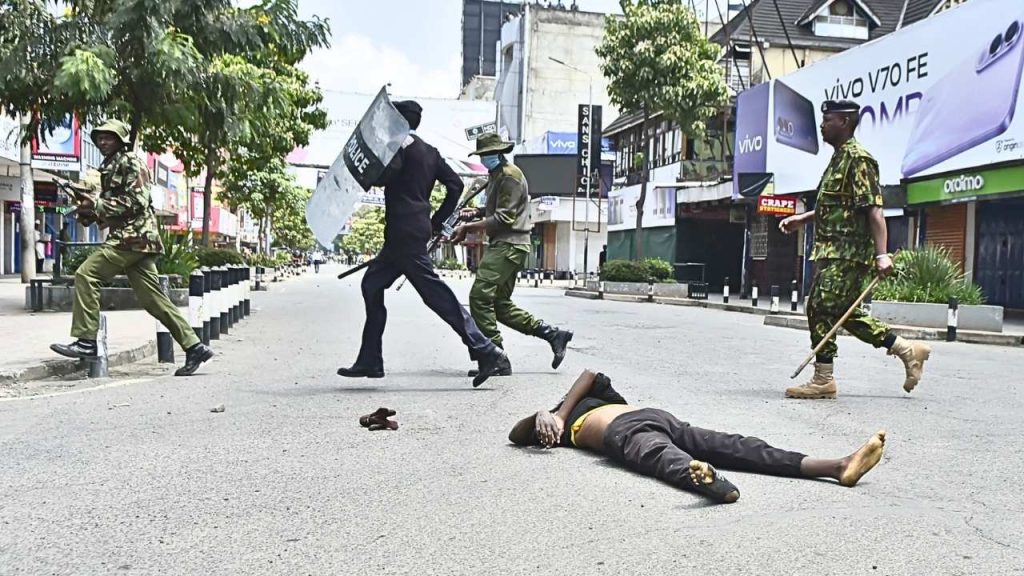
The protests, initially organized by transport sector groups angered by a sharp increase in fuel prices, escalated into running battles between protesters and anti-riot police in Nairobi, Nakuru, Kisumu, Mombasa and Eldoret. Demonstrators lit bonfires on highways, barricaded roads with stones and debris, and forced many businesses and public transport operators to suspend operations.
Interior Cabinet Secretary Kipchumba Murkomen said the unrest was part of a coordinated campaign involving criminal gangs and politically linked actors seeking to destabilize the country and paralyze economic activity. He said four people were killed and more than 30 injured during the demonstrations.
“What we witnessed today was not peaceful protest but a coordinated campaign of lawlessness designed to intimidate citizens, destroy livelihoods and paralyze transport networks across the country,” Murkomen said.
Murkomen said security agencies had gathered intelligence indicating that organized groups infiltrated demonstrations in multiple towns, allegedly targeting roads, businesses and public infrastructure. The government cited incidents including the looting of supermarkets, the burning of a ruling party office in Wote, Makueni County, and the torching of trucks linked to the Rironi-Mau Summit road project as evidence of what authorities described as coordinated sabotage.
The Kenya National Commission on Human Rights acknowledged reports of looting, arson and destruction of property but raised concern over allegations of excessive force by police during efforts to disperse crowds and reopen blocked roads.
In a statement released this evening, KNCHR said it had received reports of multiple injuries, arrests and destruction of property of unknown value during the unrest, which also forced school closures in several affected areas and stranded commuters for hours.
“The Commission has received reports of at least four fatalities, multiple injuries, arrests, looting, arson, and destruction of property of unknown value in various parts of the country,” KNCHR Chairperson Claris Ogangah said.
The commission said demonstrations had begun peacefully before deteriorating into violent confrontations involving what it described as marauding gangs. It also warned that the unrest infringed on the rights of other citizens, including freedom of movement and security.
At the same time, KNCHR questioned reports that police used live ammunition during security operations, saying law enforcement officers were constitutionally required to observe legality, necessity, proportionality and accountability in the use of force. The commission urged authorities to ensure lethal force was used only as a last resort and in line with Kenyan and international human rights standards.
Across several towns, public transport services were suspended as matatu operators cited safety concerns amid fears of violence and vandalism. Highways in parts of Nairobi and Nakuru remained partially blocked for hours while police deployed tear gas to disperse crowds and restore traffic flow. Businesses in affected urban centres shut early as tensions escalated through the day.
Witnesses reported prolonged confrontations between protesters and anti-riot police, while videos circulating on social media showed smoke billowing from major roads as groups of youths clashed with security officers.
The demonstrations were fueled by mounting public anger over rising fuel prices that have sharply increased transport fares and commodity costs in recent weeks. Analysts have linked the latest increases to volatility in global oil markets and supply concerns tied to tensions in the Middle East, further intensifying pressure on households already struggling with inflation and high living costs.
Murkomen said the government recognized the economic hardship caused by rising fuel prices and that the National Treasury, Energy Ministry and transport officials were engaging stakeholders on possible interventions. However, he warned that organizers of violent demonstrations would face prosecution and said security agencies had been directed to intensify operations against criminal networks allegedly behind the unrest.
KNCHR called for investigations into the violence and prosecution of individuals responsible for destruction of property, attacks on civilians and human rights violations during the demonstrations, while urging restraint from security agencies as authorities sought to restore calm nationwide.
The unrest renewed scrutiny over Kenya’s handling of public demonstrations and underscored growing public frustration over the rising cost of living, highlighting an increasingly tense political and economic confrontation between the government and opposition-linked activists over the country’s economic direction.
About The Author