How Kibagendi’s Expanding Influence Sparks Institutional, Political Pushback
Kibagendi previously served in the office of William Ruto as Secretary for Youth Affairs between 2017 and 2022 when Ruto was Deputy President, a role analysts say exposed him to internal state coordination and political strategy.

By Staff Writer
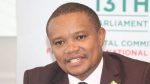
Early political maneuvering ahead of the 2027 general election is intensifying, with Kitutu Chache South Member of Parliament Anthony Kibagendi increasingly viewed as a strategic disruptor capable of reshaping alliances across both government and opposition camps.
Governance expert Cyprian Nyamwamu says recent actions against Kibagendi, including his arrest and expulsion from the National Assembly, signal a deepening political contest with implications for institutional independence and democratic accountability.
Nyamwamu notes that Kibagendi’s political trajectory, spanning both government and opposition circles, has positioned him uniquely within Kenya’s power matrix, amplifying his influence as parties recalibrate strategies ahead of the next general election cycle.
“The response directed at Kibagendi points to a broader effort to contain individuals perceived to possess critical insider knowledge and growing public credibility,” Nyamwamu said, linking the developments to heightened political sensitivities within ruling structures.
Kibagendi previously served in the office of William Ruto as Secretary for Youth Affairs between 2017 and 2022 when Ruto was Deputy President, a role analysts say exposed him to internal state coordination and political strategy.
Before joining Ruto’s office, he had worked closely with opposition leaders Raila Odinga and Kalonzo Musyoka, before shifting alignment during the 2017 elections to support former president Uhuru Kenyatta’s re-election campaign.
Nyamwamu, who is eyeing the Naiorbi governorship in 2027, says Kibagendi’s mobilization efforts during that period contributed to a significant shift in voting patterns, with opposition dominance in Nyamira declining and Kisii margins narrowing to about 52 percent from previous levels of roughly 67 percent.
In recent months, Kibagendi has emerged as a central figure in the political activities surrounding Fred Matiang’i, playing a key coordination role during opposition engagements, including high profile tours across the Gusii region.
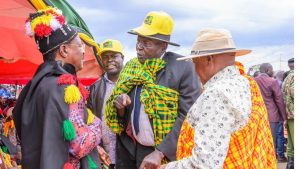
His influence was particularly visible during a recent regional tour involving opposition leaders and allied figures, where analysts say his grassroots networks and organizational capacity reinforced his standing as a mobilizer with growing national relevance.
Nyamwamu also links Kibagendi to broader civic and political formations, including grassroots aligned initiatives such as the Linda Mwananchi movement, where his coordination role is said to have strengthened public engagement and political messaging.
At the parliamentary level, Kibagendi has been associated with oversight efforts targeting the Social Health Authority, placing him at odds with senior officials including Health Cabinet Secretary Aden Duale amid allegations of mismanagement within the sector.
“Kibagendi’s legislative assertiveness, particularly on sensitive governance issues, appears to have triggered coordinated reactions that go beyond routine political disagreement,” Nyamwamu said, pointing to the scale of actors involved in the dispute.
Analysts point to what they describe as an unusually broad convergence of political actors engaging the matter, including senior parliamentary leaders, regional figures and national officials aligned with the ruling coalition’s strategic interests.
Those cited in the widening political contest include figures such as Silvanus Osoro, Japheth Nyakundi, Simba Arati and Kimani Ichung’wah among others across both legislative and executive spheres.
Additional actors referenced by observers include Moses Wetangula, Aaron Cheruiyot, Kipchumba Murkomen, as well as oversight and investigative agencies drawn into the unfolding developments.
The involvement of institutions such as the Ethics and Anti Corruption Commission and the Directorate of Criminal Investigations has further heightened scrutiny, with critics warning that perceived coordination could raise concerns about institutional neutrality.
Kibagendi’s reported dismissal from the National Assembly has drawn criticism from civil society groups, who argue that due process and procedural fairness must be upheld, particularly in matters involving elected representatives engaged in oversight functions.
His arrest has also fueled debate over the role of investigative agencies, with governance experts cautioning that perceptions of selective enforcement risk undermining public trust in institutions tasked with upholding the rule of law.
Nyamwamu said the developments reflect broader tensions within Kenya’s political system, where emerging actors are challenging entrenched power structures while navigating increasing institutional pressure ahead of the 2027 elections.
“The treatment of dissenting or reform oriented leaders will serve as a critical indicator of the country’s democratic resilience as political competition intensifies in the run up to 2027,” Nyamwamu noted.
About The Author