Clergy Called To Reinforce Ethical Political Conduct In Churches
Echoing similar concerns, Pastor Ben said the pulpit has in recent years been used in ways that deviate from its intended spiritual role, contributing to confusion among congregants and undermining faith-based guidance.
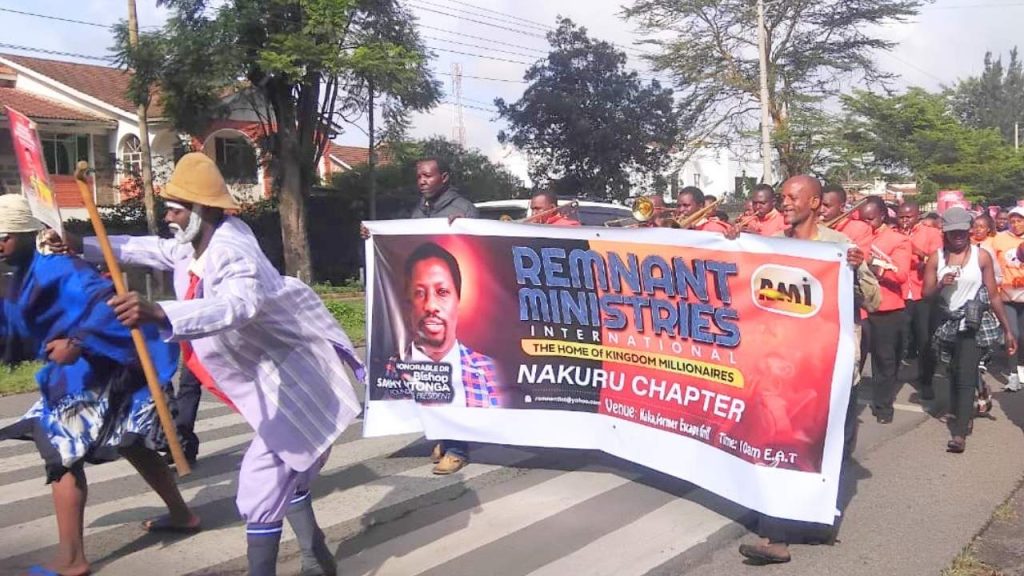
By Elijah Cherutich
Religious leaders across Kenya have been urged to reinforce ethical political conduct within churches as early political activity intensifies, amid concerns that places of worship are increasingly being used to spread divisive rhetoric and influence congregations.
Speaking in Nakuru, Bishop Sammy Gitonga of Remnant Ministries International cautioned that church institutions must remain sacred spaces, even as political actors seek engagement platforms to reach the public and promote their aspirations ahead of forthcoming elections.
Gitonga, who is also a parliamentary aspirant for Nakuru Town, said churches hold significant influence in shaping the country’s political climate and must act responsibly to prevent escalation of tensions during a period marked by heightened political activity.
“We want to encourage political leaders and especially men of God to ensure that as a country we refrain from the temptation to engage in rhetoric and cheap politics that can abuse the sanctity of church institutions,” he said.
He warned that the country must exercise caution and diplomacy in political messaging, noting that the current environment reflects early signs of intensifying political competition that could deepen divisions if left unchecked.
Echoing similar concerns, Pastor Ben said the pulpit has in recent years been used in ways that deviate from its intended spiritual role, contributing to confusion among congregants and undermining faith-based guidance.
He called on church leaders to provide firm and principled leadership, emphasizing the need to avoid a repeat of accusations that religious institutions were complicit in political partisanship during the 2022 general elections.
“We should have a bold approach to politics and ensure proper accountability of leaders seeking opportunities so that they can be honest,” he said.
Meanwhile, Roseline Chemutai Maina urged political leaders to promote peace and cohesion, particularly in cosmopolitan counties where diverse communities remain vulnerable to politically instigated tensions.
She also appealed to young people to resist manipulation by politicians, warning that involvement in politically driven unrest can result in lasting harm to families and communities.
Kenya’s religious institutions have historically played a central role in civic engagement and social cohesion, often serving as neutral grounds for dialogue during politically sensitive periods. However, their involvement in electoral discourse has at times drawn scrutiny, particularly when perceived to align with partisan interests.
As the country gradually shifts focus toward the 2027 general elections, stakeholders continue to emphasize the need for responsible leadership across all sectors to safeguard national unity and maintain public trust in key institutions.
About The Author