Sacked SDA Pastors Allege Victimisation Over Outspokenness On Financial And Moral Irregularities
The dispute now threatens to widen divisions within the regional church structure, as congregants await clarity on leadership, governance standards, and whether the matter will ultimately be settled internally or in court.
By Our Correspondent
A legal battle is looming within the Seventh-day Adventist Church after the Central Rift Valley Conference terminated the services of 19 pastors and withdrew their credentials with immediate effect, triggering a deep governance dispute.
In an official letter dated February 3, 2026, the conference informed churches under its jurisdiction that the pastors had been terminated pursuant to EXCOM minute number 26EXCOM 010 passed on February 1, 2026.
The letter, signed by Acting Executive Secretary Olgar Kemuma and stamped the same day, listed the 19 pastors by name and declared them no longer recognised as pastors, employees, or representatives of the church.
Churches across the Central Rift Valley territory were instructed not to allow the named individuals to participate in any religious, administrative, or ministerial activities within the conference’s jurisdiction.
The communication cited “gross misconduct and formation of apostasy organization under MID RIFTVALLEY UNION OF CHURCHES CONFERENCE” as grounds for the termination, stating the actions were contrary to church policy and the Church Manual.
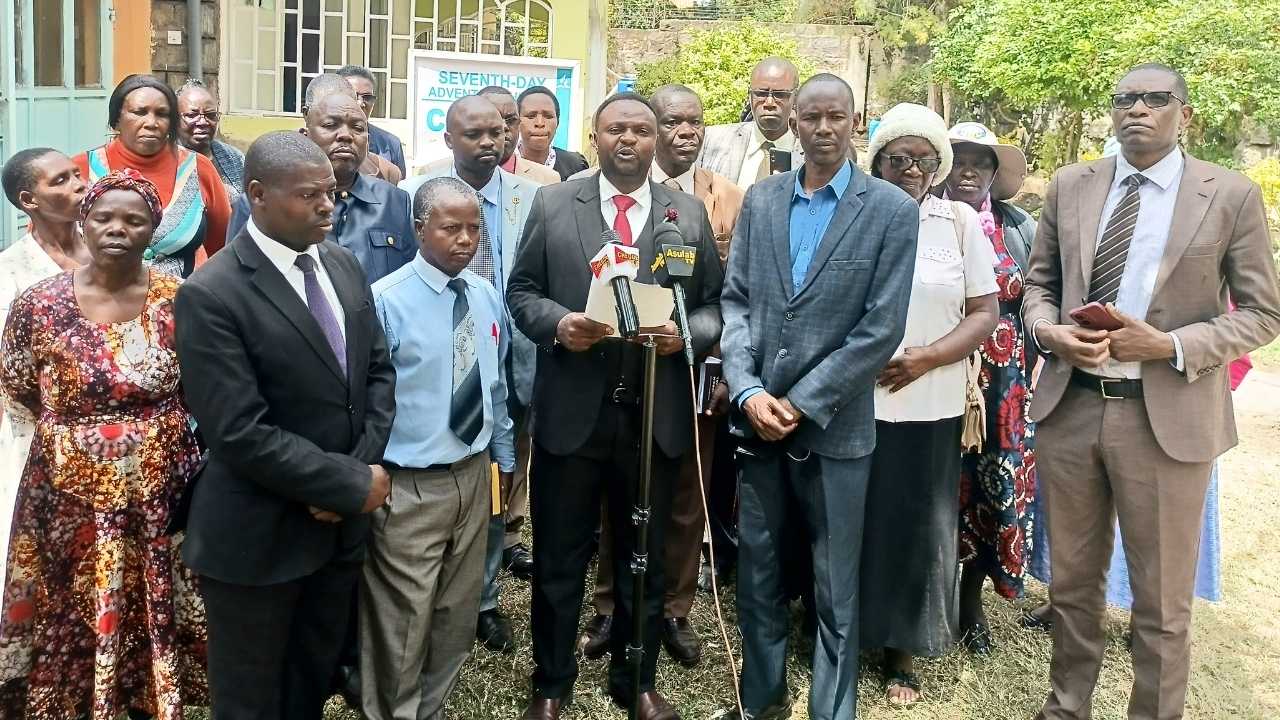
In a detailed press conference earlier today in Nakuru, the affected pastors rejected the allegations and described the termination as unlawful, arguing that their disagreements were administrative and ethical rather than doctrinal.
They disputed the label of apostasy, stating that in Adventist theology the term refers to a conscious and deliberate rejection of biblical truth, core doctrines, and faith in Christ, not governance disputes.
The pastors maintained that they had not rejected the authority of Scripture, denied salvation through Christ, opposed the Spirit of Prophecy, or abandoned any of the 28 Fundamental Beliefs of the church.
“Our disagreement with the leadership of CRVC and EKUC is not on any doctrinal matter,” they stated, adding that their concerns relate to governance, accountability, transparency, and ethical leadership.
In the statement signed collectively and read by Pastor Charles Kambo, the pastors argued that calling for integrity in leadership is not rebellion against faith but “an expression of loyalty to the principles upon which the church stands”.
They outlined what they termed credible concerns over high-level immorality within church leadership, alleging that moral misconduct among senior officials had been tolerated or selectively handled, thereby eroding confidence among members.
The group also raised questions over alleged mismanagement and misuse of denominational funds, arguing that tithe and offerings require the highest standards of transparency, auditability, and financial disclosure.
Among the specific disputes cited was the Narok land saga, which they said involved unresolved questions surrounding ownership, acquisition, transfer, or management of church property.
They further referenced the Vanga Road Apartment in Nairobi County issue, saying concerns had been raised regarding documentation, accountability, and transparent reporting on assets linked to that property.
The pastors also cited the WSG OptiCoin Kenya controversy, claiming alleged association or involvement of church leaders in the scheme had raised serious ethical and reputational concerns within the denomination.
Additional grievances included allegations of age manipulation in official records, intimidation and victimisation of workers, and governance practices they described as dictatorial and dismissive of consultative processes.
They accused the conference leadership of breaching confidentiality by releasing the termination letter publicly before formally serving the concerned pastors, exposing them to public judgment without due process.
“Releasing the letters to the public before serving us violated all known ethical and professional standards,” the pastors stated, arguing they were left with no responsible option but to respond publicly.
They further warned that they reserve the right to seek legal redress should what they termed defamatory actions continue, signalling a possible court challenge over the termination and related claims.
The Central Rift Valley Conference has not publicly addressed the detailed governance and moral allegations beyond the February 3 communication, which focused on misconduct and alleged apostasy.
The dispute now threatens to widen divisions within the regional church structure, as congregants await clarity on leadership, governance standards, and whether the matter will ultimately be settled internally or in court.
About The Author