Ruto Defends KDF Involvement In Civilian Projects Amid Procurement Scrutiny
By Staff Writer
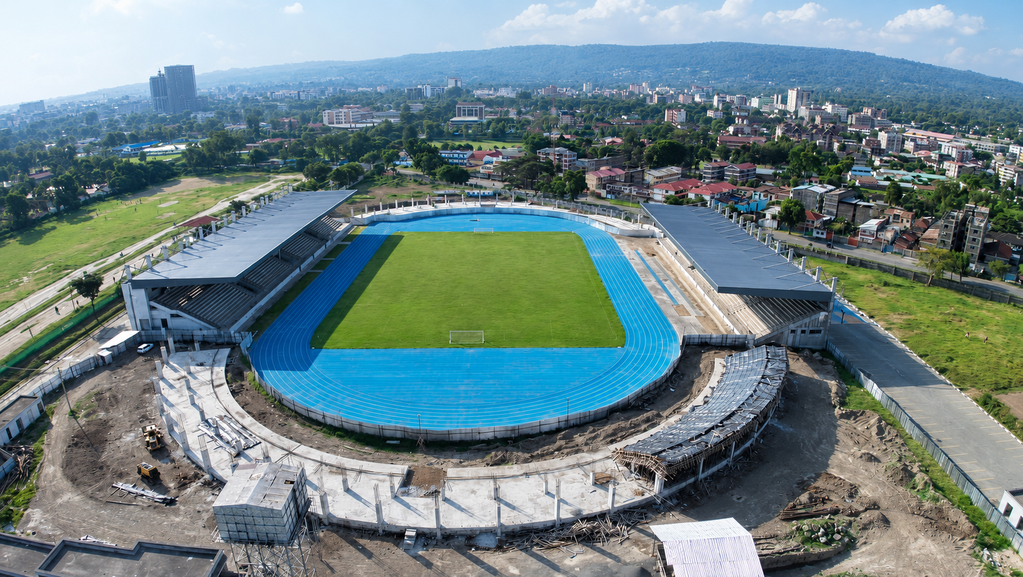
President William Ruto has defended a continued role for the Kenya Defence Forces in national development, pointing to the military’s involvement in the Raila Odinga International Stadium, the Bomas International Convention Complex and local shipbuilding as an approach Kenya should keep.
Ruto said the military’s first responsibility remains defending the country, but argued that its engineering, logistics and medical capacity can also support infrastructure, disaster response and industry. His remarks come amid concerns from some senators about procurement transparency and the impact of military involvement on civilian contractors, issues he did not address in the speech.
The President spoke yesterday during the passing-out parade for Recruits Cohort 01/2025 at the Defence Forces Recruits Training School in Eldoret, where more than 5,000 recruits graduated.
“The first duty of the Kenya Defence Forces remains, and will always remain, the defence of our Republic. Nothing dilutes that mandate. But the same capabilities that defend a modern nation also build one,” Ruto said.
He said military engineers could help strengthen strategic infrastructure, while KDF logistics and medical units could support the country when civilian systems are overwhelmed by emergencies or disasters.
KDF’s role in the major civilian projects is supervision, coordination and project management, rather than serving as the civil-works contractor.
The Ministry of Defence said in April that it was using KDF engineering and project management personnel to coordinate work on the stadium and convention centre, including roads, railway connections, water systems, utilities and security installations.
“Today, KDF engineering supports the construction of the Raila Odinga International Stadium at Talanta Sports City and the Bomas International Convention Complex. Through Kenya Shipyards Ltd and the Kenya Navy, we are rebuilding our shipbuilding capacity – MV Uhuru II, built locally and now moving trade across Lake Victoria, shows how a defence capability becomes an industrial one,” Ruto said.
The 60,000-seat Raila Odinga International Stadium is being developed at Talanta Sports City as a main venue for the 2027 Africa Cup of Nations, which Kenya will co-host with Uganda and Tanzania. The Ministry of Defence has also overseen upgrades at Kasarani, Nyayo, Afraha and Kipchoge Keino stadiums as part of preparations for the tournament.
The stadium project has, however, faced questions in Parliament over procurement and cost.
At a Senate committee hearing in May, government officials said the contract was signed at Sh45.8 billion after an initial estimate of Sh34.6 billion. They said the gap came from taxes, levies and import-related charges that were not included in the preliminary estimate prepared by University of Nairobi consultants.
Senators questioned the more than Sh10 billion difference and the use of direct procurement. Sports Cabinet Secretary Salim Mvurya said the contract price had not been varied because the Sh34.6 billion figure was only an estimate, not the signed contract amount. He told the committee the ministry would submit records to support the procurement process and cost.
The wider use of KDF in public works had already come under scrutiny before that hearing. On October 29, 2025, Marsabit Senator Mohamed Chute asked the Senate Standing Committee on Roads, Transportation and Housing to establish the procurement method used for every public infrastructure project involving KDF since 2020.
Chute also asked the committee to explain why open tendering was not used in some cases and why KDF was chosen despite the availability of qualified civilian contractors. Yesterday, Ruto did not respond to those procurement concerns or announce any changes aimed at improving public disclosure, parliamentary oversight or competition in contracts tied to KDF-supervised projects.
“Kenya must keep building its own model of defence contribution to national development, grounded in the Constitution and shaped by what our nation actually needs,” Ruto said.
Article 241 of the Constitution gives KDF three main functions: defending Kenya’s sovereignty and territorial integrity, assisting other authorities during emergencies or disasters, and restoring peace in areas affected by unrest or instability with National Assembly approval. It does not explicitly list routine civilian infrastructure construction as a separate military function.
The government has framed military supervision as a way to use KDF engineering skills and enforce deadlines and quality standards. The parliamentary questions focus on whether that arrangement provides enough procurement disclosure and whether work that could be done by civilian firms is being shifted under military supervision without sufficient justification.
Ruto also pointed to Kenya Shipyards Limited as an example of a defence-linked investment with commercial value. The state corporation, which operates under the Ministry of Defence, built MV Uhuru II in Kisumu with technical collaboration from Dutch shipbuilder Damen Gorinchem.
The vessel was commissioned in October 2023 and can carry 1,063 tonnes of petroleum products and dry cargo across Lake Victoria. The Ministry of Defence said its construction took 24 months and gave local personnel practical shipbuilding training.
Ruto linked the military’s development role to the broader discussion on Kenya’s plans beyond Vision 2030, saying infrastructure and economic ambitions would need to be matched by measures to protect digital systems, food supplies, energy networks, ports and other strategic assets.
“Security and development are not competing priorities. They are the same foundation, viewed from two directions. Security enables development. Development strengthens security,” Ruto said.
About The Author