Rooted Apical Cuttings Offer New Hope For Potato Seed Shortage
The technology could therefore give smallholder farmers greater control over seed production while reducing their dependence on limited supplies of conventional potato seed.
By Elijah Cherutich
For years, farmers in Kenya’s cold-producing regions have relied on potato tubers to preserve seed for subsequent planting seasons, a practice that has increasingly struggled to keep pace with the growing demand for quality planting material.
The traditional system involves selecting healthy, appropriately sized tubers from one harvest for use as seed in the next season. The process is then repeated, making seed multiplication a lengthy undertaking as more farmers embrace commercial potato production.
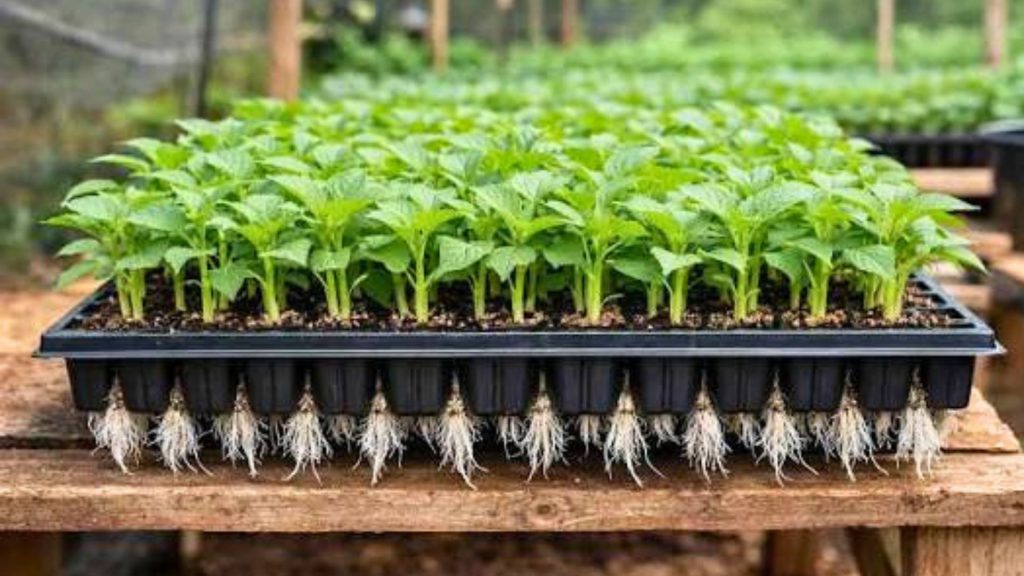
However, a new seed multiplication technology based on rooted apical cuttings is gaining traction, offering farmers a faster and potentially more efficient way of accessing disease-free potato planting material.
The technology is also being touted as a solution to declining potato productivity, with farmers currently harvesting significantly lower yields compared to previous years.
According to Kiazi Mfalme Managing Director Geoffrey Chege, potato production has drastically declined over the years to about eight tonnes per hectare, down from 20 tonnes per hectare.
He said the new generation of seeds produced from rooted apical cuttings is disease-free because the planting material is carefully prepared under laboratory conditions and subjected to strict quality controls.
“This rooted apical cutting goes through about five generations to ensure that the genetics of the plant are enhanced and can be able to be planted by farmers for several seasons without losing quality”, he said.
Chege said the five generations allow farmers to multiply sufficient planting material for their farms, helping address persistent shortages of quality potato seed.
“We have apical cutting which we get from KALRO, they produce what we call breeder seeds, the next is pre-basic, then basic, followed by certified generation one and two. Through these generations, there is a huge multiplication process and hence sustain the demands of farmers”, he said.

Francisca Tanui, farm manager at Global South Kiazi Mfalme, said the deployment of the technology at the enterprise had helped narrow the gap in potato seed supply.
She said smallholder farmers stand to benefit significantly by multiplying planting material on their own farms, allowing them to produce enough seed to sustain subsequent planting seasons.
“When you plant one acre of tooted apical cuttings, you get 10-15 acres of breeder material hence huge seed supply. The farmers can now access more of the seeds than previous old models of seed production”, she said.
The technology could therefore give smallholder farmers greater control over seed production while reducing their dependence on limited supplies of conventional potato seed.

Mirriam Mbiu, a researcher at the Kenya Agricultural and Livestock Research Organization (KALRO) in Tigoni, said limited access to potato seed has remained a perennial challenge, constraining farmers’ ability to increase production and improve their livelihoods.
She said KALRO, together with its partners, had embarked on integrating technology into the potato seed system to address the persistent shortfall.
Mbiu said rooted apical cuttings provide an alternative seed technology that complements existing seed multiplication systems while significantly reducing the time required to produce planting material.
“Before potato seeds get to the farmers through the conventional seed multiplication, it would take about 27 months but with this technology, within 2 months, the farmer can access quality planting materials which are more superior than the conventional”, she said.
She said the rooted apical cuttings undergo laboratory-controlled tissue culture processes designed to eliminate diseases before the planting material reaches farmers.
Beyond seed multiplication, maintaining the quality of planting material after production remains critical to ensuring farmers reap the expected benefits.
Margaret Waithaka, store manager at the organization, said the institution invests heavily in proper seed storage to preserve quality, ensuring the planting material remains viable and ready for use while helping farmers achieve better returns.
She said she closely monitors temperature and moisture levels within the storage system to maintain the quality of the seeds.
The adoption of rooted apical cuttings could therefore mark a significant shift in Kenya’s potato seed system, particularly in areas where farmers have struggled with inadequate access to quality planting material.
About The Author