Never Too Old To Learn: The KNH Technician Stitching Together A Second Career In Leather
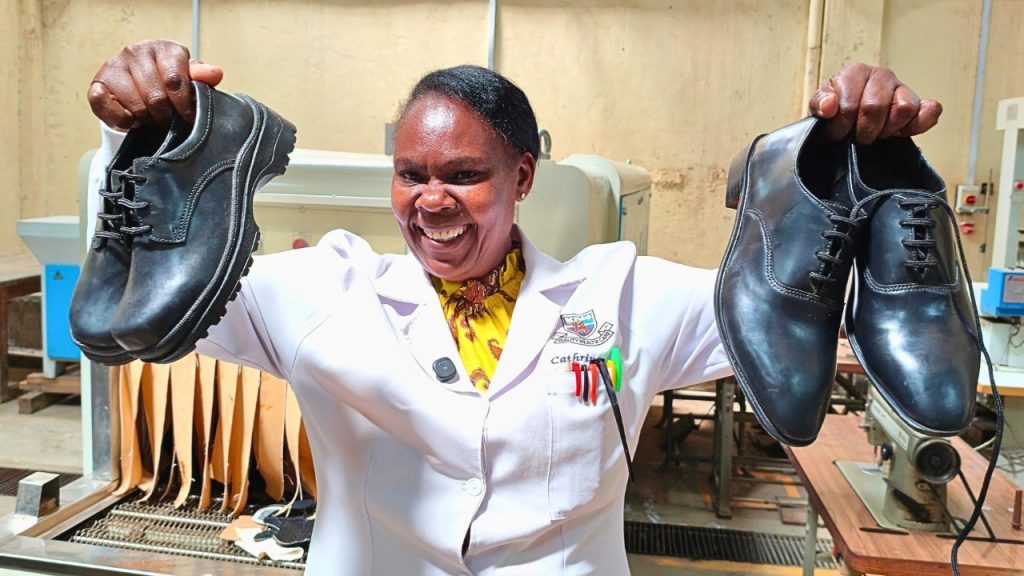
For now, the coat marks the institution where she built her career. Inside the KITI workshop, though, Catherine carries another title with equal confidence: student.
By Suleiman Mbatiah
From across the leather workshop, Catherine Kanyiri could easily be mistaken for an instructor.
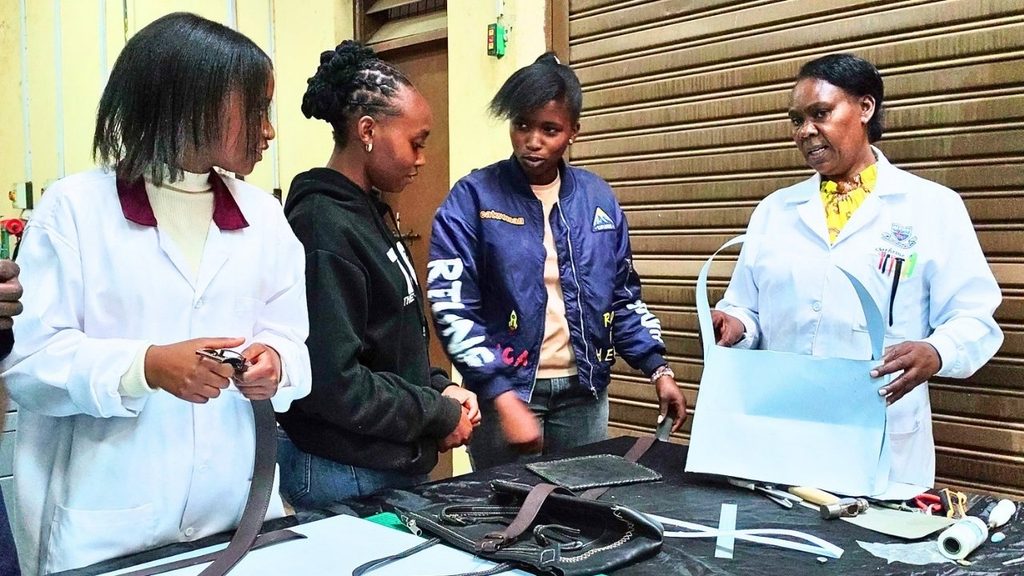
In a white laboratory coat with the Kenyatta National Hospital (KNH) logo, she moves easily among the workbenches at the Kenya Industrial Training Institute (KITI) in Nakuru. Around her are students young enough to be her grandchildren, studying pieces of leather and measuring patterns.
Catherine listens closely. When the demonstration ends, she joins the discussion, asking questions and comparing techniques with her classmates.
It soon becomes clear she is not there to supervise the lesson. She is a student, back in training with seven years left before retiring from KNH.
KITI is a government technical training institution in Nakuru. It was established in 1965 with support from the Japanese government and operates under the Ministry of Investments, Trade and Industry. The institute trains school leavers, industrial workers, and employees of small and medium-sized enterprises in practical industrial and entrepreneurship skills.
For Catherine, returning to class this late in her career is about preparing for life after public service, where retirement will not mean stopping work.
“The skills I’ve learnt here, they will help me very much. After retiring, I’m not going outside to stay. I’m going to work. Because these skills, I have to make use of them,” she says.
Her decision to build on her leather technology skills is the latest step in a journey that began in childhood in Meru County.
Long before she entered an industrial workshop or worked with patients at Kenya’s largest referral hospital, Catherine watched her father repair shoes at home. He taught his children how worn footwear could be restored using simple tools, thread and carefully placed holes.
By Class Five, she had already learned one of the basic techniques used in hand-stitching leather.
At first, those lessons seemed like practical knowledge for home. Their value became clearer years later when Catherine moved to Nairobi, found work at KNH and was assigned to the orthopedic technology department.
There, she saw technicians using familiar stitching methods to produce and repair specialized footwear and other leather components used in patient rehabilitation. The connection between what her father had taught her and the work being done in a major hospital changed how she saw the skill.
“Back in my primary school, my dad taught us how to repair shoes. So he taught us to repair shoes and he taught us how to make the stitching hole. So when I was in class five, I could make a stitching hole,” Catherine recalls.
Orthopedic leatherwork requires more than the ability to make an ordinary shoe. Technicians have to work carefully because the products they handle may be used by people with injuries, disabilities or conditions that affect mobility. Measurements, stitching and material choice can affect whether the final product is comfortable and suitable for the person using it.
As Catherine watched the technicians at work, she began to see that leatherwork could offer both formal employment and a source of independent income.
Her career, however, nearly took a different path. At one point, a supervisor encouraged her to train as a secretary, a job widely seen as stable office work. Catherine thought about what that qualification would mean after she left salaried employment and decided it was not the future she wanted.
She chose a practical trade instead, one that would allow her to keep producing, repairing and earning on her own.
“My boss wanted me to be a secretary, but I told him no. After retiring, secretary will take me nowhere,” she says.
Catherine later joined a rehabilitation center, where she trained in shoemaking. The course helped her turn the skills she had learned from her father, and her experience in the orthopedic department, into recognized professional training.
After several years, she was promoted to leather technician at KNH. The appointment placed her firmly on the path she had chosen despite pressure to pursue a more conventional office job.
Now, decades after first realizing that her childhood skill could become a profession, she has returned to formal training to deepen her knowledge of leather technology.
Her studies at KITI were made possible through an employee training program at KNH. Catherine says the hospital selected workers for further training, and her name was among those chosen. She joined KITI through the working relationship between the two government institutions.
In the workshop, her KNH coat reflects a long career, but it does not set her apart from the younger learners. Like them, she has to pay attention to measurements, understand how different materials behave and practice each new technique until she gets it right.
The training is also exposing her to methods she can take back to the hospital during her remaining years of service. Beyond improving her work at KNH, the course is helping her prepare for the small business or workshop she hopes to run after retirement.
“I came to KITI to advance because in Kenyatta there is a training sector, so I was selected to come and advance in leather technology,” she says.
Catherine believes technical training deserves more attention at a time when many young Kenyans struggle to find work after completing college and university courses.
Her view comes from experience. Leatherwork gave her a place in the hospital’s orthopedic services, supported her rise to leather technician and gave her skills she can use without depending entirely on formal employment.
A trained leatherworker can repair shoes and bags or make items such as belts, sandals, wallets and protective products. The work can be done in an established company, a public institution or a small independent workshop, depending on a person’s training, tools and access to customers.
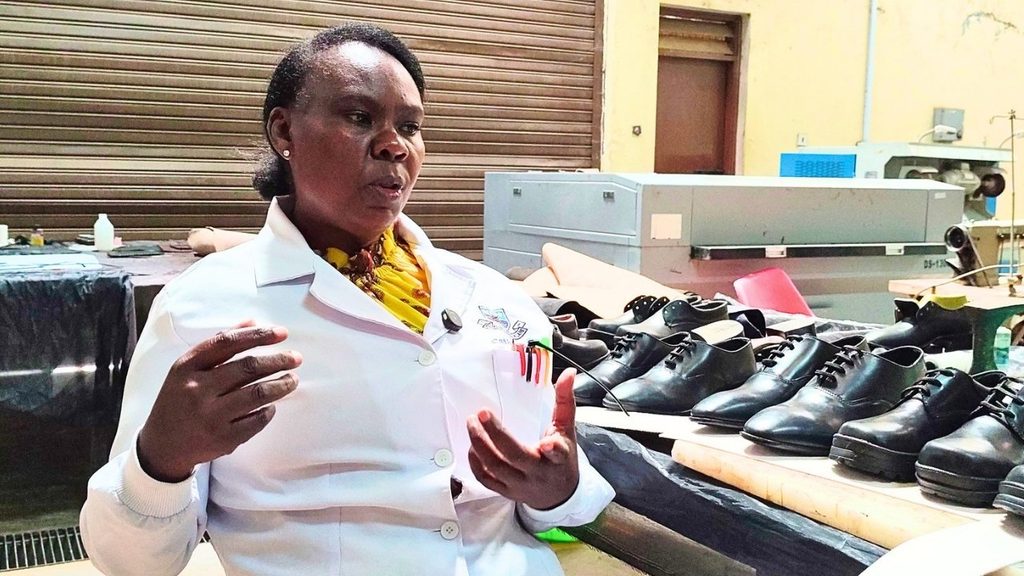
Catherine says the range of course lengths also gives learners a chance to choose training that fits their time and circumstances. According to her, students can take short courses lasting three or six months, as well as longer programs of one or two years.
She is especially concerned about young people who enroll in overcrowded courses because they are seen as prestigious, only to finish their studies and remain at home with certificates that have not led to work.
“I would request those young people who are outside, let them come. Gain skills in leather, not in any other course. Because leather, I’ve seen, it has a very big market,” she says.
Her support for leather technology comes from the livelihood it has given her and the opportunities she sees beyond hospital employment. She believes learners can begin earning from basic repair and production work even before they complete their training.
Catherine’s own journey also pushes back against the idea that education belongs mainly to the young. In her case, experience has not removed the need to keep learning. It has helped her see the gaps she still wants to fill.
She brings to class the practical knowledge she has built through years at KNH. The younger students bring their own ideas and familiarity with newer methods. At the workbench, age matters less than the task in front of them: learning how to turn a piece of leather into something durable, useful and valuable.
“There’s no need you go and do a course where it has, like, even 200 students, and then you go and stay with those certificates at home. Come do leather before even you come out from this place, you’re earning money,” she says.
As the practical session continues, Catherine bends over the workbench and follows the trainer’s instructions. Around her, tools press into leather, measurements are checked and unfinished pieces slowly begin to take shape.
In seven years, she expects to take off the KNH coat for the last time as an employee. But she does not plan to put away her tools.
For now, the coat marks the institution where she built her career. Inside the KITI workshop, though, Catherine carries another title with equal confidence: student.
About The Author