KITI Ramps Up Technical Skills For Kenya’s Industrial Drive
By Elijah Cherutich
As Kenya moves to attract multi-billion-shilling industrial investments, one of the country’s oldest industrial training institutions is stepping up efforts to train internationally certified welders, fabricators and technicians needed for large manufacturing, energy and infrastructure projects.
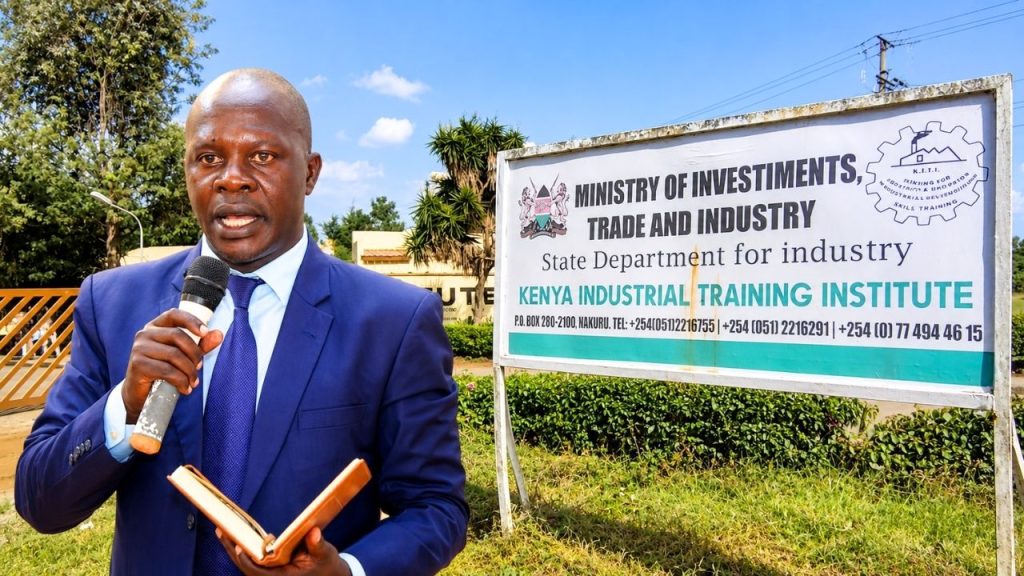
The Kenya Industrial Training Institute (KITI), established in 1965 and the only training institution directly managed by the State Department for Industry, says it is strengthening industry-led technical training to prepare graduates for jobs expected from major investments, including the proposed Dangote oil refinery in Lamu.
Originally set up with support from the Japanese government to help build Kenya’s industrial workforce, the Nakuru-based institution has grown into a national centre for practical industrial skills training. It offers programs in welding and fabrication, mechanical, electrical, automotive and building engineering, among other technical fields.
Speaking during a media briefing at the institute, KITI Director Eng. Wabwile Simuyu said the proposed refinery project would create significant opportunities for Kenyan welders, fabricators and other technical professionals able to work in highly specialized industrial environments.
He said KITI is aligning its training with industry needs by combining intensive practical instruction with certification through the Kenya Bureau of Standards (KEBS), so graduates can meet internationally recognized quality and safety standards required by major employers.
“KITI is going to plug into that space by ensuring that all these welders who go through our training have met the standards, are internationally recognized to work in such an environment and we do that through certification we have with KEBS,” Simuyu said.
He said industrial projects of this scale require workers whose skills can be independently verified, adding that certification gives employers confidence that graduates have the technical knowledge, practical ability and quality standards expected in modern manufacturing and engineering workplaces.
Simuyu said producing internationally competitive graduates also requires continued investment in trainers, noting that instructors must regularly undergo industrial attachment and exposure to emerging technologies to keep pace with changing manufacturing processes and workplace practices.
He said KITI has strengthened partnerships with industry to expose trainers to modern production environments, so they understand changing workplace demands, new equipment and evolving technologies before passing that practical knowledge on to trainees.
The director said the institute is regularly reviewing its curriculum and updating training methods to support the country’s industrialisation agenda by producing skilled artisans for large-scale manufacturing, construction, energy and infrastructure investments.
Beyond diploma and certificate programs, KITI also provides tailor-made industrial training and upskilling courses for companies and small and medium-sized enterprises, helping existing workers improve productivity and keep up with changing manufacturing technologies and industry requirements.
His remarks follow recent comments by Investments, Trade and Industry Cabinet Secretary Lee Kinyanjui, who said the proposed Sh2.2 trillion Dangote refinery in Lamu would require a new generation of highly specialized welders and other technical professionals during construction and eventual operations.
The proposed refinery, expected to process about 700,000 barrels of crude oil a day, would be the largest in East Africa and among the biggest private industrial investments planned in the region. Construction is expected to take about three years.
President William Ruto has said the refinery project could create about 60,000 jobs for young people during construction and operations, pointing to the need for Kenya to expand its pool of highly skilled technical workers to meet the expected demand.
Students at the institution said KITI’s practical training model has given them skills that match industry expectations and boosted their confidence to pursue careers in engineering and construction, sectors that have traditionally attracted fewer women.
Building and Construction student Ruth Wamboi said the program had broadened her understanding of opportunities in the construction industry while showing that women are equally capable of succeeding in technical careers through practical training and determination.
She urged the government to continue investing in technical and vocational education and to ensure training programs remain aligned with changing labour market needs to improve youth employability and strengthen Kenya’s industrial workforce.
“I was raised by boys and so I got used to such hard work early and developed a passion for this construction industry. I am happy that doing my attachment at this construction site has helped me put into practice what we have learned in class,” Wamboi said.
About The Author