Government Pushes Biotechnology To Strengthen Climate-Resilient Farming
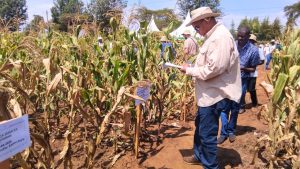
The forum, organized by the National Biosafety Authority (NBA), brought together national and county government officials, scientists, regulators, farmers, traders, students and members of the public to discuss biotechnology, genetically modified organisms (GMOs) and biosafety regulation in Kenya.

By Our Correspondent
The government is positioning modern biotechnology as a key tool in transforming Kenya’s agriculture sector, arguing that scientific innovations could help farmers overcome challenges ranging from climate change to pest outbreaks.
Speaking during the National Biosafety Awareness Forum in Mumias, Kakamega County, Principal Secretary for Agriculture Dr. Kipronoh Ronoh said Kenya’s agricultural sector continues to face mounting pressures from erratic weather patterns, declining productivity, pests and diseases, rising production costs, and increasing pressure on land and natural resources.
The forum, organized by the National Biosafety Authority (NBA), brought together national and county government officials, scientists, regulators, farmers, traders, students and members of the public to discuss biotechnology, genetically modified organisms (GMOs) and biosafety regulation in Kenya.
Dr. Ronoh said the government views modern biotechnology as one of several science-based tools that can contribute to agricultural transformation while helping the country strengthen food security and build resilience against emerging agricultural threats.
“This forum provides a valuable opportunity for the National and County Governments, scientists, regulators, farmers, traders, and the public to engage openly on matters of biotechnology, genetically modified organisms (GMOs), and biosafety regulation in Kenya,” he said.
The Principal Secretary noted that the government has approved a national public awareness programme that will see biosafety education activities rolled out across all 47 counties. The initiative is intended to improve public understanding of biotechnology and provide factual information on biosafety matters at the grassroots level.
The National Biosafety Authority, established under the Biosafety Act of 2009, is responsible for regulating activities involving genetically modified organisms in Kenya. The authority oversees the approval, transfer, handling and use of GMOs to ensure they do not pose risks to human health, animal health or the environment.
Kenya lifted its decade-long ban on the cultivation and importation of GMO crops in 2022, paving the way for the adoption of genetically modified crops such as Bt cotton and genetically modified maize varieties developed to resist pests and improve yields. Government officials have argued that biotechnology can complement conventional farming methods in addressing food insecurity and climate-related production challenges.
“I wish to assure the people of Mumias, Kakamega County, and Kenya at large that the Government treats issues of biosafety seriously,” Dr. Ronoh said, emphasizing that GMO products and related technologies are subjected to internationally recognized safety protocols, scientific evaluation and consultations with relevant government agencies before approvals are granted.
According to the ministry, the adoption of biotechnology in Kenya remains subject to strict regulatory oversight, with all GMO-related products and technologies undergoing scientific risk assessments, safety evaluations, inter-agency consultations and compliance reviews before approval for commercial use.
Dr. Ronoh said many biotechnology innovations under consideration are being developed by Kenyan scientists through institutions such as KALRO, Masinde Muliro University of Science and Technology and Kenyatta University. He noted that local research capacity continues to play an important role in developing solutions tailored to Kenya’s agricultural needs.
The Principal Secretary also described the Mumias forum as a milestone for public engagement, noting that it was the first major mass public awareness event undertaken by the National Biosafety Authority since its establishment. He said the initiative would help create direct channels for citizens to seek clarification from experts while enabling regulators to listen to public concerns and expectations.
He urged participants to rely on evidence-based information when discussing biotechnology and encouraged stakeholders to distinguish scientific facts from misinformation. Public awareness and participation, he said, remain critical components of good governance and informed decision-making.
The government further reaffirmed its commitment to supporting programmes that enhance agricultural productivity, improve food security and increase farmers’ incomes while ensuring innovation is guided by safety, accountability and public interest.
Dr. Ronoh said farmers remain at the center of the government’s agricultural agenda, stressing that any new technology must ultimately help producers increase yields, reduce losses and strengthen livelihoods. He also called for closer collaboration among national and county governments, researchers, regulators, private sector players and farming communities in advancing agricultural transformation.
Participants called for continued public engagement on biotechnology, saying open dialogue between scientists, regulators, farmers and communities will be essential as Kenya works to harness innovation, strengthen food security and maintain robust biosafety safeguards amid evolving agricultural challenges.
About The Author