Dr Kinnity Rejects New River Yala Inquiry, Demands Answers From State Officials
He argued that the central questions remain unanswered, including the identities of the victims, the findings of investigations conducted at the time and what senior government officials knew about the killings and disposal of the bodies.
By Our Correspondent
Former and current State officials should publicly account for what happened to victims whose bodies were recovered from River Yala instead of calling for another commission of inquiry, Dr Isaac Newton-Kinnity has said, arguing that a fresh probe would only delay accountability over one of Kenya’s most controversial human rights cases.
In a recorded statement, Kinnity criticised renewed calls for a public inquest, saying Kenyans have waited for years without answers despite advances in forensic science and previous police investigations into bodies recovered from River Yala between 2021 and 2022.
He argued that the central questions remain unanswered, including the identities of the victims, the findings of investigations conducted at the time and what senior government officials knew about the killings and disposal of the bodies.
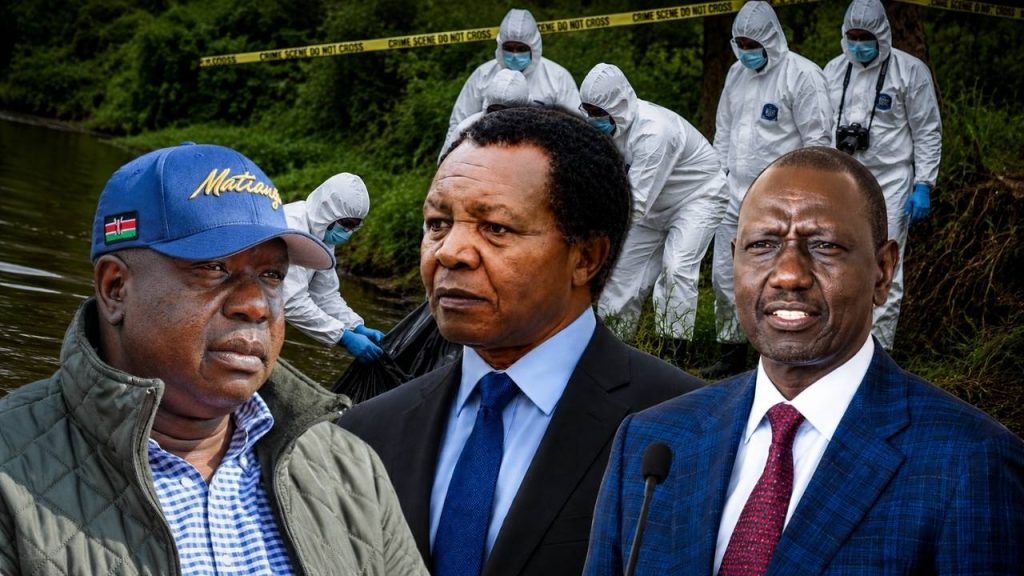
President William Ruto and former Interior Cabinet Secretary Fred Matiang’i recently engaged in a sharp political feud regarding the tragic discovery of dozens of bodies dumped in River Yala during the previous administration.
The clash escalated into a fiery exchange when President Ruto publicly challenged Dr. Matiang’i to account for the mysterious killings in River Yala before lecturing the current government on human rights and governance. In response, Matiang’i strongly denied any personal involvement, stated that the ghosts of the tragedy do not haunt him, and dared the state to establish a public inquest to uncover the truth.
“I would like to urge Uhuru Kenyatta, William Ruto, Fred Matiangi and Mr Kibicho to come out open and tell Kenyans what happened. They know what happened,” Kinnity said.
Dr Kinnity contended that identifying the victims should not have been an impossible task, arguing that fingerprint analysis, DNA testing and other forensic techniques available today were capable of establishing the identities of those whose bodies were recovered from the river.
He maintained that investigators from the Directorate of Criminal Investigations likely gathered information on the victims and submitted their findings to the government, alleging that the truth had subsequently been withheld from the public. He did not provide evidence for the claim.
He also questioned why the government had not sought international forensic assistance if local investigations faced limitations, suggesting that foreign experts with experience in identifying victims from skeletal remains could still help establish the identities of those buried in mass graves.
The allegations remain unproven, and no court has found former President Uhuru Kenyatta, President William Ruto, former Interior Cabinet Secretary Fred Matiang’i or former Interior Principal Secretary Karanja Kibicho personally responsible for the killings or disposal of bodies linked to the River Yala case.
Matiang’i has previously rejected suggestions that he opposed accountability, maintaining that investigations into the River Yala bodies were underway before he left office. He has publicly supported a judicial inquest and stated that he is prepared to testify under oath. Fred Matiang’i
In an interview reported by The Star, Matiang’i said an open inquest would provide the most transparent avenue for establishing responsibility, adding that he was willing to account publicly for decisions made during his tenure.
Separately, The Eastleigh Voice reported that Matiang’i said senior security officials had demanded explanations from the National Police Service and the Directorate of Criminal Investigations after reports emerged of bodies being retrieved from River Yala.
Kinnity nevertheless insisted that another inquiry would repeat a familiar pattern of commissions whose findings either remain unpublished or fail to produce accountability, arguing that Kenyans should instead receive direct answers from those who occupied senior security positions during the period in question.
“Don’t send this issue to Cold Cases Bank. We have had so many commissions of enquiries, very many public inquests in Kenya, very many of them, hundreds of them, whose findings were never released to the public,” he said.
The River Yala case drew international attention after dozens of bodies were recovered from the river and surrounding areas in Siaya County. Human rights organisations documented repeated recoveries over several months and raised concerns that some victims may have been subjected to enforced disappearances and extrajudicial killings.
Human Rights Watch reported that residents recovered bodies from River Yala almost daily between July 2021 and January 2022, while activists later documented more than 30 bodies in the area.
International Commission of Jurists Kenya said in February 2022 that two additional bodies were recovered in the presence of DCI detectives, bringing the number then taken to Yala mortuary to 23.
The case later expanded as additional recoveries were reported. The Guardian reported that at least 36 bodies were eventually found, with some showing signs consistent with torture, while families of missing persons travelled from Nairobi hoping to identify relatives.
President Ruto has previously linked the River Yala case to broader police reforms, saying his administration disbanded the Special Service Unit to curb arbitrary killings and restore public confidence in law enforcement.
Concluding his appeal, Kinnity maintained that Kenyans no longer needed another investigative process but clear explanations from those who served in leadership when the bodies were recovered.
“So please, either give answers to Kenyans of what happened, or leave this issue of public inquest. It will never help Kenyans. Anytime, now, or even in the future,” said the Former Secretary General, Kenya Civil Servants Union.
About The Author