KEBS Targets SMEs In New Standards Compliance Awareness Drive
Consumers can verify the authenticity of a Standardization Mark by using the KEBS app, checking the certified products database, sending the mark details by SMS to 20023 or calling the KEBS toll-free number 1545.
By Elijah Cherutich
The Kenya Bureau of Standards has urged small and medium manufacturers to certify their products, saying compliance with national standards is critical to consumer safety, business credibility and access to formal markets.
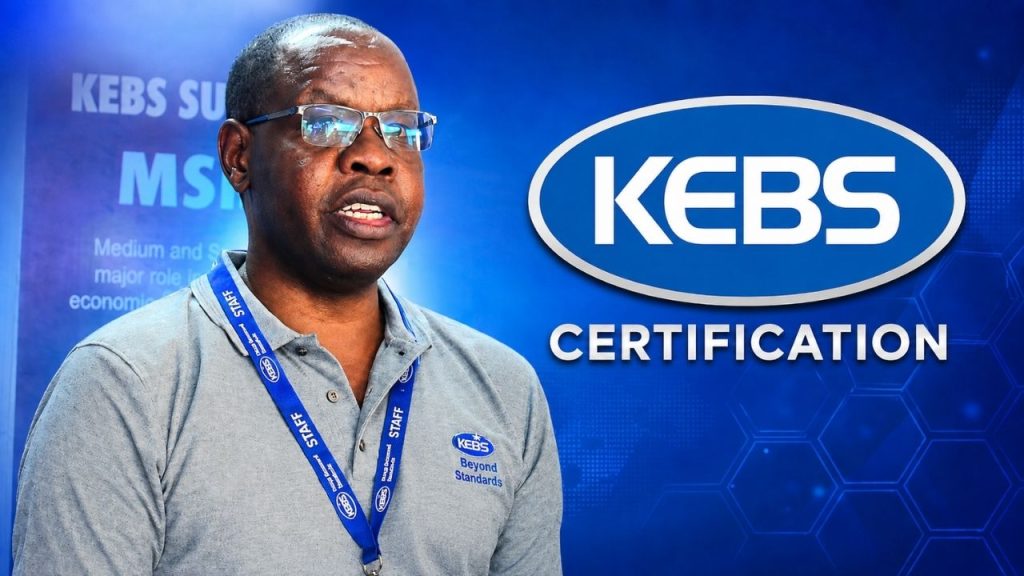
Speaking at the Nakuru ASK National Show, KEBS South Rift Regional Manager Eng. Josphat Bangi said many small enterprises have viable products but struggle with certification requirements, product testing and compliance procedures.
Bangi said KEBS was using the show to engage small and upcoming manufacturers, especially SMEs, and guide them on how to regularise their products under the agency’s certification system.
“We are interacting with small manufacturers and upcoming manufacturers, particularly SMEs. We have realised that they have challenges complying with standards and testing their products, and that is why we have taken the initiative to show them how they can certify their products,” Bangi said.
He said KEBS was encouraging uptake by allowing eligible small businesses to certify three products under a package in which two additional products are covered after the first product is certified.
The Standardization Mark is mandatory for locally manufactured products under Section 10 of the Standards Act, Cap 496. KEBS says the mark confirms that a product conforms to the relevant Kenya or approved standards and is issued after application, inspection, product testing, evaluation and certification.
Under the certification process, manufacturers apply through the KEBS Information Management System, after which quality assurance officers inspect the production facility, draw samples for laboratory analysis and assess whether the product and production process meet applicable standards.
Once approved, the manufacturer is issued with a permit number and is required to display the Standardization Mark and the permit number on the product label. KEBS says the permit is valid for two years, during which the agency conducts surveillance inspections at factories and in the market.
Bangi said certification protects SMEs from enforcement action, strengthens consumer confidence and enables businesses to compete better in supermarkets, public procurement, regional markets and other formal trade channels where proof of compliance is often required.
He warned that operating without certification exposes businesses to reputational damage, product seizures and possible legal consequences, especially where products are found to be unsafe, substandard or falsely labelled.
The regional manager also cautioned traders against fraudsters posing as KEBS officers and visiting business premises under the guise of inspection.
He said business owners should verify the identity of any person claiming to be a KEBS officer before allowing inspections or making any payment.
Bangi said the agency had received complaints about imposters targeting traders, adding that KEBS was working with enforcement agencies to root out the suspects and protect businesses from extortion.
KEBS has previously issued a public alert over impersonation of its inspectors, warning that fraudsters were targeting retail shops, supermarkets, hardware stores and other business premises while claiming to be affiliated with the agency. The notice advised traders to authenticate officers by asking for staff cards and national identity cards and sending the officer’s staff number to 20023 for confirmation.
Bangi said traders should not make cash payments to people claiming to be inspectors, adding that genuine KEBS services are handled through official channels.
He also urged consumers to check for the KEBS quality mark before buying locally manufactured products, especially food, beverages, cosmetics, building materials and household goods.
“Any consumer who is being deceived or consumes products without a KEBS Standardization Mark is doing so at their own risk because the quality of that product is not guaranteed, and neither is your safety,” he said.
Consumers can verify the authenticity of a Standardization Mark by using the KEBS app, checking the certified products database, sending the mark details by SMS to 20023 or calling the KEBS toll-free number 1545.
Bangi said certification should not be viewed only as a regulatory requirement, but also as a business growth tool that helps SMEs improve production systems, build trust with consumers and reduce the risk of unsafe products reaching the market.
The Nakuru ASK National Show has provided government agencies, manufacturers, farmers, innovators and consumers with a platform to exchange information on standards, quality assurance, market access and product safety.
About The Author