Usawa Ni Sawa: Government Rolls Out Sh46 Billion Development Projects Across Nakuru
The deputy president also defended the administration’s political agenda, linking its emphasis on equality to calls for President William Ruto to serve a second term.
By Suleiman Mbatiah
Nakuru County is benefiting from Sh46 billion in government-funded development projects covering affordable housing, modern markets, institutional hostels and staff housing for security agencies, as the government steps up investment in infrastructure across the devolved unit.
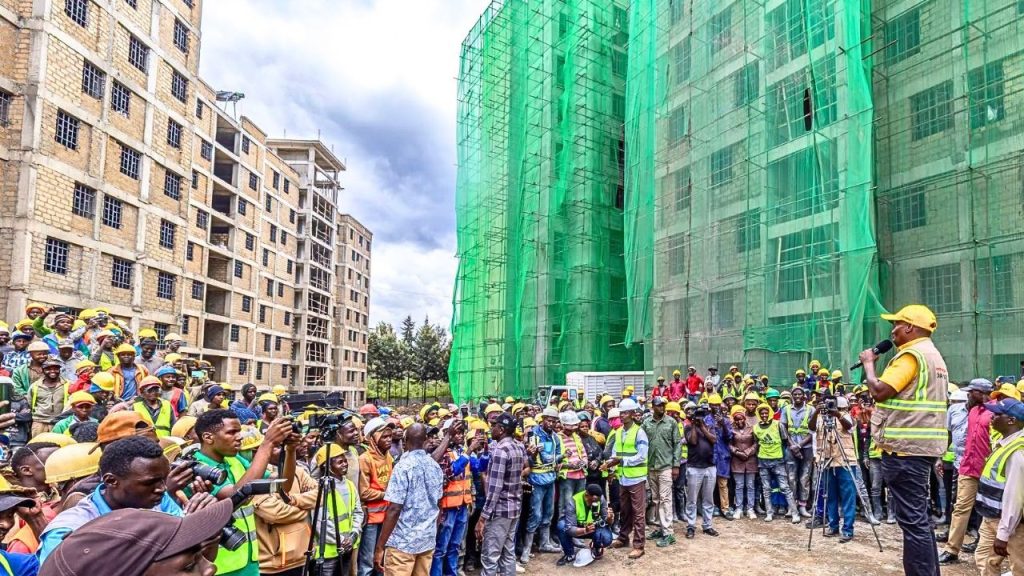
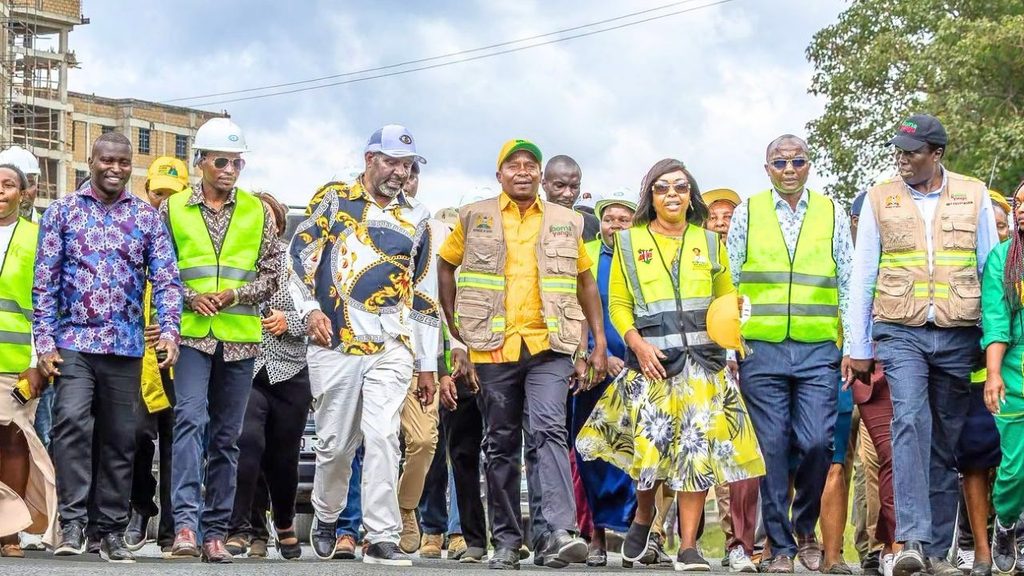
Deputy President Kithure Kindiki outlined the scale of the projects during a development tour of Bahati Constituency, where he inspected ongoing housing and market construction works.
The investments form part of the government’s wider development agenda, with additional projects covering road construction, electricity connections and the expansion of the Rironi-Mau Summit highway expected to improve infrastructure and connectivity across the county.
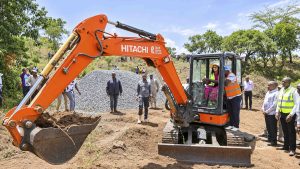
During his visit, Kindiki inspected the Bahati Affordable Housing Project, where 220 units under Phase One have been completed at a cost of Sh504 million, while construction of another 1,067 units under Phase Two is ongoing at a cost of Sh3 billion.
The deputy president also assessed progress at the Bahati Economic Stimulus Programme (ESP) Market, alongside plans for modern markets in Dundori and Kabatini, as the government continues to invest in trading infrastructure across the county.
Nakuru has 25 modern markets valued at Sh25 billion under development across its constituencies, with another four markets worth Sh715 million in the pipeline, according to figures presented by Kindiki.
The projects are intended to expand access to modern trading facilities and support economic activity across the county. However, the government did not provide a completion timeline for the markets during the visit.
Beyond housing and markets, Nakuru is also implementing an extensive road development program, with more than 870 kilometers of road projects valued at Sh38 billion underway across the county.
Residents are also expected to benefit from the planned expansion of the Rironi-Mau Summit highway, a major transport corridor serving the region.
The deputy president said the projects reflected the administration’s commitment to distributing development across the country rather than concentrating investment in selected regions.
He cited the Usawa ni Sawa slogan as a guiding principle in the government’s economic transformation agenda, arguing that development should benefit Kenyans regardless of their ethnic, religious or social backgrounds.
“We are building one nation that accommodates everyone and takes into account the interests of all people, regardless of their religion, ethnic community or age. We want to promote equality and build peace. There is no better place to speak about equality in Kenya than Nakuru,” DP indicated.
Kindiki described Nakuru as a cosmopolitan county whose population reflects Kenya’s ethnic diversity, saying residents should resist attempts to divide communities along tribal lines.
“Nakuru is a cosmopolitan town where people from different ethnic communities live together. The Kikuyu, Kalenjin, Kisii, Luhya communities, among others, all call this place home,” he reiterated.
His remarks came against the backdrop of growing political mobilization ahead of the next General Election, with the deputy president urging residents to prioritize national cohesion and development over ethnic affiliations.
He said the government’s development agenda was intended to promote fairness and ensure that public investments reached communities across the country.
In the energy sector, the government has allocated Sh3 billion for last-mile electricity connections targeting 25,000 homes in Nakuru County.
Njoro Constituency has received Sh370 million to facilitate electricity connections to an additional 3,300 homes, according to the deputy president.
The program is expected to expand access to electricity for households that remain outside the national power grid, although the government did not provide a detailed implementation schedule for the targeted connections.
Kindiki said the investments were part of a broader effort to address disparities in access to public infrastructure and economic opportunities.
“Many people do not understand the work we are doing to build an equitable Kenya. As we move forward, there should be no discrimination between the poor and the rich, one ethnic community and another, one religion and another, men and women, the young and the elderly. We are one community and one nation,” DP emphasized.
The deputy president also defended the administration’s political agenda, linking its emphasis on equality to calls for President William Ruto to serve a second term.
He said the government was pushing for equality among all ethnic communities, religions and genders to ensure Kenya accommodated everyone, adding that President Ruto should serve a second term because he stood for equality and fairness.
About The Author