Lawyer Faults Conflicting High Court Rulings On Retired Presidents’ Political Rights
The Presidential Retirement Benefits Act was enacted in 2003 and provides retired presidents with pension and other benefits. Section 4 also set out circumstances under which Parliament could resolve to withhold or reduce benefits, including where a retired president breached the political-party restriction in Section 6.
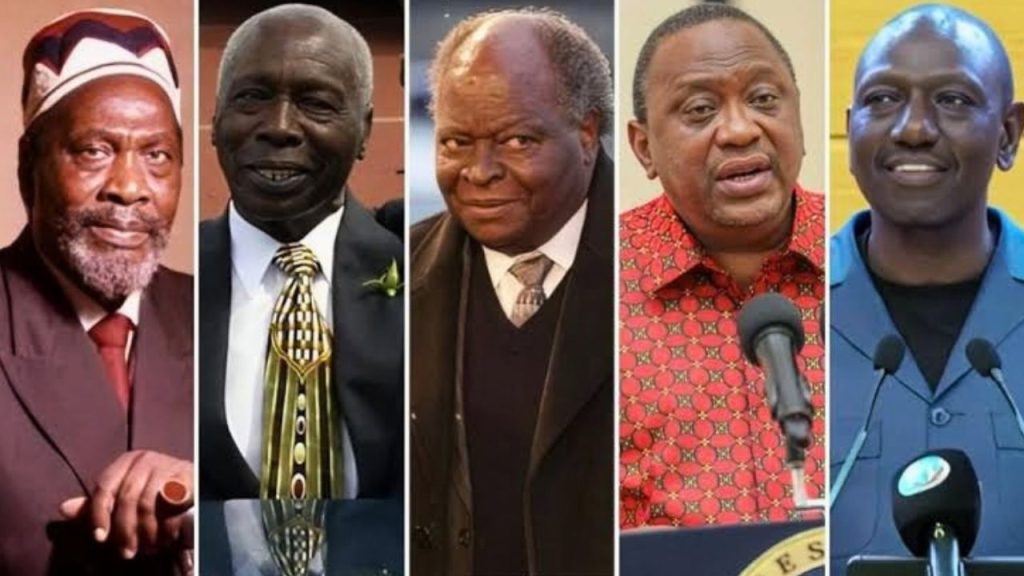
By Elijah Cherutich
Two conflicting High Court rulings on the political rights of retired presidents have raised fresh questions about the interpretation of Kenya’s Constitution and the Presidential Retirement Benefits Act, with legal practitioners warning that the divergent decisions could create uncertainty over the law governing former heads of state.
The latest ruling, delivered by Justice Bahati Mwamuye on Monday, September 21, declared unconstitutional the statutory restriction barring retired presidents from holding political party office beyond six months after leaving State House. The judge also struck down provisions allowing Parliament to withdraw or reduce retirement benefits in specified circumstances.
The decision came barely a week after Justice Lawrence Mugambi upheld Section 6 of the same Act, ruling that retired presidents cannot hold political party office after the six-month period, although they remain free to participate in political activities and belong to political parties.
The contrasting decisions have brought renewed attention to the constitutional position of former presidents, particularly former President Uhuru Kenyatta, whose continued involvement in political activities has become a point of contention between his allies and the administration of President William Ruto.
While addressing journalists in his office, Nakuru advocate Benhard Kipkoech Ngetich said the divergent rulings risk creating uncertainty over the applicable legal position and could set a problematic precedent for constitutional governance.
He said judges of equal status should not appear to reach conflicting conclusions on substantially similar constitutional questions without a clear mechanism for resolving the divergence.
Ngetich said Justice Mugambi’s ruling of September 14 and Justice Mwamuye’s judgment of September 21 presented Kenyans with sharply different interpretations of the relationship between the Presidential Retirement Benefits Act and constitutional political rights.
“The high court has not shown a good example on what Kenyans should take as their clear mind. Maybe the chief justice and the judges during their colloquium should have a broader engagement on how to compare their viewpoints during cases to avoid such scenario”, he said.
Justice Mugambi had found that Section 6 was a reasonable limitation on the political rights of retired presidents, taking into account their unique position and the influence they may continue to exercise after leaving office. He also considered the historical circumstances surrounding the enactment of the law in 2003, shortly after the end of former President Daniel arap Moi’s 24-year presidency.
The law itself provides that a retired president shall not hold office in a political party for more than six months after leaving the presidency. It also states that a retired president is expected to play a consultative and advisory role to the Government and the people of Kenya.
Justice Mwamuye took a different constitutional approach, holding that leaving the presidency ends the exercise of presidential authority but does not diminish the former president’s rights as a citizen. He found Section 6 inconsistent with Article 38, which protects political rights, including the right to form, join and participate in the activities of political parties.

Ngetich said the reasoning in Mwamuye’s judgment comes closer to the constitutional protection of political rights because Article 38 applies to citizens, while the statutory restriction specifically targets retired presidents.
He said that, in his view, the legislation was enacted in a political context in which there were concerns about the influence a former president could continue to wield after leaving office.
Ngetich said the law was initially developed to checkmate the second president, the late Daniel Toroitich Arap Moi, who had been in power for a long time and there was concern that he could wield much power outside the government.
The historical context has also featured in Justice Mugambi’s judgment. The court noted concerns at the time that a retired president could retain significant political influence through a political party or political allies after leaving State House.
The Presidential Retirement Benefits Act was enacted in 2003 and provides retired presidents with pension and other benefits. Section 4 also set out circumstances under which Parliament could resolve to withhold or reduce benefits, including where a retired president breached the political-party restriction in Section 6.
Justice Mwamuye subsequently declared sections 4(1), 4(2) and 4(3), as well as Section 6, unconstitutional, null and void. He also found that the restrictions on political party office could not be justified by the former status of a retired president.
Ngetich said the competing interpretations could have broader implications for Kenya’s political and constitutional order, particularly as the country moves towards the 2027 General Election.
He said the controversy had become more politically sensitive because of accusations by some government-aligned figures that Uhuru Kenyatta has remained involved in opposition politics after leaving office. Those accusations have been publicly disputed by Uhuru and his allies.
“The Challenge with such conflicting judgments is that the people of Kenya don’t get institutional memory of what should be followed in such legal issues, we expect the court to be clear in their decisions”, he said.
About The Author