Laikipia Sets Sights On Mental Health Overhaul
The meeting coincided with the 27th Annual Mental Health Nurses’ Scientific Conference, bringing together practitioners from all 47 counties and amplifying calls for sustained public investment, workforce support, and integrated mental health services.
By Fatuma Rashid
Laikipia County is moving to overhaul its mental health infrastructure, with plans to build specialised facilities and establish a drug cessation centre as officials link substance abuse to a sharp rise in psychiatric cases.
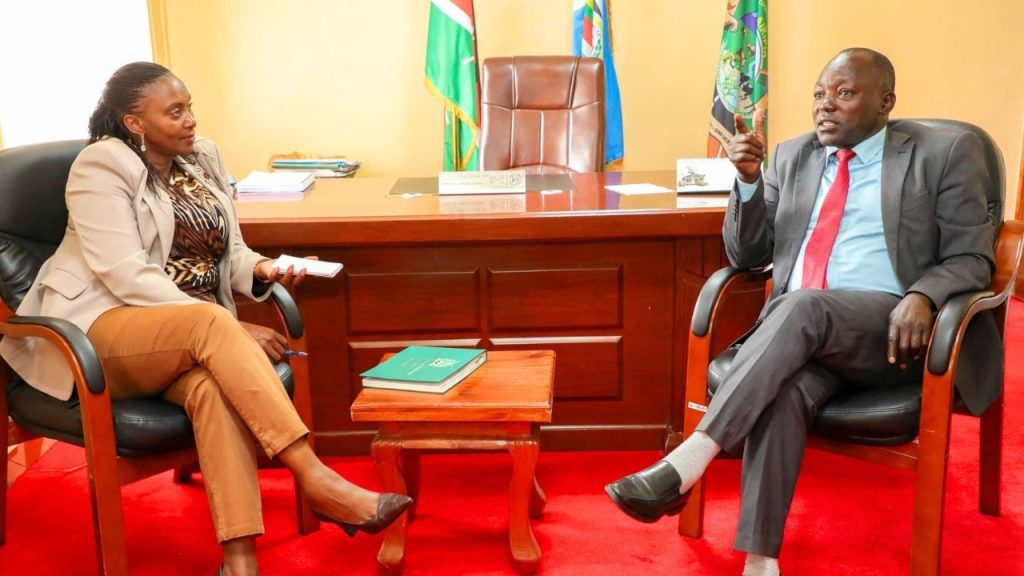
The planned reforms follow high-level talks in Nanyuki between Governor Joshua Irungu and Principal Secretary for Public Health and Professional Standards Mary Muthoni, who agreed on a coordinated response aligning national policy with county implementation.
The meeting coincided with the 27th Annual Mental Health Nurses’ Scientific Conference, bringing together practitioners from all 47 counties and amplifying calls for sustained public investment, workforce support, and integrated mental health services.
At the core of Laikipia’s strategy is the construction of a modern mental health facility at Nanyuki Teaching and Referral Hospital alongside a dedicated mental health ward at Nyahururu Referral Hospital.
Officials say the new facilities will expand access to specialised care, shorten travel distances for patients, and ease pressure on general wards that have increasingly absorbed mental health cases without adequate capacity or staffing.
A dedicated drug cessation centre is also planned, targeting substance abuse identified by both national and county leaders as a primary trigger behind the growing number of mental health cases reported in health facilities.
“Our engagement was focused, candid, and forward-looking, centred on strengthening collaboration between the national government and the county government to deliver better, more accessible healthcare for our people,” Irungu said.
The Laikipia facility will form part of a national rollout of ten cessation centres, reflecting a broader policy shift that treats drug abuse as a public health crisis requiring structured prevention, treatment, and rehabilitation systems.
National data presented at the conference underscores the scale of the challenge, with Muthoni noting that one in four Kenyans seeking care for other conditions are diagnosed with a mental health disorder.
To improve early detection and access, the government has integrated mental health screening and treatment into Universal Health Coverage, making services available free of charge at primary healthcare facilities nationwide.
Muthoni said the approach prioritises community-level care, reducing reliance on referral hospitals and ensuring services are accessible closer to where patients live, particularly in underserved and rural areas.
“The Government is stepping up efforts to strengthen mental health services nationwide, with a focus on integrating care at community level and expanding access to treatment and rehabilitation,” she said.
Beyond mental health, officials reviewed progress under the Community Health Programme and the Bridging and Expanding Essential Health Services Project, both seen as critical to strengthening primary healthcare delivery across Laikipia.
Irungu also flagged non-communicable diseases as an emerging concern, signalling a broader health agenda that addresses chronic illnesses alongside mental health in response to shifting disease patterns.
On staffing, the county plans to offer permanent employment to health workers and create structured opportunities for young professionals, aiming to stabilise a workforce facing sustained demand and limited resources.
“We are equally committed to investing in our people by offering permanent employment to our staff, creating opportunities for young professionals already in service and confronting pressing challenges such as drug and substance abuse head-on,” Irungu said.
About The Author