Inside Kihika’s Bid to Break Nakuru’s One-Term Governor Curse
Her development projects could provide a platform for that campaign, but the outcome will also depend on the credibility of competing candidates, the issues that dominate the campaign and the electorate’s assessment of the county government’s performance.

By Paul Kariuki
Nakuru Governor Susan Kihika could defy the county’s history of one-term governors as she prepares to defend her seat, with supporters pointing to her development projects and political experience as factors that could strengthen her re-election prospects.
Political observers and residents interviewed for this feature believe her performance in office, grassroots networks and the strength of her challengers will be central to determining whether she secures another term.
Since the advent of devolution in 2013, Nakuru has had two governors, Kinuthia Mbugua and Lee Kinyanjui, neither of whom secured a second term. Kihika, elected in 2022, now has an opportunity to break that pattern and become the county’s first governor to win re-election.
Her prospects, however, will depend on how voters assess her administration’s performance, the impact of its development projects and the ability of rival candidates to mount a credible challenge across the county’s diverse constituencies.
Former Nakuru County Assembly member Steve Kihara, who previously clashed with Kihika during her tenure as assembly speaker, says his assessment of the governor has changed over time.
“I used to criticize her but with time I’ve come to admire her leadership,” says Steve Kihara, a former MCA, who at one point had a heated argument with Kihika in the county assembly when she was the Nakuru County Assembly Speaker between 2013-2017.
Kihara, who is seeking a return to the county assembly in the next election, said Kihika played an important role during the early years of devolution, when county assemblies were establishing procedures and systems to guide their operations.
He noted that Kihika had to develop standing orders from scratch when she became speaker, providing a framework that subsequent assemblies continued to use.
“She’s brilliant with a legal mind,” he notes.
Kihika’s experience in the county assembly, followed by her election as Nakuru senator and later governor, has given her a political profile that supporters consider an advantage as she prepares to defend her seat.
However, her leadership has also attracted criticism, with opponents questioning some of her decisions and the performance of the county’s public services.
One of the most vocal controversies arose during her extended maternity absence, when critics questioned her decision to seek medical services abroad. Nakuru Senator Tabitha Karanja Keroche was among those who publicly criticized the governor, arguing that local health facilities had deteriorated.
Kihara, however, defended Kihika’s decision, saying individuals should be free to choose where they receive medical care if their insurance arrangements allow them to access treatment elsewhere.
“I’d have done what she did. If I’ve a health cover that allows me to access the best medical care in the best hospital anywhere, I’d go there, not because the facilities in my county or country are worse, but because its an individual’s choice to choose where to go to,” he affirms.
The controversy highlights the competing perceptions surrounding Kihika’s leadership, with supporters defending her personal choices and record while critics continue to scrutinize her administration’s decisions and delivery of services.
Despite the criticism, Kihara believes the governor remains a formidable contender based on the field of candidates who have expressed interest in succeeding her.
“Seeing those who have declared their interest to unseat her, I’d say she’s the strongest contender so far,” he says.
Nakuru’s political and demographic diversity is expected to play a significant role in the gubernatorial contest. The county has 11 constituencies, each with distinct political dynamics, making broad-based support and established grassroots networks important factors in any candidate’s campaign.
Kihara noted that both Kihika and her predecessor, Kinyanjui, had established political networks in areas where Kikuyu voters are not the majority, including Njoro, Rongai, Kuresoi North and Kuresoi South.
Those networks could prove important in a competitive election, particularly if candidates seek to build support beyond their traditional strongholds.
Senator Karanja Keroche is also mentioned in the political debate surrounding the governor’s prospects, with the draft identifying Gilgil, Naivasha and parts of Nakuru East as areas where she has followers. The extent to which that support could translate into a gubernatorial challenge remains uncertain.
The contest is therefore likely to revolve around more than individual popularity, with candidates needing to demonstrate their ability to appeal to voters across the county’s different constituencies.
For Kihika, one of the central arguments in favor of another term is her administration’s development agenda, particularly projects intended to improve health services and address longstanding local needs.
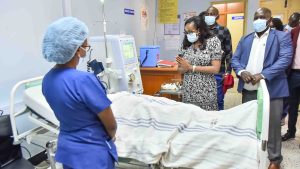
Antony Cheruiyot, a resident of Salgaa, cited the construction of a trauma treatment center in the area as an example of a project that could have a direct impact on residents and victims of road accidents.
Salgaa, along the Eldoret-Nakuru highway, is known for serious road accidents, making emergency and trauma care a major concern for the surrounding community.
“This is timely if you’ve seen what trauma such victims go through,” he says.
The proposed or ongoing trauma care facility, as described in the draft, is among the initiatives supporters believe could form part of Kihika’s legacy. Its ultimate impact will depend on its completion, operational readiness, staffing and ability to provide timely treatment to accident victims.
Other projects cited in support of the governor include the development of Level 5 hospitals across the county, a morgue and the revival of projects that stalled under previous administrations.
Such initiatives could become important campaign issues as voters evaluate whether the county government has made meaningful progress in improving public services and addressing local development priorities.
For residents, the significance of these projects will ultimately be measured by whether they improve access to health care, reduce the burden on families and deliver tangible benefits to communities.
Cheruiyot believes Kihika’s political career and record of breaking barriers could also strengthen her case for re-election.
“I’ve watched her doing many firsts. She attempted to run for a parliamentary seat for Bahati constituency and would have been the first female legislator from that constituency. She went on to become the first female assembly speaker, the first Nakuru senator and currently the first county female governor. If this trend of being a first is sustained, she’ll be the first Nakuru governor to be reelected and breaking the cycle of one term county chiefs,” he says.
Kihika was among seven women elected governors in the 2022 General Election, marking a historic milestone in Kenya’s devolved leadership. Her political journey has included serving as speaker of the Nakuru County Assembly and senator before winning the governorship.
Her supporters view that progression as evidence of political resilience and experience, while her critics are likely to focus on the performance of her administration and whether its promises have translated into measurable improvements in residents’ lives.
The governor is also the daughter of the late politician Kihika Kimani, who represented different constituencies in Parliament and was a prominent figure in Kenya’s political history. His legacy forms part of the political background surrounding her career, although her prospects in the next election will depend largely on her own record and the support she can maintain among voters.
With the next election approaching, Kihika faces the task of consolidating her political networks, defending her administration’s record and persuading voters that she deserves another term.
Her development projects could provide a platform for that campaign, but the outcome will also depend on the credibility of competing candidates, the issues that dominate the campaign and the electorate’s assessment of the county government’s performance.
If she wins re-election, political analysts say, Kihika would make history as Nakuru’s first governor to serve a second term, ending a pattern established by her predecessors. Whether she can achieve that milestone remains an open question, with the coming campaign set to test both her political strength and the public’s verdict on her leadership.
About The Author