Ruto Calls For Fresh Audit Of 2010 Constitutional Gains
Ruto said the Constitution was more than the promulgation of a new supreme law. He said it marked the start of a new constitutional order anchored in the sovereignty of the people.
By Staff Writer
President William Ruto has called for a fresh national reckoning on the implementation of the 2010 Constitution, saying Kenyans must assess whether State institutions have exercised their powers faithfully and delivered the rights guaranteed under the supreme law.
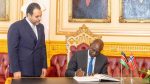
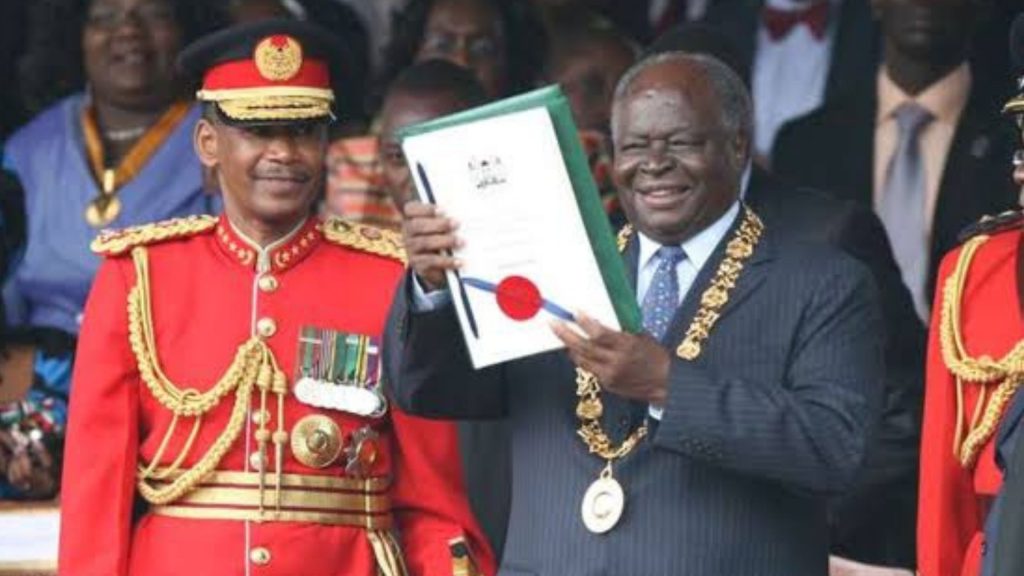
Speaking during the commemoration of Katiba Day at the Kenyatta International Convention Centre in Nairobi, Ruto said the 16th anniversary of the Constitution should be a chance for the country to examine how far it has come in fulfilling the promises in the document.
Ruto said the Constitution was more than the promulgation of a new supreme law. He said it marked the start of a new constitutional order anchored in the sovereignty of the people.
He said generations of Kenyans had struggled for a system in which government authority would be limited by law, public office would be held in trust, and State institutions would remain accountable to citizens.
“Katiba Day, sixteen years later, must be more than an annual anniversary. It must be a day of national accounting,” Ruto said.
The President said that accountability should apply across all arms and levels of government, including the Executive, Parliament and the Judiciary, as well as national and county governments, constitutional commissions and independent offices.
He said the Constitution has two equally important functions: restraining power and directing it for the benefit of citizens.
According to Ruto, constitutional checks and balances are meant to prevent abuse of authority, protect fundamental freedoms and provide remedies when power is misused.
At the same time, he said the Constitution places an obligation on the State to govern, protect, provide services and progressively realise the social and economic rights of citizens.
“Our responsibility is to uphold both obligations: power must be managed and rights must be assured,” Ruto said.
Ruto said Article 43 should be central to any assessment of how the Constitution has been implemented because it guarantees rights to healthcare, adequate housing and sanitation, food, clean and safe water, social security and education.
He said these rights should not be treated as ornamental provisions, but as fundamental entitlements guaranteed to Kenyans under the Constitution.
The President said the requirement for progressive realisation of these rights did not mean governments could delay fulfilling them indefinitely because resources are limited.
Instead, he said, governments must take reasonable, deliberate, concrete and measurable steps to ensure citizens can enjoy the rights guaranteed by the Constitution.
Ruto said constitutional implementation should be visible in the daily lives of Kenyans, including whether mothers can access healthcare, emergency patients receive treatment, families have clean water and children can attend school.
“The ultimate test of constitutional implementation is not how often we quote the Constitution or invoke constitutionalism. It is how closely the daily experience of the citizen reflects the promise of the Constitution,” he said.
The President linked his administration’s development agenda to the constitutional duty to deliver social and economic rights, saying proposals on universal healthcare, affordable housing, food security, education and social protection had been placed at the centre of the national transformation programme.
He said the Bottom-Up Economic Transformation Agenda was designed from the outset as a tool for implementing the Constitution.
Ruto cited the registration of more than 32.4 million Kenyans with the Social Health Authority, with more than eight million having been treated. He also pointed to the deployment of more than 100,000 Community Health Promoters and the strengthening of emergency care through the 922 Lifeline.
He further cited more than 274,000 affordable houses under construction, the creation of more than 1.1 million jobs through the housing programme, the recruitment of more than 100,000 teachers and the construction of 23,000 classrooms.
The President said agricultural reforms were increasing food production, reducing input costs and improving farmers’ incomes, while also strengthening service delivery through county governments.
Ruto, however, acknowledged that the work of implementing the Constitution was not complete and said major steps still remained.
He said the progress made should nevertheless show that constitutional obligations were increasingly being translated into practical benefits for Kenyans.
The President said the same constitutional principles should guide the national conversation on Kenya Beyond Vision 2030, arguing that the country already has a constitutional destination defined by democracy, prosperity, equity, inclusion, human dignity and social justice.
He said the challenge was to turn that destination into a coherent national development charter that would shape how future economic growth delivers constitutional rights, unlocks the potential of counties and expands opportunities through innovation, technology and enterprise.
Ruto said Kenya’s development beyond 2030 must also balance economic progress with environmental stewardship and protect the interests of future generations.
“Kenya Beyond Vision 2030 must, therefore, be more than a new economic blueprint or a catalogue of projects,” he said.
The President said the success of the country’s next development phase should not be measured only by the size of the economy, the height of buildings or the reach of infrastructure.
Instead, he said, it should be judged by the dignity, opportunity, security and quality of life enjoyed by every Kenyan.
He also linked constitutional accountability to the electoral mandate, saying citizens elect governments after weighing competing political visions and manifestos.
Ruto said an electoral mandate carries democratic legitimacy, but also a responsibility for an elected government to keep its word and deliver on its programme.
“The ballot gives direction. The Constitution establishes the boundaries. Public institutions ensure that both are respected,” he said.
He said the country must continue to grapple with questions about the constitutional space available to elected governments to implement their programmes, particularly when government policies are challenged in court.
At the same time, Ruto reaffirmed that judicial independence was non-negotiable, saying courts must remain free to interpret the Constitution, protect rights and invalidate unlawful government action.
He said government must obey court decisions where it acts unlawfully, while lawful policy choices that fall within the constitutional authority of elected institutions should also be respected.
Ruto said accountability ultimately goes beyond institutional procedures, reports and the defence of institutional territory.
He said Kenya must judge constitutional implementation by whether public institutions protect the sovereignty of the people, uphold human dignity, safeguard public resources and make constitutional rights accessible to more citizens.
“Ultimately, we must account for outcomes,” Ruto said.
Sixteen years after the promulgation of the Constitution, Ruto said the country’s responsibility is to fulfil its transformative promise and build a democratic, prosperous Republic.
He said the Constitution belongs to all Kenyans and that its authority, rights and responsibilities bind citizens and institutions alike.
The President framed the anniversary as a call for renewed responsibility in implementing the supreme law and making sure its promises lead to tangible improvements in the lives of Kenyans.
About The Author