Nakuru PGH Emerges As A Model For Cleanliness, Waste Management
During the tour, the visiting officers observed how cleaning equipment, consumables, linen systems and staff supervision are coordinated to maintain consistent hospital standards across departments.
By Staff Writer
The Nakuru County Referral and Teaching Hospital (NCRTH) has strengthened its position as a model public health facility after hosting another benchmarking visit, with its modern medical waste management technology emerging as one of the key attractions.
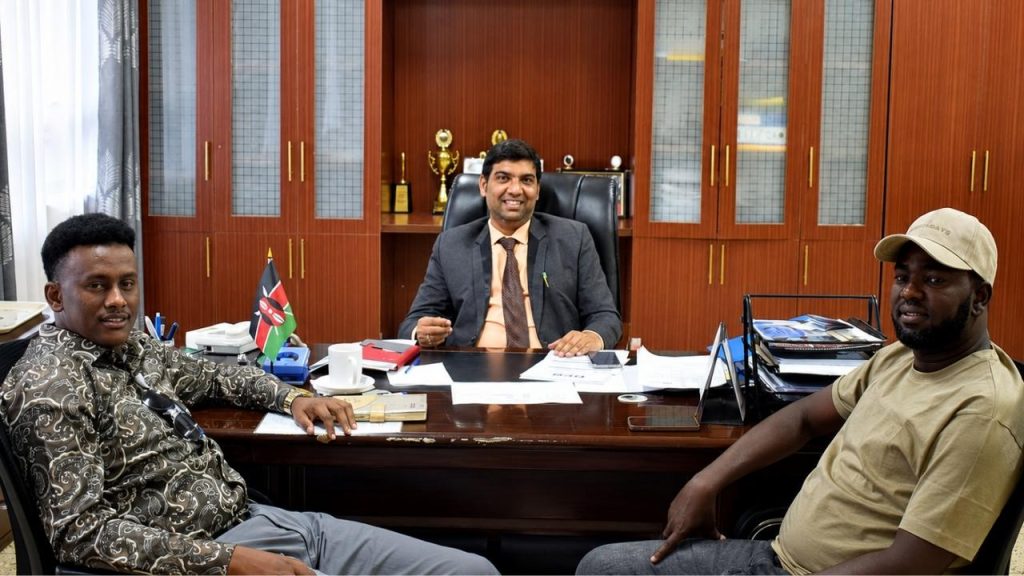
The regional referral hospital today received two officers from Garissa County Teaching and Referral Hospital for a learning tour on cleanliness, waste management, infection prevention, facility maintenance and environmental management systems.
The Garissa team, comprising Abdi Mohamed Ibrahim and Minaj Ahmed Abdi, was received by the hospital’s Administration Department for practical exposure to daily operations that support safe and patient-friendly care.
The visit focused on housekeeping standards, infection prevention and control, laundry and linen services, waste handling, compound maintenance and supervision systems for outsourced cleaning personnel.
At the centre of the learning tour was NCRTH’s medical waste management setup, which uses microwave treatment technology and an industrial shredder to process infectious biomedical waste without relying on traditional open burning.
The system has helped position the hospital as a regional hub for safer waste handling, serving not only the referral facility but also surrounding public and private health facilities.
Hospital officials said the technology was among the practical innovations drawing interest from other institutions seeking cleaner, safer and more environmentally responsible ways of managing hazardous medical waste.
Unlike conventional fuel-based incinerators that release smoke and other pollutants, the microwave treatment and shredding system uses a sealed, non-combustion process to disinfect and reduce the volume of infectious waste.
The process starts with the loading of biohazard waste into a sealed intake chamber before the material is shredded into smaller fragments, allowing heat and steam to penetrate the waste more effectively.
The shredded material is then exposed to high-temperature steam and microwave energy, which neutralises pathogens, including bacteria and viruses, before the treated residue is discharged for safe disposal.
The technology also helps destroy sharps such as needles and scalpels, reducing risks to health workers, waste handlers and members of the public who may otherwise be exposed to untreated biomedical waste.
Hospital Director Santosh Devaraj said the benchmarking visit reflected the growing value of peer learning among public health institutions seeking to improve safety, cleanliness and service quality.
“When hospitals learn from one another, patients benefit through cleaner spaces, reduced infection risks, better service coordination and improved confidence in public healthcare,” said Santosh.
NCRTH, formerly Nakuru PGH, has in recent months attracted growing interest from county and national health teams seeking to strengthen operational systems beyond clinical care.
Recent learning engagements at the hospital have covered paediatric oncology mentorship, facility quality improvement, referral coordination, infection prevention and administrative systems that support patient care.
Hospital officials said environmental management remains central to patient safety because poor hygiene, improper waste handling and weak maintenance can increase risks of hospital-acquired infections.
During the tour, the visiting officers observed how cleaning equipment, consumables, linen systems, waste treatment procedures and staff supervision are coordinated to maintain consistent standards across departments.
The exchange also highlighted the importance of continuous quality improvement, where hospitals regularly assess gaps, strengthen accountability and update work routines to protect patients and staff.
The hospital’s waste management model has also drawn attention because it links public health with environmental protection by reducing harmful emissions associated with older waste disposal methods.
Officials said the treated waste, once disinfected and rendered non-infectious, can be handled more safely for final disposal under approved waste management procedures.
Santosh said the engagement reflects Nakuru County’s broader commitment to sharing knowledge, supporting inter-county collaboration and building resilient, clean and quality healthcare facilities for all.
The Garissa visit adds to a growing list of benchmarking engagements at the hospital, reinforcing NCRTH’s role as a reference point for practical hospital management systems in the public health sector.
About The Author