Ruto Calls For Reform Of “Outdated UN Governance Structure”
The President linked his appeal to rising instability across several regions, warning that intensifying rivalries, shrinking development assistance, and weakening adherence to international law are undermining efforts to prevent conflict and sustain peace.
By Staff Writer
President William Ruto renewed calls for reform of the United Nations Security Council, arguing that Africa’s continued exclusion from permanent membership weakens the credibility of global peace efforts amid escalating conflicts and growing pressure on international institutions.
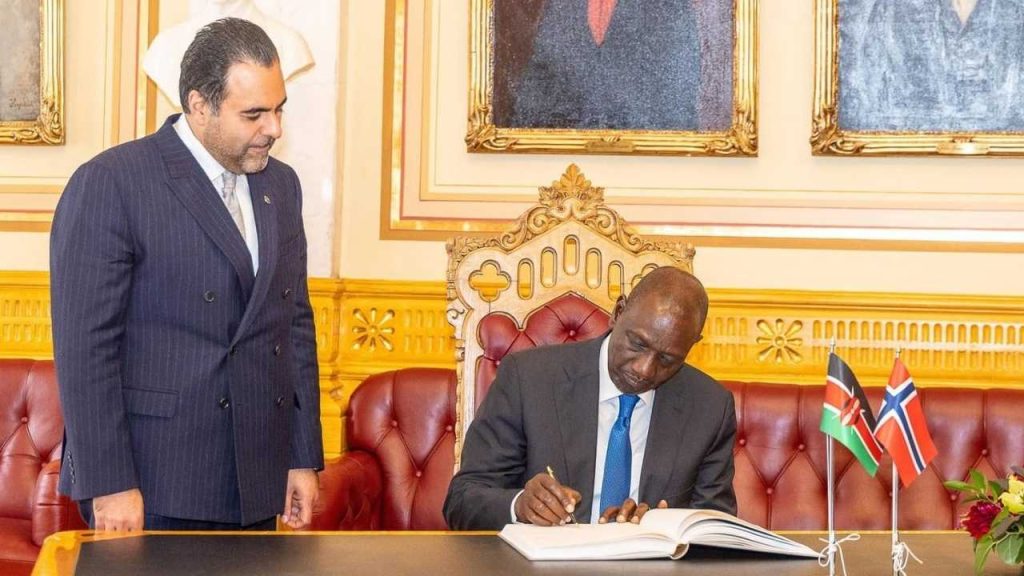
Addressing the Oslo Forum in Norway, Ruto said the current system no longer reflects modern geopolitical realities and requires urgent restructuring to improve representation, strengthen legitimacy, and enhance the effectiveness of multilateral responses to crises.
The President linked his appeal to rising instability across several regions, warning that intensifying rivalries, shrinking development assistance, and weakening adherence to international law are undermining efforts to prevent conflict and sustain peace.
“The theme before us, ‘The Cost of War, the Price of Peace,’ could not be more urgent,” Ruto told delegates, framing the discussion around mounting global insecurity and the increasing burden borne by vulnerable populations.
He pointed to ongoing conflicts in Eastern Europe, the Middle East, the Horn of Africa, the Sahel, and the Great Lakes region, saying their effects extend beyond national borders and threaten economic and humanitarian stability.
According to the United Nations, Africa comprises 54 member states, representing more than a quarter of the organisation’s membership, yet the continent has no permanent representative on the Security Council despite recurring deliberations on African crises.
Ruto said African nations continue confronting overlapping challenges including climate pressures, governance weaknesses, geopolitical competition, and transnational threats, factors that have complicated efforts to achieve sustainable development and long-term security across several regions.
He highlighted the conflicts in Sudan, Somalia, and the Democratic Republic of the Congo, noting that persistent violence, displacement, food insecurity, and attacks on civilians continue to inflict severe human suffering and disrupt livelihoods.
“A peace architecture that excludes the very regions where peace is most urgently needed cannot effectively deliver peace,” Ruto said, arguing that institutional reform has become essential for both fairness and practical global governance.
The Security Council currently comprises five permanent members with veto powers and ten non-permanent members elected for two-year terms, a structure established in 1945 and frequently criticised as outdated by reform advocates.
Ruto maintained that Africa should participate directly in shaping international decisions rather than remaining primarily the subject of discussions, stressing that meaningful representation would strengthen confidence in global institutions and improve policy outcomes.
He also called for stronger cooperation between Africa and Europe, saying shared interests in security, trade, technology, climate action, and migration create opportunities for deeper partnerships aimed at preventing conflict and promoting prosperity.
Kenya, he said, remains committed to supporting mediation efforts, peace operations, and stabilisation initiatives across the Horn of Africa and the Great Lakes region through collaboration with regional and international partners.
“The price of peace is ours to pay. And it is ours to pay together,” Ruto said, urging governments and international organisations to invest consistently in diplomacy, accountable governance, and inclusive development.
About The Author