Ruto Backs Overhaul Of Higher Education Funding
The President said the broader objective was to make access to higher education depend on students’ ability and ambition rather than their parents’ financial circumstances.
By Suleiman Mbatiah
President William Ruto has backed an overhaul of Kenya’s higher education financing system that would provide government funding to every student admitted to a university, technical college or Kenya Medical Training College, moving away from the current need-based model.
The proposed Tertiary Education, Placement and Funding Bill, 2026, seeks to establish a framework in which funding follows the student, rather than being determined primarily by the financial circumstances of the student’s family.
Ruto said the proposed system would ensure that students admitted to tertiary institutions receive full funding, arguing that access to higher education should not depend on parents’ ability to pay.
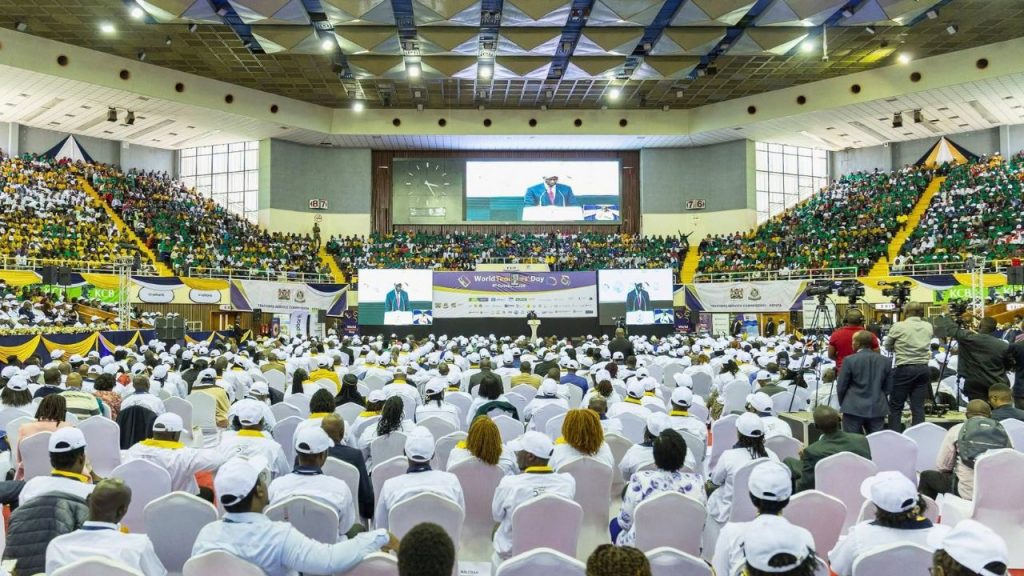
“A child’s place in higher education should depend on their ability and ambition, not on the income of their parents,” Ruto said during World Teachers’ Day celebrations at Kasarani Gymnasium in Nairobi earlier today.
The proposal would replace the Student-Centered Funding Model introduced in 2023, under which government support is determined through an assessment of a student’s financial need and provided through a combination of scholarships and loans, with households expected to meet the remaining contribution.
Under the current system, the Universities Fund provides scholarships to eligible students based on assessed financial need, while the Higher Education Loans Board provides loans to cover part of the remaining cost.
This means students in the same institution and course can receive different levels of government support depending on their assessed financial circumstances.
The proposed framework would instead seek to guarantee funding for every eligible student, regardless of household income.
Education Cabinet Secretary Julius Ogamba said the government was changing the system after finding that the existing model had not reached all qualified students.
“The funding model that the government has adopted is basically out to ensure no qualified university student is locked out of their studies because they cannot afford it,” Ogamba told senators in July.
Ogamba said the previous system had reached only about 40 percent of university students, against an intended 80 percent, prompting the government to seek a new framework.
For students, the proposed model would mean that access to government financing would no longer depend on securing a partial scholarship based on household income.
The immediate effect could be particularly significant for students from families that struggle to raise tuition balances under the existing arrangement. Instead of a student’s family being required to meet part of the cost while government support covers the remainder, the proposed framework would seek to ensure that every qualified student has a financing pathway.
However, full funding should not necessarily be interpreted as free higher education.
The final structure of the financing, including the proportion provided as loans, scholarships or other forms of support, will depend on the legislation before Parliament. The Bill is still subject to debate and possible amendment.
For parents, the proposed model could reduce the immediate pressure to raise tuition contributions while their children are studying. Under the current system, families may have to meet the portion of costs remaining after scholarships and loans have been applied.
The proposed system would shift more of that immediate financing burden to the government and the student funding framework. Where support is provided as a loan, however, the financial obligation would ultimately remain with the student rather than disappearing altogether.
The proposed changes also seek to separate access to higher education from a family’s ability to finance particular courses.
Ogamba has argued that under the previous approach, some families considered unable to finance expensive professional courses could influence the courses their children pursued. The proposed system is intended to direct funding toward the student and the course rather than the parent’s financial capacity.
The overhaul is also being presented as a response to the financial difficulties facing public universities.
Ruto said universities had been expected to receive government funding equivalent to 80 percent of teaching costs but had received about 40 percent, contributing to severe financial problems that left 23 of 40 public universities technically insolvent.
The government subsequently introduced the Student-Centered Funding Model and increased university funding from Sh44 billion in 2022 to Sh82 billion in the last financial year, according to Ruto.
“More teachers require more classrooms. New classrooms require well-prepared teachers. New pathways require laboratories and specialised skills. And every learner who succeeds in school deserves a clear and affordable path into higher education,” he said.
The proposed Bill is now before Parliament. Until it is enacted, students joining universities and other tertiary institutions continue to be financed under the existing framework.
Ogamba has said the government intends to manage the transition so that students already in higher education and new entrants can move into the new system once the legislation takes effect.
The policy therefore represents a shift from need-based government support to universal access to tertiary financing.
For students, the proposed change could mean greater certainty that financial difficulties will not prevent them from pursuing a qualified course. For parents, it could reduce immediate tuition obligations, although the final financing structure will determine whether costs are ultimately met through grants, scholarships, loans or a combination of these mechanisms.
The President said the broader objective was to make access to higher education depend on students’ ability and ambition rather than their parents’ financial circumstances.
About The Author