Mining Bill To Transform Resource-Rich Counties
Without clear operational regulations, counties often struggled to project mining income, communities lacked certainty on their share, and disputes arose over who should benefit from resources extracted from their land.
By Staff Writer
Communities living in Kenya’s mining zones are set to benefit more directly from mineral wealth under a newly passed law that seeks to speed up royalty transfers and strengthen county revenue streams once assented to.
National Assembly Speaker Moses Wetang’ula said the Mining (Amendment) Bill, 2025, passed by the National Assembly before its recess, could transform resource-rich counties by linking extraction more directly to local development.
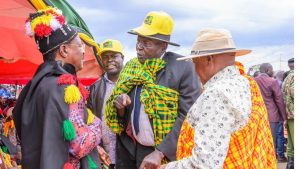
Speaking at Friends Church Amalemba in Lurambi Constituency, Kakamega County, Wetang’ula said the Bill clarifies sharing and utilisation of mineral royalties, addressing delays that left host communities waiting for benefits from extractive activities.
“The mining that is happening in Kakamega makes sense to the national economy, the county economy and the people. The Mining (Amendment) Bill will ensure everyone benefits and feels empowered,” said Wetang’ula during the service.
Under the mining royalty framework, 70 per cent goes to the national government, 20 per cent to counties and 10 per cent to host communities, giving counties and residents defined entitlements.
Proposed changes require the National Treasury to remit allocated royalties to County Revenue Funds within 21 days after receiving a certified schedule from the Ministry of Mining, reducing delays in grassroots benefits.
The Bill also ringfences community allocations for locally identified projects and establishes community project implementation committees, giving residents a stronger role in choosing and monitoring investments funded from mineral royalties.
Without clear operational regulations, counties often struggled to project mining income, communities lacked certainty on their share, and disputes arose over who should benefit from resources extracted from their land.
For mining areas, predictable royalty flows could finance roads, schools, health facilities, water projects and environmental rehabilitation in affected villages, while strengthening local accountability through committees elected or backed by communities.
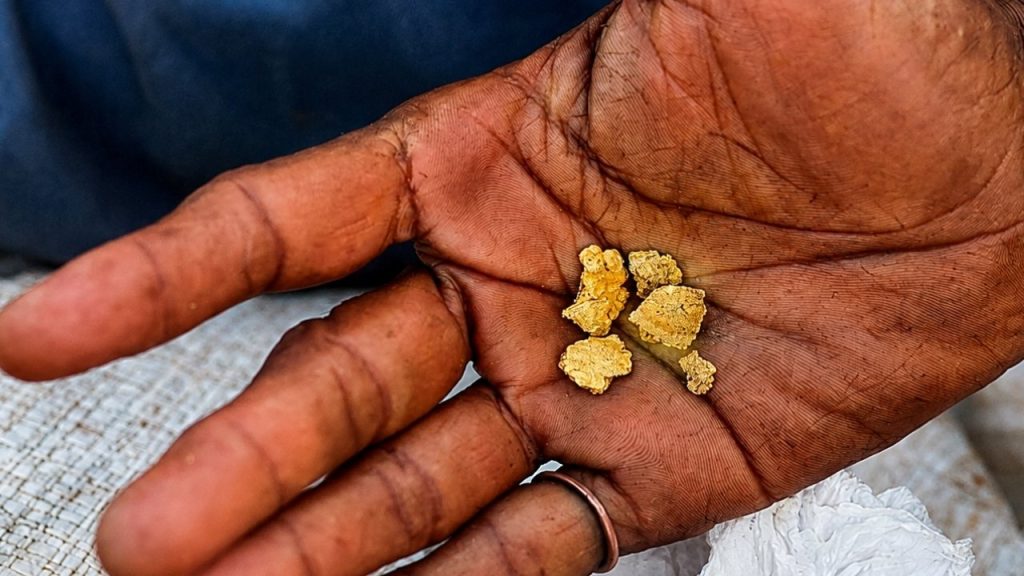
Wetang’ula said Kakamega should position itself early for opportunities under the law, especially because the county remains central to Kenya’s gold mining and wider mineral value addition agenda in Western Kenya.
On value addition, the Speaker said: “We are committed to establishing modern gold refining factories in Kakamega to enable value addition, improve livelihoods and create more employment and business opportunities for our people.”
The government is also pursuing a Sh5.8 billion gold refinery at Iguhu in Ikolomani under a public-private partnership, expected to support processing, reduce raw mineral exports and expand local employment.
The refinery plan aligns with the draft Minerals, Mining and Beneficiation Policy 2026, which targets raising mining sector contribution from about one percent of GDP to ten percent by 2030.
Government officials say a nationwide airborne geophysical survey has identified 970 geophysical anomalies for ground-truthing, a step expected to improve mineral data and guide investors toward credible exploration opportunities countrywide.
The proposed policy also promotes artisanal mining formalisation, cooperatives, county committees and value addition centres, measures intended to improve miner safety, incomes and market access while reducing exploitation by middlemen.
Wetang’ula said local processing would attract investment and make Kakamega a mineral-processing hub, but implementation will depend on timely assent, Treasury transfers, county planning and strong oversight of community projects.
About The Author