Kihika Launches Second Bursary Tranche As Ksh447 Million Fund Expands Education Access
The new application phase follows an increased bursary allocation of Kshs 447 million, up from Kshs 440 million in the previous financial year and significantly higher than Kshs 177.8 million allocated at the start of the current administration, signaling a steady scale-up of education funding across the county.
By Suleiman Mbatiah
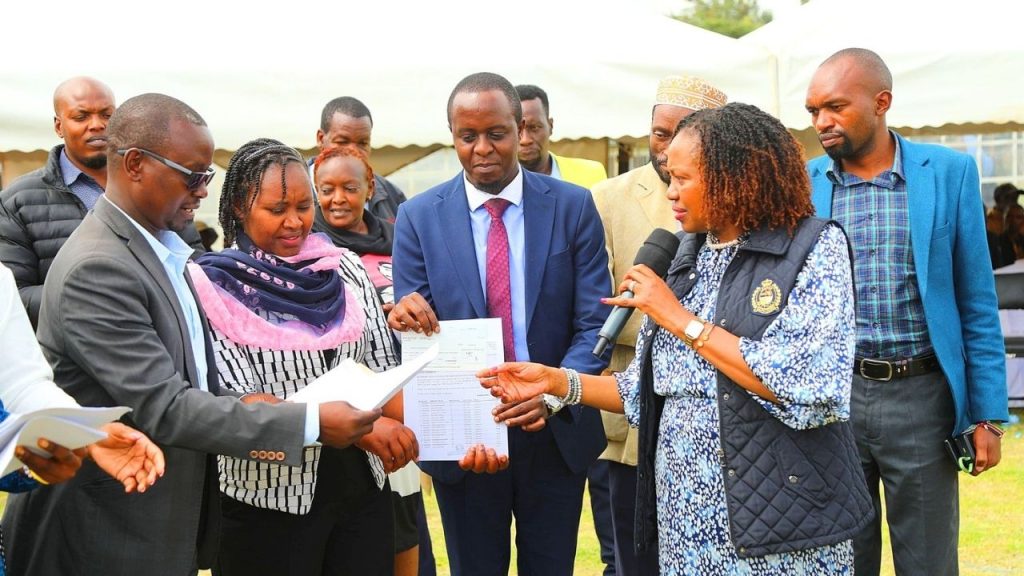
The County Government of Nakuru has launched the second tranche of the 2025/2026 bursary programme, expanding financial support to thousands of learners as the administration moves to sustain school retention and widen access to education.
The new application phase follows an increased bursary allocation of Kshs 447 million, up from Kshs 440 million in the previous financial year and significantly higher than Kshs 177.8 million allocated at the start of the current administration, signaling a steady scale-up of education funding across the county.
Kshs 284.4 million is already being disbursed to 57,231 learners in the first tranche across all 11 sub-counties, with beneficiaries drawn from universities, colleges, vocational training centres, secondary schools, and special institutions. Data from the first tranche shows secondary school students are receiving the largest share at Kshs 163.4 million, followed by college learners at Kshs 44.9 million, university students at Kshs 33.6 million, and allocations to vocational and special needs institutions, reflecting a broad and inclusive funding approach.
The distribution also captured regional balance, with sub-counties such as Naivasha receiving Kshs 43.1 million for 8,300 learners, Njoro Kshs 31.5 million for 6,703 beneficiaries, and Nakuru Town West Kshs 36.5 million, underscoring efforts to reach vulnerable households across both urban and rural areas.
Governor Susan Kihika said the increased allocation demonstrates a sustained commitment to education access, noting that no learner should miss opportunities due to financial hardships in Nakuru County.
“We must not allow bright, promising minds to fade away due to lack of opportunity,” Governor Kihika said, emphasising the need for collective responsibility among stakeholders to sustain education access and long-term learner success.
The county has issued timelines with the application forms currently being issued through Ward offices and online platforms to improve accessibility and ensure more eligible students are captured in the process. Completed forms are to be returned between April 29 and May 4, followed by ward-level verification and analysis from May 5 to May 8 using standardized digital systems to enhance transparency and consistency.
Ward lists will be submitted to the County Education Secretariat between May 11 and May 15 before undergoing scrutiny by the county bursary committee from May 16 to May 22 to finalize allocations. The disbursement process will include signing of vouchers and institutional documentation between June 2 and June 19, with funds expected to reach institutions between June 22 and June 26. Monitoring and evaluation will run from July 6 to July 10, followed by reporting later in the month.
Governor Kihika said the structured timelines are intended to strengthen accountability, speed up fund release, and maintain fairness in identifying deserving beneficiaries across all wards.
“We have aligned the entire process to guarantee that deserving students receive support in good time and with full transparency,” she said, underscoring the county’s focus on efficient service delivery.
Beyond bursaries, the county has expanded complementary education interventions, including awarding 69 full scholarships across sub-counties, strengthening support for learners with special needs, and scaling up early childhood and vocational training programmes.
In early childhood education, the county now operates 1,073 public ECDE centres, has constructed 230 classrooms and 82 sanitation facilities, and introduced a feeding programme that has increased enrolment from 58,000 to 66,000 learners. In vocational training, more than Kshs 480 million has been disbursed in capitation grants, enrolment has grown to 6,850 trainees, and the number of training centres has expanded from 33 to 43, alongside investments in equipment, infrastructure, and instructor recruitment.
The expanded bursary programme forms part of a broader strategy by Governor Kihika’s administration to improve access, retention, completion, and transition across all levels of education, while addressing poverty-related barriers that continue to affect learners in vulnerable communities.
About The Author