Government Enforces Gender, Disability Quotas In NYOTA Youth Grants
The government today began distributing the latest Sh25,000 instalment to 122,000 beneficiaries across the country, committing about Sh3 billion to youth-owned businesses through the second tranche of the NYOTA Business Support programme.
By Suleiman Mbatiah
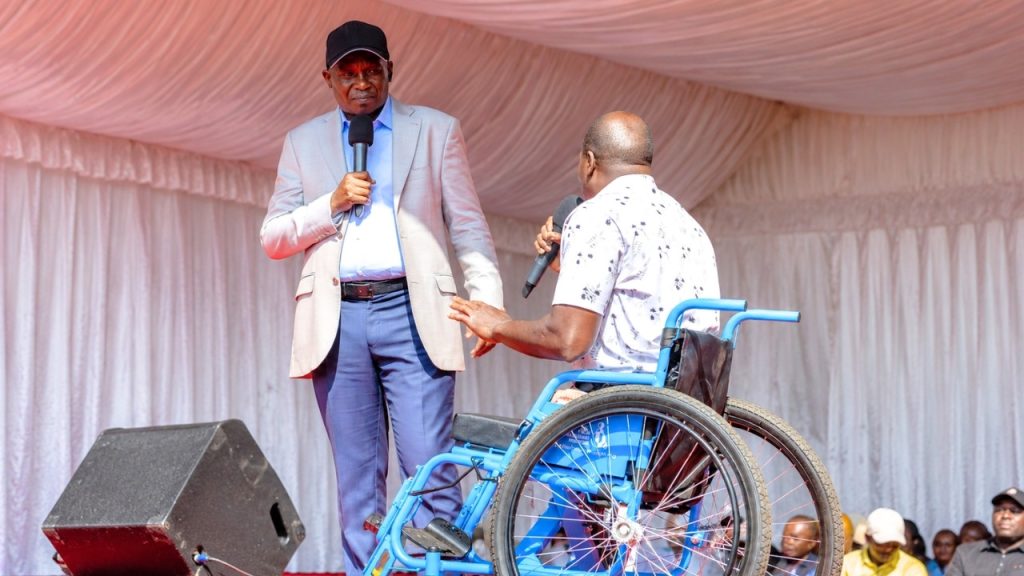
The government says it has adopted gender and disability quotas in the distribution of National Youth Opportunities Towards Advancement (NYOTA) start-up grants, reserving half of the opportunities for women and five per cent for persons with disabilities.
Deputy President Kithure Kindiki said the safeguards are intended to ensure young women, persons with disabilities and other vulnerable groups receive an equitable share of the business financing, training and employment opportunities offered under the programme.
The government today began distributing the latest Sh25,000 instalment to 122,000 beneficiaries across the country, committing about Sh3 billion to youth-owned businesses through the second tranche of the NYOTA Business Support programme.
“Thirdly, half of the beneficiaries are male and the other half are female, ensuring 50–50 equity. Five per cent of all the funds we will disburse today under the NYOTA programme will go to persons with disabilities,” Kindiki said during the Nakuru disbursement event.
He said the programme had included beneficiaries from all 47 counties and was deliberately targeting young people who might otherwise be excluded from government-backed employment and enterprise programmes.
NYOTA primarily targets vulnerable young people aged between 18 and 29 who have Form Four education or below and are unemployed, underemployed or engaged in low-income work. Persons with disabilities are eligible up to the age of 35.
Kindiki said many of the beneficiaries had completed primary or secondary school but were unable to proceed to college or university because of financial difficulties, loss of parents or other circumstances.
The latest disbursement covers both continuing participants receiving their second instalment and newly admitted beneficiaries receiving their first Sh25,000 allocation after completing the required training.
“Today, we are disbursing funds to a total of 122,000 young people across Kenya. Each of you will receive KSh 25,000, but KSh 3,000 will go to NSSF as your savings. The remaining KSh 22,000 will be sent directly to your phone,” Kindiki said.
The Sh3,000 savings allocation is deposited into beneficiaries’ National Social Security Fund accounts, while Sh22,000 is transferred directly to their mobile phones for investment in new or existing businesses.
Under the programme design, the savings component includes enrolment into the NSSF Haba Haba scheme, financial literacy training, matched savings incentives and access to social protection benefits.
The Sh25,000 released on Friday is the second half of a Sh50,000 business grant for continuing beneficiaries. The government says recipients also receive business training, mentorship, coaching and market linkages intended to improve the survival and growth of their enterprises.
Kindiki defended the size of the grant following criticism that Sh22,000 available for immediate business use was insufficient, saying the government intended to increase both the value of the support and the number of beneficiaries as resources became available.
“I have heard some people say that KSh 22,000 is too little, but if you think this is little money, please come and help us provide more. For the time being, we are grateful, and in the future we will expand this grant so that it can be larger than it is at the moment,” he said.
He said the assistance was reaching young people who had limited access to formal credit, higher education and other government programmes commonly linked to academic or professional qualifications.
Kindiki also criticized political leaders whom he accused of attempting to compete with President William Ruto over youth empowerment while expecting young people to praise them without providing tangible economic support.
He said the administration should be credited for establishing the programme but acknowledged that future governments would need to expand it, increase the size of the grants and enrol more young people.
“This is the fairest government programme ever: well balanced, reaching the grassroots and targeting young people who might otherwise have been left behind because many other programmes target those with degrees and diplomas,” Kindiki said.
In Nakuru, the disbursement brought together 8,900 beneficiaries from Nakuru, Baringo and Nyandarua counties, with the allocation based partly on the number of wards in each county.
Nakuru received the largest share, with 4,100 beneficiaries drawn from wards across the county. At least 70 young people were selected from every ward, according to the Deputy President.
Of the 4,100 Nakuru beneficiaries, 3,000 were receiving their second instalment, while 1,100 were newly enrolled and receiving their first payment. Each was allocated Sh22,000 for business use and Sh3,000 for savings.
Baringo County had about 2,900 beneficiaries. Kindiki said approximately 1,900 were receiving their second instalment, while about 1,000 were first-time recipients.
Nyandarua had approximately 1,900 beneficiaries, comprising about 1,500 continuing participants and 400 newly admitted young people receiving their first disbursement.
Kindiki said about 123,000 young people received the initial instalment earlier in 2026. He said 88,000 had continued with the programme, while another 33,000 beneficiaries were added during the latest phase.
The National Youth Opportunities Towards Advancement project is a five-year Government of Kenya initiative financed by the World Bank. Its objective is to increase employment and earnings while promoting savings among vulnerable young people.
The World Bank values the project at Ksh30 billion and says it is designed to reach about 800,000 young people across Kenya, including vulnerable women, persons with disabilities, refugees and members of refugee-hosting communities.
Kindiki said the Business Support component was targeting about 120,000 young entrepreneurs, with the number expected to rise if additional resources became available. Beneficiaries receive business development training before accessing capital and structured mentorship.
The Deputy President said another 90,000 young people had joined the Job Experience component and would undergo six months of industrial attachment in occupations such as mechanics, masonry and other technical trades.
Official programme guidelines state that the On-the-Job Experience intervention includes 20 days of socio-emotional, business and digital skills training, followed by placement with employers or master craftsmen and five months of apprenticeship.
Participants receive stipends every two weeks, subject to maintaining at least 80 per cent attendance. They are assessed and certified after completing the programme and may proceed to a further six-month employment placement.
Another 20,000 young artisans are expected to benefit from the Recognition of Prior Learning component, which identifies people with practical skills acquired outside formal education and helps them secure recognised qualifications.
The intervention targets masons, electricians, furniture makers, stone builders and other artisans who can perform skilled work but lack certificates required to compete for formal jobs or contracts.
The National Industrial Training Authority, working with technical training institutions, will assess, train and certify the beneficiaries, enabling them to seek employment in Kenya and other countries.
Official NYOTA data shows the Recognition of Prior Learning intervention attracted more than 63,000 applicants and aims to assess and certify 20,000 young artisans nationwide.
Kindiki said the Government Procurement Opportunities component would assist more than 6,000 young people to access tenders, employment and business opportunities offered by national and county governments.
He said the intervention would particularly target young people in rural areas who have historically struggled to obtain information, certification and institutional support needed to compete for public procurement opportunities.
Applications for NYOTA opportunities are made through the USSD code *254#. The project says participation is free and warns that it does not operate a mobile application or charge registration, application or service fees.
Eligible applicants are screened before beneficiaries are selected through a randomised process. A participant may benefit from only one NYOTA intervention, although unsuccessful applicants can be considered for another component.
The government says the combination of business capital, vocational certification, workplace experience, savings and procurement support is intended to address barriers that prevent vulnerable young people from obtaining sustainable employment or establishing viable enterprises.
About The Author