Boost For Africa Vaccine Ecosystem As Kenya, IVI Sign Manufacturing Deal
The initiative also includes the Advancing Vaccine End-to-End Capabilities in Africa project, known as AVEC Africa, which aims to strengthen the continent’s vaccine ecosystem by connecting institutions and expertise involved in the vaccine value chain.
By Jane Chepkurui
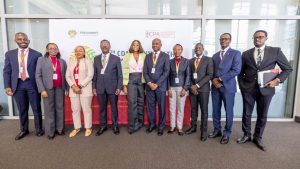
Kenya has taken a major step toward positioning itself as Africa’s regional vaccine manufacturing and research hub after signing a Host Country Agreement with the International Vaccine Institute to establish a permanent country office in Nairobi.
The agreement, signed at State House in Nairobi, formalises the presence of the International Vaccine Institute in Kenya through the establishment of the IVI Kenya Country and AVEC Africa Project Office.
The deal was signed by Musalia Mudavadi, who also serves as Cabinet Secretary for Foreign and Diaspora Affairs, and IVI Director General Jerome H. Kim in the presence of President William Ruto.
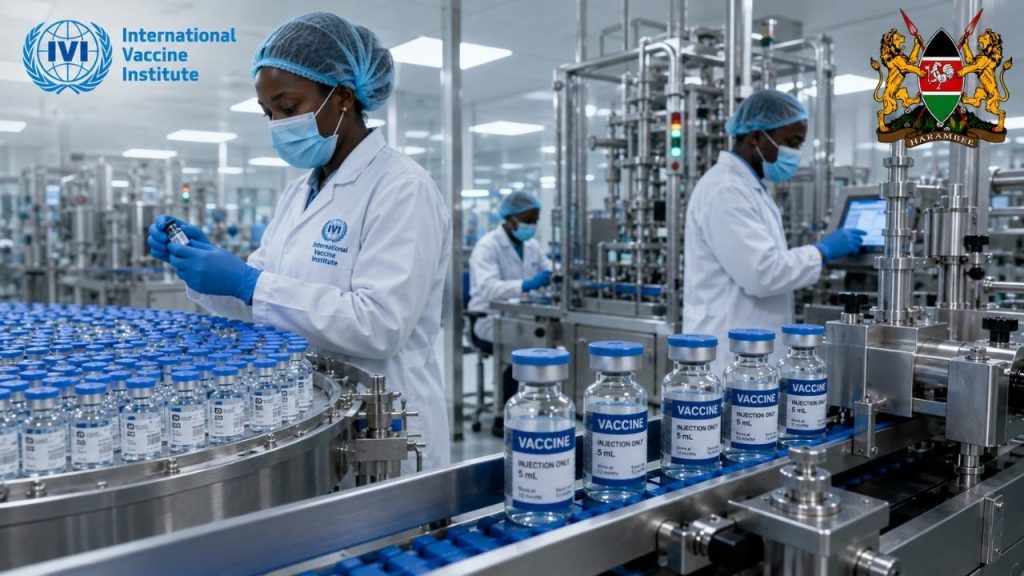
The agreement is expected to strengthen collaboration in vaccine research and development, translational and field research, product innovation, technology transfer, and workforce development as Kenya seeks to expand its role in Africa’s growing biomanufacturing sector.
The initiative also includes the Advancing Vaccine End-to-End Capabilities in Africa project, known as AVEC Africa, which aims to strengthen the continent’s vaccine ecosystem by connecting institutions and expertise involved in the vaccine value chain.
“The establishment of IVI’s Country Office in Kenya reflects our shared commitment to strengthening health systems, advancing research and development, and championing local manufacturing for Kenya and across Africa,” Mudavadi said.
He said the partnership supports Kenya’s vision to become a regional hub for biomanufacturing and underscores the importance of strong international collaboration in improving preparedness, resilience, and equitable access to critical technologies.
Kenya has in recent years intensified efforts to develop local pharmaceutical and vaccine production capacity following lessons from the COVID-19 pandemic, which exposed Africa’s heavy reliance on imported vaccines and medical supplies.
Government officials have repeatedly stated that local manufacturing is central to improving health security, reducing supply chain vulnerabilities, and enhancing rapid response to future disease outbreaks.
“The signing of this Host Country Agreement marks an important milestone in IVI’s growing partnership with Kenya and our long-term commitment to advancing vaccine research, development, and delivery capacity across Africa,” said Dr Kim.
He said Kenya had shown strong leadership in advancing regional health security and expanding biomanufacturing capacity, positioning the country as a key partner in supporting African-led vaccine innovation and equitable healthcare access.
IVI, through its country office in Nairobi, looks forward to deepening collaboration with national health agencies, research partners, and industry players to support African-led innovation and equitable access to vaccines.
Kenya became a State Party of IVI in May 2024, further strengthening ties with the international organisation, which was originally established in 1997 at the initiative of the United Nations Development Programme.
IVI focuses on developing safe, effective, and affordable vaccines targeting diseases that disproportionately affect low- and middle-income countries. Its current portfolio includes vaccines in various stages of development for cholera, typhoid fever, chikungunya, shigellosis, salmonellosis, schistosomiasis, hepatitis E, HPV, group A strep-related diseases, and COVID-19.
The organisation developed the world’s first low-cost oral cholera vaccine and a new-generation typhoid conjugate vaccine, both of which have been pre-qualified by the World Health Organization.
Headquartered in Seoul, IVI also operates a regional office in Rwanda, a Europe regional office in Sweden, a country office in Austria, and now its newly established Kenya office in Nairobi.
The institute currently works with 40 member countries and collaborates with health and research centres across Africa and Asia, including facilities in Bhutan, Burkina Faso, Ghana, Ethiopia, Nepal, and Madagascar.
About The Author