El Niño: Government Sets Aside Sh2.1bn To Cushion Livestock Sector
Sh100 million will support livestock evacuation, welfare and logistics, while Sh50 million will be used to establish strategic feed and fodder reserves, rehabilitate water points and arrange emergency water supplies.
By Suleiman Mbatiah
The government has set aside Sh2.1 billion to protect the livestock sector from the effects of the forecast El Niño weather event, with the bulk of the money going towards vaccines, veterinary medicines and emergency response equipment.
Agriculture and Livestock Development Cabinet Secretary Mutahi Kagwe said the National Livestock Sector El Niño Preparedness and Anticipatory Action Plan would enable the Government to act before livestock farmers and pastoral communities suffer major losses.
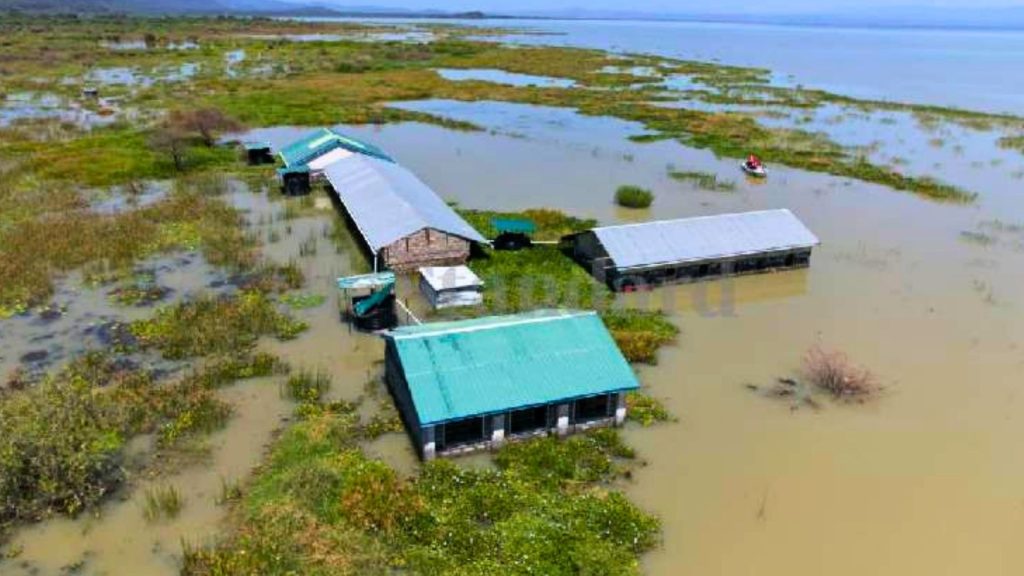
The plan targets 24 counties identified as flood-prone and with high livestock populations, following advisories from the Kenya Meteorological Department warning of an increased likelihood of enhanced rainfall, flooding, flash floods and localised inundation.
Kagwe, who launched the plan in Isiolo County, said lessons from previous weather-related disasters had informed the Government’s decision to prioritise preparedness.
“The 2023 El Niño and the 2024 long rains floods caused devastating losses to our livestock farmers, destroyed critical infrastructure and triggered disease outbreaks that set back the sector significantly. We therefore need to learn from our experiences and this is the reason we are determined to ensure that, our farmers and pastoralists are not caught unprepared,” Kagwe said.
The six-pronged plan includes early warning and communication systems, disease prevention, protection of livestock infrastructure, evacuation and welfare, feed and water security, and farmer awareness.
Sh100 million will be spent on early warning systems, climate risk mapping, emergency communication networks and coordination between agencies.
The largest share, Sh1.5 billion, will be used to procure and pre-position vaccines, veterinary medicines, laboratory reagents, personal protective equipment, mobile veterinary clinics and emergency response kits.
The Government said the investment will help contain climate-sensitive diseases such as Rift Valley Fever, whose risks can increase because of rising vector populations during prolonged flooding.
Another Sh250 million will protect key livestock infrastructure, including cattle dips, markets, slaughterhouses, milk cooling facilities, veterinary laboratories and feed stores.
Sh100 million will support livestock evacuation, welfare and logistics, while Sh50 million will be used to establish strategic feed and fodder reserves, rehabilitate water points and arrange emergency water supplies.
The remaining Sh100 million will support farmer awareness, biosecurity promotion, livestock insurance sensitisation, commercial offtake operations and contingency planning.
“Livestock is the primary livelihood asset for millions of Kenyan households, particularly in our arid and semi-arid regions. Protecting that asset during an extreme weather event is a matter of food security, economic stability, and national resilience,” Kagwe said.
The counties covered by the plan are Garissa, Tana River, Lamu, Kilifi, Isiolo, Wajir, Mandera, Marsabit, Turkana, Samburu, Narok, Kajiado, Baringo, West Pokot, Busia, Kisumu, Siaya, Migori, Homa Bay, Kitui, Makueni, Machakos, Meru and Embu.
The Government said the list could be expanded based on subsequent weather advisories.
The interventions will be coordinated under the One Health framework, which brings together human, animal and environmental health surveillance to deal with zoonotic disease risks.
Principal Secretary for Livestock Development Jonathan Mueke said the Government was also making progress in strengthening the country’s livestock export capacity through vaccination.
Mueke spoke during an inspection tour of the Isiolo International Abattoir, which is expected to be launched by President William Ruto.
He said more than 20 million cattle, sheep and goats had been vaccinated across the country, strengthening Kenya’s ability to access and expand export markets.
Kagwe also launched the Animal Identification and Traceability System (ANITRAC) in Isiolo County during the tour.
The CS said traceability would help secure livestock while enabling farmers and traders to meet domestic and international market requirements.
He warned cattle rustlers that the tagging system would make it increasingly difficult for stolen animals to enter legitimate markets, telling them to “find another business”.
Kagwe said livestock markets would progressively require properly identified animals and urged security agencies to act against suspected stock thieves.
He also raised concern over cases in which animals are found with deliberately mutilated ears, apparently to remove ANITRAC tags and conceal their identity.
The system, he said, would provide verifiable information on the origin, movement and health status of animals, improving food safety and the credibility of Kenyan livestock products in premium markets.
Kagwe said the combination of traceability, vaccination, structured livestock aggregation and modern processing facilities such as the Isiolo Export Abattoir would help farmers meet market specifications and access higher-value markets.
The measures are ultimately expected to enable livestock keepers to secure better prices for their animals while strengthening Kenya’s position in regional and international livestock markets.
About The Author