Development Investment, Wage Discipline Strengthen Nakuru’s Fiscal Ranking
The county’s budget implementation report put employee compensation at Sh6.47 billion, or 30 per cent of its revenue. That was below the 35 per cent ceiling set under the Public Finance Management (County Governments) Regulations, 2015.

By Suleiman Mbatiah
Transparent governance and development spending were cited among the reasons for Nakuru County’s strong showing in the Senate’s first 2026 County Fiscal Performance Measurement Index (CFPMI).
The index assessed all 47 counties using seven indicators: budget implementation, development expenditure, own-source revenue, spending on wages and benefits, pending obligations, county assembly expenditure, and audit outcomes.
Embu was rated the best-performing county for the 2024/25 financial year with a composite score of 0.689, followed by Narok at 0.608 and Wajir at 0.605. Kisumu ranked last with 0.285.
Nakuru placed ninth nationally with a score of 0.536 and received a Grade C. The county also reported spending Sh3.94 billion on development programmes during the financial year.
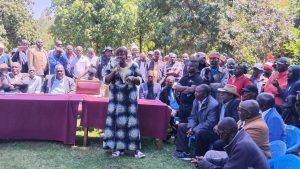
Governor Susan Kihika said the ranking reflected prudent financial management, disciplined development spending, and an administration focused on making sure resources lead to measurable improvements in services and livelihoods across Nakuru County.
“This top-tier placement is a massive win for us and reflects our commitment to transparent, high-impact governance,” she said, adding that her administration had worked to strengthen financial management while funding development projects aimed at improving residents’ lives.
Nakuru’s fourth-quarter budget implementation report put development expenditure at Sh3.94 billion, an absorption rate of 42 per cent. That was 12 per cent lower than the Sh4.45 billion recorded in 2023/24, a drop the county linked to delays majory in national budget processes..
Nakuru also ranked second nationally on the wage-bill management indicator, with a score of 0.982, behind Embu.
“Even better, we achieved this while maintaining razor-sharp fiscal discipline,” she said, adding that this had helped limit waste, keep wage costs sustainable, and free up public funds for development projects.
The county’s budget implementation report put employee compensation at Sh6.47 billion, or 30 per cent of its revenue. That was below the 35 per cent ceiling set under the Public Finance Management (County Governments) Regulations, 2015.
Financial analysts suggest Nakuru’s wage bill was not consuming an excessive share of revenue, leaving more money available for development projects, services, suppliers and other obligations.
About The Author