Kalenjin Elders Warn Against Voter Intimidation Ahead Of 2027 Polls
The political contest in Mount Kenya has intensified since Gachagua fell out with Ruto. The Senate impeached Gachagua in October 2024, after which Kithure Kindiki was sworn in as deputy president. Gachagua rejected the charges as politically motivated and has since become one of Ruto’s leading opponents.
By Elijah Cherutich
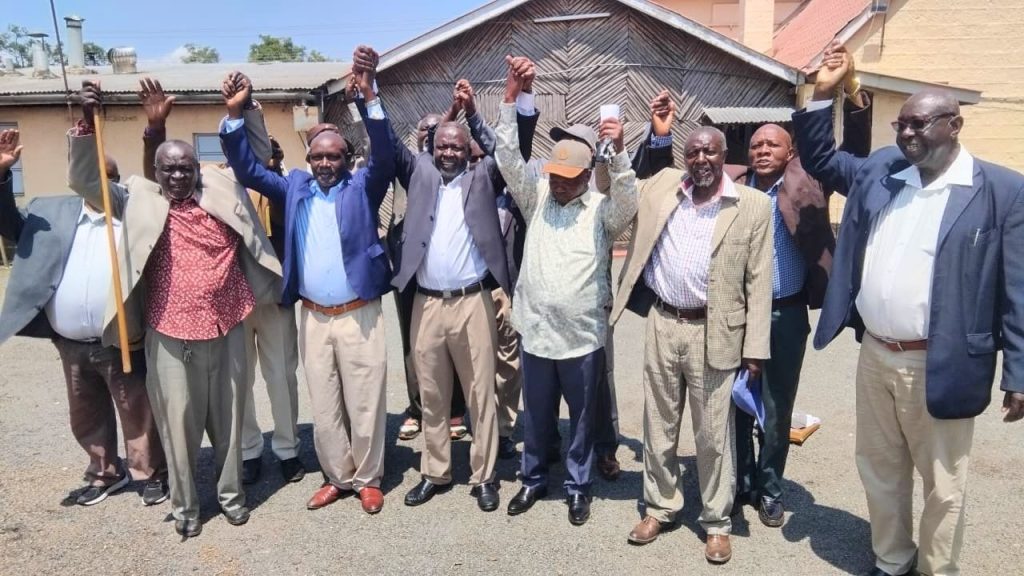
Kalenjin community elders have urged political leaders to avoid rhetoric that could intimidate voters or stigmatise supporters of rival candidates, saying such language could strain relations ahead of the 2027 General Election.
The Myoot Council of Elders – Nakuru chairman Kangugo Yatich said voters should be free to support candidates of their choice without coercion. He urged leaders to campaign through persuasion and debate.
“Toxic politics is not good for the nation. We should see sober political discourse from leaders so that people can exercise their mandate peacefully,” Yatich said.
The elders spoke after former deputy president Rigathi Gachagua announced “Operation Fagia,” or “Operation Sweep,” targeting candidates aligned with President William Ruto and the United Democratic Alliance in Mount Kenya.
Gachagua described it as a campaign to defeat UDA-aligned MCAs, MPs, senators, governors and Ruto in the 2027 polls. He had earlier said Ruto should get no more than 1,000 votes in any Mount Kenya constituency.
The elders said political parties had a right to campaign against rivals, but language suggesting that certain supporters should be “swept out” could create fear among residents with different political views.
Article 38 of the Constitution guarantees citizens the freedom to make political choices and gives every adult citizen the right to register as a voter and vote by secret ballot without unreasonable restrictions.
Johnston Bidii arap Too, a former Nakuru County Council chairman, also urged Gachagua to give voters room to make informed choices. He said pressure and threats could create fear and erode democratic gains.
Yatich said the principles of the Nakuru County Peace Accord should continue to guide relations among communities in the county, including debate on political inclusion and the sharing of resources.
The Nakuru County Peace Accord was signed by community elders on August 19, 2012, after a 16-month mediation process led by the National Cohesion and Integration Commission and the National Steering Committee on Peacebuilding and Conflict Management. It was not signed by former president Uhuru Kenyatta and Ruto.
The agreement brought together elders from the Gikuyu, Kalenjin and other communities and focused on peaceful coexistence, dispute resolution and preventing election-related violence. It did not set a formula for sharing political positions or county resources.
The accord followed the 2007-08 post-election violence, in which more than 1,300 people were killed and about 600,000 displaced across the country, with Nakuru among the worst-hit areas. Kenyatta and Ruto later formed a political alliance and won the 2013 presidential election. A study by one of the accord’s mediators said the local peace process helped Nakuru hold a peaceful election that year.
The political contest in Mount Kenya has intensified since Gachagua fell out with Ruto. The Senate impeached Gachagua in October 2024, after which Kithure Kindiki was sworn in as deputy president. Gachagua rejected the charges as politically motivated and has since become one of Ruto’s leading opponents.
About The Author