Nakuru Pushes Community-Based Response To Child Malnutrition
She was accompanied by healthcare workers, including Clinical Nutritionist and Nutrition Officer Arthur Wangare, during the visit to the facility, also known as PGH-Nakuru, where she interacted with staff and observed ongoing care.
By Suleiman Mbaiah
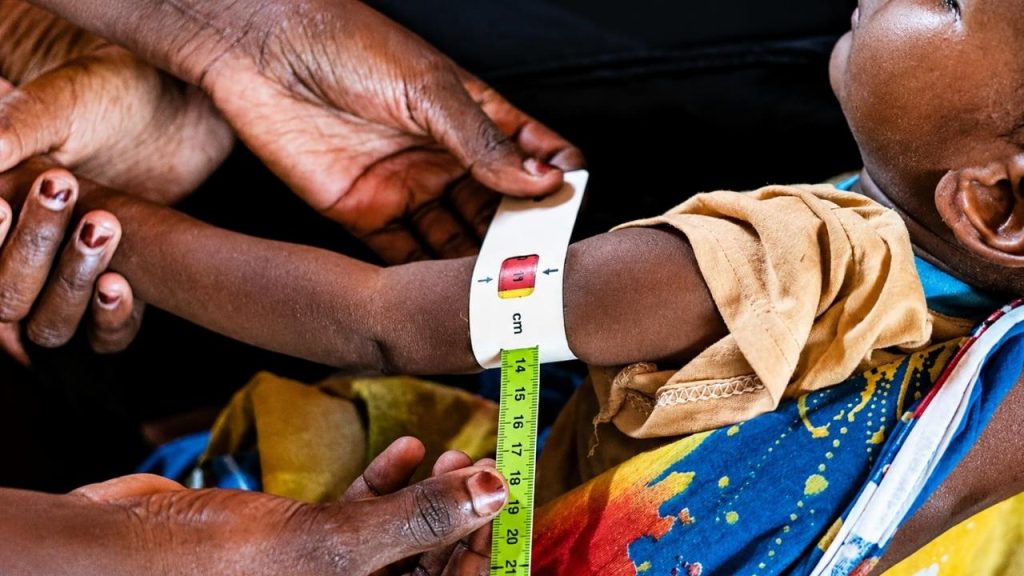
The high number of children admitted with severe acute malnutrition at Nakuru County Referral and Teaching Hospital has raised concern, with health officials calling for stronger community-based interventions to identify vulnerable children earlier.
Health County Executive Committee Member Roselyn Mungai raised the concern after visiting Ward 5 at the hospital, where she assessed the condition of ‘Baby IK’ and other children admitted under paediatric care.
Mungai said the children were receiving medical attention from healthcare workers at the facility, but noted that the number of children admitted with severe acute malnutrition remained worrying.
She was accompanied by healthcare workers, including Clinical Nutritionist and Nutrition Officer Arthur Wangare, during the visit to the facility, formerly known as PGH-Nakuru, where she interacted with staff and observed ongoing care.
The situation has exposed a deeper community health challenge, with medics warning that many vulnerable children are reaching hospital only after their conditions have deteriorated and require urgent medical care.
According to the 2022 Kenya Demographic and Health Survey, 19 percent of children under five in Nakuru are stunted, slightly higher than the national average of 18 percent.
The same survey shows that three percent of children under five in Nakuru are wasted, meaning they are too thin for their height, while nine percent are underweight.
Although Nakuru’s wasting and underweight rates are below the national averages of five percent and 10 percent respectively, the county’s stunting burden remains a concern because it reflects long-term nutritional deprivation.
Health experts say stunting is particularly worrying because it can affect a child’s physical growth, brain development, school readiness and long-term productivity if nutrition gaps are not addressed early.
The hospital admissions have therefore shifted attention to prevention, with county health teams expected to strengthen screening, nutrition counselling and referral systems through Primary Care Networks and community health promoters.
“While hospitals will always be there to care for children who need us, the real work begins much earlier, with families, communities, and a strong Primary Care Network (PCN) that identifies children at risk early, supports caregivers, and connects every child to the appropriate care at the right time,” Mungai said.
The Health boss said preventing malnutrition requires sustained support at household and community level, where caregivers can be guided on proper child feeding, early warning signs and timely referral for medical attention.
She said Primary Care Networks remain central to strengthening early identification of vulnerable children, linking families to health facilities and ensuring children receive appropriate care before their conditions worsen.
Mungai further called for active involvement of local leaders, community health promoters, families and residents in supporting child nutrition, saying hospitals alone cannot solve the problem once children are critically ill.
Severe acute malnutrition is a dangerous condition that weakens a child’s immunity, increases vulnerability to infections and can lead to complications if not identified and treated early.
Health officials said children admitted with malnutrition often require close monitoring, nutritional rehabilitation and treatment for related illnesses, placing additional pressure on paediatric wards and frontline health workers.
Nationally, Kenya continues to face a serious acute malnutrition burden, with the Integrated Food Security Phase Classification estimating that 810,871 children aged six to 59 months will require treatment for acute malnutrition in 2026.
The IPC says the worst acute malnutrition pressures are concentrated in arid and semi-arid counties, driven by drought, poor dietary diversity, disease outbreaks, reduced milk availability and weakened nutrition services.
For Nakuru, officials say the priority is early identification of at-risk children before they require hospital admission, alongside stronger support for caregivers on breastfeeding, complementary feeding, hygiene and timely treatment of childhood illnesses.
Mungai said the county must strengthen efforts to nourish, support and protect children so that fewer families are forced to seek emergency hospital care because of preventable malnutrition.
She said the long-term goal should be a stronger community health system that reaches children early, supports caregivers consistently and reduces the number of children requiring hospital beds due to malnutrition.
About The Author