Trade, Investment And Jobs At Centre Of Ruto’s Strategic European Visit
A central focus of the Brussels leg will be the implementation of the Kenya-EU Economic Partnership Agreement, which provides duty-free and quota-free access for Kenyan exports to the European market. According to the State House Spokesperson, the engagement will help to “unlock greater opportunities for Kenyan farmers and exporters, particularly in tea, coffee, cut flowers, horticulture and other value-added products.”
By Staff Writer
From flower growers and tea farmers to technology startups and manufacturers, thousands of Kenyans could benefit from new export opportunities and investment deals expected to emerge from President William Ruto’s European mission.
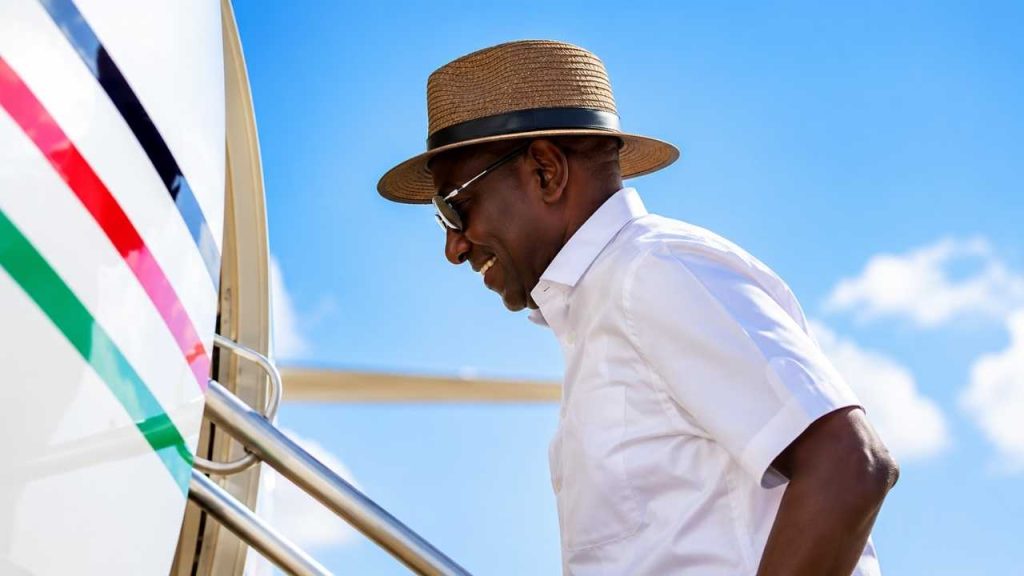
President Ruto departed on Sunday for a multi-country tour covering Belgium, Norway and Finland, in a diplomatic push aimed at attracting investment, securing new partnerships and strengthening Kenya’s access to European markets. The visit, which spans official and state-level engagements, comes as the government accelerates efforts to grow exports, reduce the trade deficit and create jobs across key sectors of the economy.
In Belgium, President Ruto will hold talks with King Philippe and Matthias Diependaele, Minister-President of Flanders, covering bilateral trade, investment and the broader relationship between Kenya and the European Union. The meetings will also bring together business leaders to explore openings in value addition, manufacturing, agriculture and logistics.
A central focus of the Brussels leg will be the implementation of the Kenya-EU Economic Partnership Agreement, which provides duty-free and quota-free access for Kenyan exports to the European market. According to the State House Spokesperson, the engagement will help to “unlock greater opportunities for Kenyan farmers and exporters, particularly in tea, coffee, cut flowers, horticulture and other value-added products.”
The EU is Kenya’s single largest export market, accounting for 21 percent of the country’s total exports to the world, according to the European External Action Service. More than 70 percent of Kenya’s total flower production is exported to the EU each year, supporting 500,000 direct and indirect jobs. Kenya’s exports to the EU rose to Ksh200 billion in 2024, driven by increased sales of horticulture, floriculture, tea and coffee, according to Trade Principal Secretary Dr Chris Kiptoo.
The President will also hold consultations with European Council President Antonio Costa and European Parliament President Roberta Metsola, discussions that State House said would help advance the partnership agreement’s implementation and deepen institutional ties between Kenya and the bloc. Earnings from Kenyan exports to the EU went up by 39.9 percent in the first quarter of 2024 compared to the same period in 2023, growth largely driven by cut flowers, avocados and re-exports of jet fuel.
From Brussels, President Ruto will travel to Norway, where he will hold consultations with Prime Minister Jonas Gahr Store and meet Crown Prince Haakon. He will also take part in the Kenya-Norway Business Forum, which will bring together investors and business leaders from both countries to explore commercial opportunities.
The forum’s agenda is expected to focus on renewable energy, electric mobility, the blue economy, and climate-smart agriculture. The pairing carries strategic weight. Blue economy experts say Kenya could inject an additional Ksh90 billion into its economy by properly exploiting the Exclusive Economic Zone in the Indian Ocean, with scientists from the Kenya Marine and Fisheries Research Institute estimating potential annual yields of between 150,000 and 300,000 metric tons of fish. Norway, with one of the world’s most developed aquaculture industries, is seen as a natural partner in unlocking that potential.
Norway has been recasting its relationship with Kenya from a development aid model toward a deeper strategic partnership, working through financial institutions and investment vehicles such as Norfund to support renewable energy, marine conservation and the blue economy. According to the Norwegian Ambassador to Kenya, the two countries share perspectives on global challenges including climate change and oceans, and Kenya has become a partner from which Norway also draws lessons, particularly in regional peace and security.
President Ruto will conclude the tour with a State Visit to Finland at the invitation of President Alexander Stubb, becoming the first African head of state to participate in the Kultaranta Talks. The previous state visit from Kenya to Finland took place in 1987. The reciprocal nature of this visit is significant. President Stubb made a state visit to Kenya in May 2025, marking 60 years of diplomatic relations between the two countries, with discussions centred on trade, climate action, technology, education and multilateral cooperation.
In Helsinki, official talks will cover bilateral relations, multilateral cooperation, UN system reform, mediation, and trade. The two presidents are expected to hold a joint press conference following the discussions. A Kenya-Finland Business Forum on the sidelines will bring together investors and companies to explore opportunities in technology, clean energy, manufacturing, innovation and value addition. Kenya has acknowledged Finland’s developmental support, particularly through Finnfund, in areas such as health, renewable energy and digital infrastructure.
On education, the two countries had already begun laying the groundwork during President Stubb’s Nairobi visit last year. President Ruto stated that Kenya is keen on leveraging Finland’s global leadership in education and expressed intention to deepen cooperation in support of the Competency-Based Education curriculum, noting that a cooperation framework focused on basic, technical, vocational and higher education would be concluded to equip Kenyan youth “with the skills needed in a digital economy.”
The 2026 Kultaranta Talks, scheduled for June 11 and 12 in Naantali, carry the theme “A World in Transition: Global, Regional and Local Perspectives,” with Africa featured as a key pillar of the discussions. President Ruto is expected to join President Stubb in opening the forum’s first panel, providing Kenya and the continent a platform to shape the conversation on peace, security and sustainable development before a gathering of roughly 160 policymakers, researchers, business representatives and journalists.
State House framed the tour as part of a broader strategy to position Kenya as a destination for foreign investment and a competitive exporter in global markets. The visit to the three countries touches on sectors the government has identified as priorities for job creation and economic growth, including agri-processing, clean energy, maritime industries and the digital economy.
The tour is also a test of whether diplomatic engagement translates into tangible outcomes. State House has consistently defended President Ruto’s international travel schedule, arguing that such visits have yielded investment commitments, trade agreements, infrastructure financing and enhanced market access for Kenyan products. Critics have at times questioned the frequency and cost of foreign missions against the backdrop of domestic economic pressures, though the administration has maintained that international engagement is essential for positioning Kenya as a regional economic hub.
About The Author