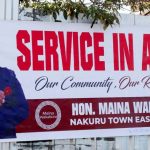
Wakabura Champions Homegrown Leadership For Inclusive Development
Wakabura, who seeks to succeed Gikaria, further explained that choosing leaders well known and trusted increases the likelihood of responsive governance and sustained development, underscoring the need for voters to critically assess candidates beyond campaign promises.

By Suleiman Mbatiah
Voters have been urged to elect leaders they understand well and who have a proven commitment to advancing development, as calls grow for more accountable and effective representation ahead of 2027 elections.
Nakuru businessman, politician and philanthropist Maina Wakabura emphasized that informed choices at the ballot are critical to ensuring communities benefit from tangible progress in key sectors.
He said voters should prioritize candidates with a clear track record, integrity, and a deep understanding of local challenges. He noted that electing individuals who are accessible and familiar to the electorate can strengthen service delivery.
“I am one of you. You brought me up, educated me and stepped out to seek opportunities in Nairobi. Now, I am back seeking for your votes to give me an opportunity so that we can together improve our community,” Wakabura stated.
He was speaking at Kiratina in Nakuru Town East during a community event to honor the elderly people in the community organized by area Member of Parliament David Gikaria, who is seeking Nakuru senatorship under the United Democratic Alliance (UDA) ticket.
Wakabura, who seeks to succeed Gikaria, further explained that choosing leaders well known and trusted increases the likelihood of responsive governance and sustained development, underscoring the need for voters to critically assess candidates beyond campaign promises.
The appeal comes amid concerns that some voters continue to base their decisions on short-term incentives or political rhetoric rather than long-term development priorities. He warned that such choices can undermine progress by placing untested or ineffective leaders in positions of power.
“A focus on development-oriented leadership could accelerate improvements in infrastructure, healthcare, education, and job creation. Leaders who are rooted in their communities are better positioned to understand pressing needs and mobilize resources effectively,” he said.
He further called on the Independent Electoral and Boundaries Commission (IEBC) to embark on civic education in empowering voters to make informed decisions ahead of the 2027 general elections, arguing that increased public awareness encourages issue-based voting.
At the sane time, he asked fellow aspirants to promote issue-based politics that unites communities around shared development goals, while asking voters to reject rhetoric that he said fuels division, ethnic polarization, or short-term interests.
About The Author