Ruto To Launch Construction Of Naivasha–Kisumu–Malaba SGR
The extension forms part of Phase 2B and Phase 2C of Kenya’s Standard Gauge Railway development plan, which seeks to extend the line from Naivasha through Kisumu to Malaba at the Kenya–Uganda border.
By Our Correspondent
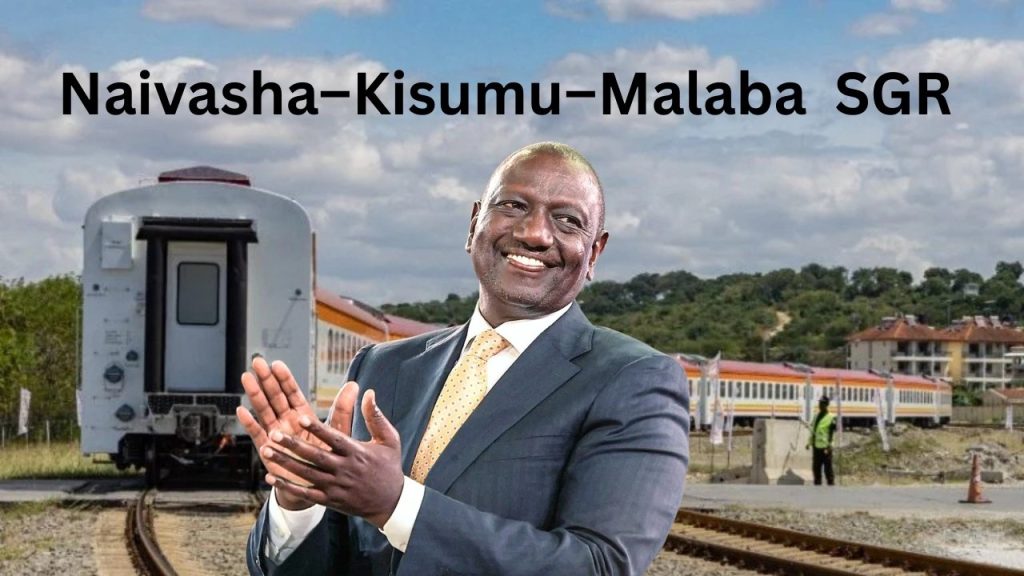
President William Ruto will this week launch the construction of the Naivasha–Kisumu–Malaba Standard Gauge Railway (SGR), marking a major milestone in Kenya’s plan to expand modern rail infrastructure and strengthen regional trade corridors.
The launch will signal the start of the long-awaited extension of the SGR beyond Naivasha toward western Kenya and the Uganda border, a project expected to enhance connectivity and unlock economic opportunities.
Government officials say the groundbreaking ceremony will begin with the Naivasha–Kisumu section scheduled for March 19 at Narok Teachers Training College, bringing together national leaders, transport officials and regional stakeholders.
“The project will cut travel time between the two cities from 14 hours to about four hours while reducing freight costs by 35 per cent,” President William Ruto said, adding that the project will enhance regional integration.
A second event will follow on March 21 for the Kisumu–Malaba section, with the ceremony set to take place at Kibos in Kisumu County as the government rolls out the next phase of the railway project.
The extension forms part of Phase 2B and Phase 2C of Kenya’s Standard Gauge Railway development plan, which seeks to extend the line from Naivasha through Kisumu to Malaba at the Kenya–Uganda border.
Once complete, the railway will form a key segment of the Northern Corridor transport network, connecting the Port of Mombasa with inland markets and neighboring countries across the East African Community.
The project is expected to significantly reduce cargo transport costs, improve freight efficiency and ease pressure on major highways currently used to move goods from the coast to western Kenya and the region.
Government officials say the railway will also accelerate economic development by opening up new investment opportunities along the corridor while boosting the movement of agricultural produce, manufactured goods and passengers.
Western Kenya leaders have welcomed the project, saying it will transform the region’s economy by improving market access, stimulating industrial growth and strengthening Kisumu’s position as a regional transport hub.
The railway extension will link with the existing Mombasa–Nairobi–Naivasha Standard Gauge Railway, creating a continuous modern rail corridor expected to support Kenya’s long-term goal of becoming a regional logistics hub.
Officials say the Naivasha–Kisumu–Malaba line is also part of the broader East African railway integration plan aimed at connecting Kenya with Uganda, Rwanda, South Sudan and the Democratic Republic of Congo.
Once operational, the railway is expected to play a critical role in facilitating trade across the region while reinforcing Kenya’s strategic position as the primary gateway for goods entering East and Central Africa.
President Ruto on Monday signed the National Infrastructure Fund into law to drive economic growth, describing the establishment of the fund as the most consequential initiative in the country’s development history.
“Mobilizing domestic capital will help us solve major challenges that arise when development depends excessively on foreign financing,” he said.
The fund will be managed by a board comprising eight persons, including four independent directors to be competitively recruited by the governing council, three public officers appointed based on their expertise, and a chief executive officer.
About The Author