New PBO Regulations to Boost Oversight, Weed Out Fake NGOs
The Public Benefit Organizations (PBO) regulations are set to enhance transparency and accountability in the operations of non-governmental organizations in Kenya, experts say.
If approved, the regulations, published on June 5, 2025, will operationalize the PBO Act, 2013, and introduce tighter oversight aimed at eliminating “briefcase NGOs” while strengthening the sector’s regulatory framework.
According to Mr. Liondo Otieno, Legal Affairs Manager at the Public Benefit Organizations Regulatory Authority (PBORA), the new rules will empower the Authority to monitor and verify all NGOs, now classified as PBOs. This, he said, will help restore public trust by ensuring only legitimate and impactful organizations operate.
“We reaffirm our support for a vibrant, well-regulated civil society that complements government efforts in delivering services, promoting social justice, and deepening democratic governance across the country,” said Mr. Otieno.
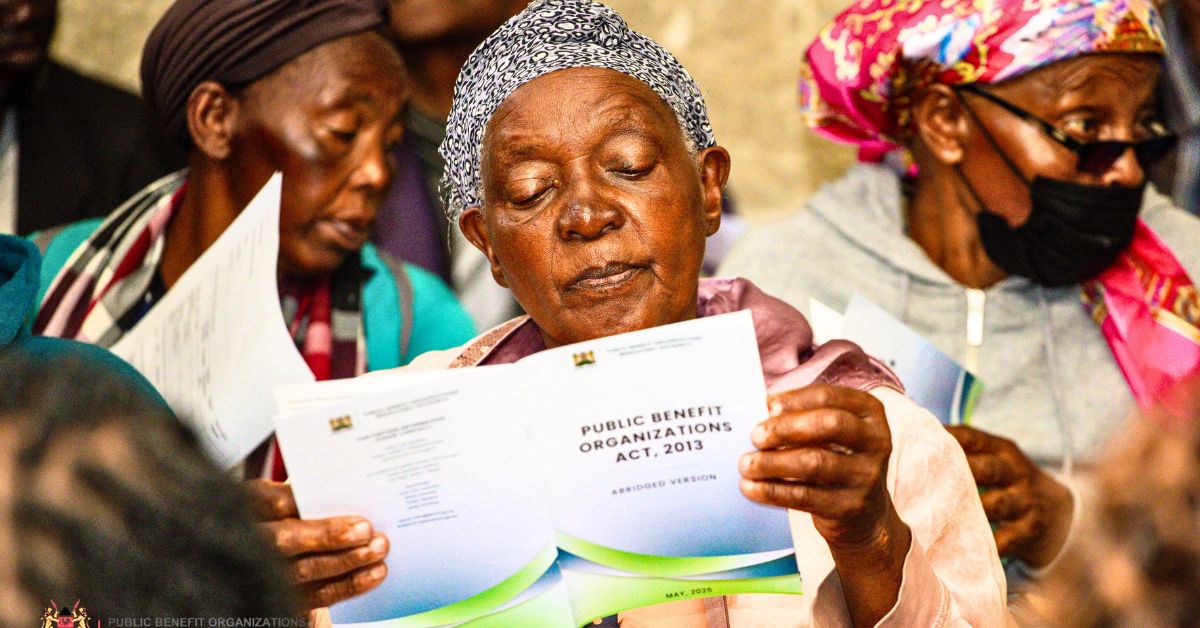
He was speaking during a public participation forum on the draft regulations held at the Rift Valley Regional Commissioner’s plenary hall in Nakuru. Mr. Otieno said one of the government’s priorities is to root out fraudulent organizations that misappropriate donor funds while purporting to serve communities.
PBORA, established under Section 34 of the PBO Act, took over the functions previously handled by the NGO Coordination Board. Unlike its predecessor, PBORA operates as an independent oversight body responsible for registration, compliance monitoring, policy interpretation, and advising the government. It also has the power to investigate and deregister non-compliant organizations.
The PBO Act came into effect on May 14, 2024, after an 11-year delay caused by legal and administrative hurdles. Its commencement followed President William Ruto’s announcement at the UN Civil Society Conference in Nairobi.
With the Act in force, attention has turned to finalizing the regulations. Two drafts—one from the government and another from civil society—are currently being harmonized through nationwide consultations. A final report will be submitted to Parliament in August, followed by a review by the Attorney General and gazettement by the Interior Cabinet Secretary.
Mr. Otieno described the Act’s commencement as a milestone and urged stakeholders to actively shape the regulations.
“Feedback on the draft regulations will determine how the law functions in practice. Public input is essential to ensure the regulations achieve the PBO Act’s 2013 purpose,” he said.
Under the Act, a Public Benefit Organization refers to a voluntary, non-profit, and non-partisan group delivering charitable services. These organizations must register under the new framework, which replaces the outdated NGO Coordination Act of 1990.
The law streamlines registration, curbs administrative discretion, introduces tax and procurement benefits, and mandates all PBOs—regardless of funding size—to file both general and audited financial reports within six months of their financial year-end.
“In the previous Act, PBOs receiving funding of less than Sh1 million only filed a general report and not the audited reports, but with the PBO Act, all PBOs will henceforth file both reports,” said Mr. Otieno.
NGOs must re-register within a year of the Act’s commencement. Failure to comply within 30 days of notice will lead to deregistration. Previously exempt groups must register within three months, and international PBOs must appoint a local agent. Others operating abroad from Kenya may apply for special permits.
The law also provides for asset protection, citizen participation, and a dispute resolution tribunal under the Judiciary. It allows for three registration paths: incorporation as a new PBO, transition of existing entities, or permits for international NGOs.
The sector received Sh196 billion in project support and employed nearly 80,000 people in the 2022/23 financial year. According to the Kenya National Bureau of Statistics, nonprofit institutions contributed between 0.8 and 1 percent of GDP between 2018 and 2022.
Stakeholders in Nakuru welcomed the reforms.
Centre of Enhancing Good Governance (CEDGG) CEO Masese Kemunche stated the Public Benefit Organizations Act, 2013 strengthens self-regulation through PBO forums, improving transparency and sector coordination.
“This will allow PBOs to do business and plough back proceeds to pursue primary objectives of PBOs, enhances efficiency through setting strict timeline,” he noted while submitting a memorandum by the Nakuru Civil Society Organization Forum (NACSOF).
Pastor David Bellie of Nakuru Pastors Fellowship said the law would enhance transparency in a sector plagued by fraud.
“Unfortunately, we’ve had NGOs that only exist on paper. They siphon donor money without delivering on their mandates,” he said.
Mzee Richard Mulembaine from the Kapkures Council of Elders supported the push for mandatory audits and better public access to NGO operations, including training and funding support for groups working with vulnerable communities.
Mary Waruinge, a trader at Wakulima Market, praised the Act’s creation of a Disputes Tribunal and a National Federation of PBOs.
“The Act introduces stricter governance requirements, including clear board composition, fiduciary duties, and mandatory annual audits. These measures aim to ensure responsible management and oversight of non-profit organizations,” she said.
About The Author