Nakuru Residents Back Safaricom Share Sale, Demand Accountability
By Suleiman Mbatiah
Residents of Nakuru County have backed the government’s plan to sell part of its Safaricom shareholding, but want firm guarantees on transparency and accountability in how the proceeds will be spent.
Under the proposal, the State plans to sell 15 per cent of its 35 per cent stake to South Africa’s Vodacom Group for Sh204.3 billion, pricing each share at Sh34.
The offer price represents a 23.6 per cent premium over Safaricom’s six-month average trading price as at December 2, 2025, according to documents presented during public participation forums.
Once the transaction is completed, the government’s shareholding will fall to 20 per cent, Vodacom’s stake will rise to 55 per cent, while public shareholders will retain 25 per cent.
Vodacom will also pay Sh40.2 billion upfront for future dividend rights attached to the State’s remaining stake, bringing the total expected cash inflow to about Sh244.5 billion.
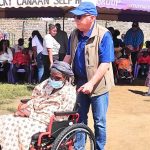
Most residents who spoke at a public participation forum in Kampi ya Moto, Rongai constituency, said they supported the divestiture, provided the funds are protected from misuse and corruption.
John Maina told the forum he supported the sale but stressed that local communities expect the money to be used prudently and directed to visible development projects across the country.
Others questioned the wisdom of the deal. Festus Lumumba from Shabaab Ward argued the amount to be raised was modest compared to Safaricom’s long-term value as a strategic national asset.
Mr Lumumba said that if shares must be sold, priority should be given to local investors instead of foreign companies, and called for stronger legal safeguards on public participation.
He also urged Parliament to fast-track the Public Participation Bill, saying clearer rules were needed to ensure citizen views meaningfully influence major financial and privatisation decisions.
Stephen Bett, representing the Ogiek community, said marginalised groups feared the proceeds could be lost to corruption and political interests rather than improving services on the ground.
Mr Bett called on Members of Parliament to closely supervise the process and ensure the funds benefit citizens directly, warning against diversion to campaigns or recurrent government spending.
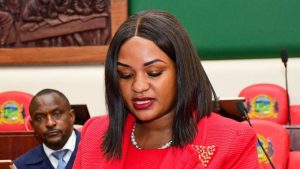
Molo MP Kuria Kimani, who chairs the National Assembly Finance and National Planning Committee, said a QR code had been provided to allow wider public input online.
“The views of the people will also be presented by their elected leaders in Parliament,” Mr Kimani said, adding that MPs were expected to continue public engagements nationwide.
The transaction is expected to close in the first quarter of 2026, subject to approvals by regulators in Kenya, South Africa and Ethiopia, where Safaricom has regional interests.
The government has emphasised it is not selling Safaricom as a company, noting it will remain listed on the Nairobi Securities Exchange and continue operating without changes.
Treasury says the proceeds will be ring-fenced as seed capital for a National Infrastructure Fund and a Sovereign Wealth Fund to finance roads, power, water and airports.
Treasury Cabinet Secretary John Mbadi has described the sale as part of a wider privatisation programme under the Privatisation Act, 2025, aimed at attracting private capital.
The government also argues the deal will help ease public debt pressures by reducing reliance on borrowing and avoiding new taxes, while preserving strategic oversight of the company.
Safeguards include retaining a Kenyan chairperson, independent directors, two government board seats, a Kenyan chief executive, and a three-year job and supplier protection period.
Parliamentary committees on Finance and on Public Debt and Privatisation have been holding stakeholder hearings since mid-January, amid concerns over valuation and calls for broader public participation.
About The Author