Kihika Pushes Completion of Nakuru Trauma Center After 14-Year Delay
Once operational, the Trauma Center is expected to strengthen Nakuru County Referral and Teaching Hospital’s capacity to manage serious injuries and other medical emergencies while expanding access to specialized trauma services.
By Suleiman Mbatiah
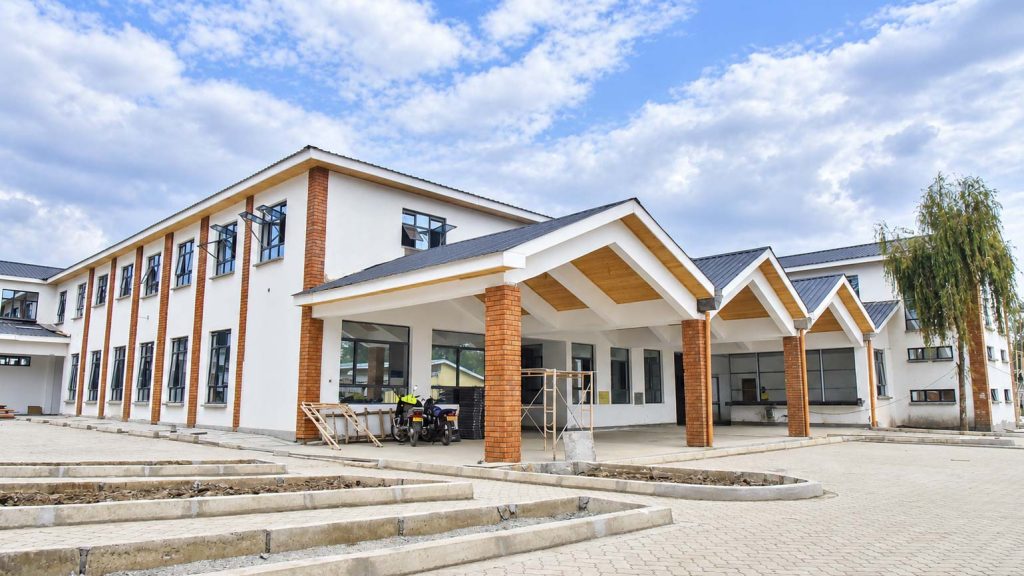
After more than 14 years of delays, the Trauma Center at Nakuru County Referral and Teaching Hospital is nearing completion, with the facility expected to provide specialized emergency care, surgery and critical care services to patients from Nakuru and neighboring counties.
The facility, whose foundation stone was laid in September 2012 by former President Mwai Kibaki, stalled for more than a decade before efforts to revive it gathered pace through a partnership between the Nakuru County and national governments.
Dr Joshua Ondari, an orthopedic surgeon and deputy medical superintendent at the hospital, said the center was conceived in response to the region’s growing need for specialized trauma care.
“The project was also conceived after the Sachang’wan fire tragedy and the high number of accidents handled by the hospital and its role as a referral facility serving patients from more than five counties,” he recalled.
The project remained incomplete until Governor Susan Kihika took office in 2022 and began pushing for its revival through collaboration with the national government.
Kihika said completing stalled projects was among her priorities because unfinished public investments denied residents value for money.
“We visited (together with President William Ruto) our cancer center here at our Nakuru County Teaching and Referral Hospital, and one of the asks that I requested was that there was a stalled project here since the days of the former President Mwai Kibaki, and since consecutive county governments had not been able to handle it, I thought it was important that as one of the things that I do for Nakuru County is to make sure that all the stalled projects are completed and working so that Mwananchi gets value for their money, and here we are today,” Kihika said during the revival launch late last year.
The revival was formally launched on November 13, 2025, with Defense Cabinet Secretary Soipan Tuya presiding over the event.
Tuya commended Kihika for prioritizing completion of the facility, saying its revival would benefit patients beyond Nakuru because of the county’s strategic location and the hospital’s referral role.
“The governor has enumerated the history of the project that we have in front of us today, and for me, I would like to commend the governor for the focus and commitment to a fast completion of a stalled project,” Tuya said.
She said the project had experienced setbacks linked to government transitions and the implementation of devolution, but that the facility could now be brought to completion.
The center is designed as an integrated emergency and trauma-care facility, with services ranging from diagnosis and surgery to intensive and post-operative care.
Ondari said construction was progressing well and was expected to be completed within about one month, with services potentially commencing within two to three months thereafter.
“So far so good. The project is going on, expected to be completed within the next one month, and hopefully it should start offering services within the next two to three months to the public and the great citizens of this country,” he said.
The facility will have 14 intensive care unit beds and 12 high dependency unit beds, as well as emergency wards for pre- and post-operative patients. It will also have a larger post-operative ward, consultation rooms, a laboratory and offices for information and communications technology and biomedical services.
Two specialized operating theaters will handle trauma cases, while a radiology unit will provide diagnostic services within the center.
Ondari said the new facility would ease pressure on the hospital’s existing accident and emergency unit, which currently operates within the outpatient area and has limited space and supporting infrastructure.
“All trauma patients and generally emergency patients will be brought to this unit. One thing that I also didn’t mention, there are two special theatres that will be able to handle these patients,” he said.
The integrated design will allow critically injured patients to access several essential services within the same facility, potentially reducing delays caused by moving patients between separate hospital departments.
“So, it will be a complete unit with the radiology unit, theatres, ICU, HDU, and the wards so that when the patients land here, they have one stop for all the services that they need,” he said.
Tuya said the center would serve a wider catchment beyond Nakuru, citing the county’s position along major transport routes and the hospital’s role as a referral facility for patients from across the region.
Once operational, the Trauma Center is expected to strengthen Nakuru County Referral and Teaching Hospital’s capacity to manage serious injuries and other medical emergencies while expanding access to specialized trauma services.
Its planned services include emergency trauma management, surgery, intensive care, high dependency care, radiology, laboratory services and inpatient care.
About The Author