Inside ODM’s Leadership Change And The Battle For Control
By Our Correspondent
The Orange Democratic Movement has formally notified the Registrar of Political Parties of an intended overhaul of its top leadership, a move that deepens debate over the party’s future amid internal wrangles and succession tensions.
In a gazette notice dated January 19, 2026, the Registrar said ODM had written to her office under Section 20 (1)(c) of the Political Parties Act, signalling changes to key party positions, including party leader, deputy party leaders and national office bearers.
The notice lists Dr Oburu Oginga as the proposed new party leader, replacing Raila Amolo Odinga, while several other strategic positions are also set to change hands.
The Registrar invited objections from the public within a seven-day window.
“Any person with written submissions concerning the intended change by the political party shall within seven (7) days from the date of this publication, deposit them with the Registrar of Political Parties.”
The notice does not cite reasons for the changes. It also makes no reference to a change of party name.
However, the scale and timing of the reshuffle has reignited long-running tensions within ODM over control, direction and succession following Raila Odinga’s decision to vacate the party leader position. Raila Odinga is alive and remains an influential figure in national and continental politics.
Still, his reduced involvement in day-to-day party affairs has exposed deep divisions that had long been managed through his authority.
Under the proposed structure, Abdulswamad Sheriff Nassir is listed as Deputy Party Leader in charge of Strategy, replacing Wycliffe Ambetsa Oparanya. Paul Simba Arati is named Deputy Party Leader for Operations, replacing Ali Hassan Joho.
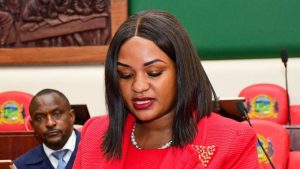
Gladys Nyasuna Wanga is proposed as National Chairperson, taking over from John Mbadi, while Paul Otiende Amollo is listed as Deputy Chairperson for Strategy and Political Affairs.
Other changes affect the organising and political affairs secretariats, signalling a near-complete reset of ODM’s command structure.
Political analysts say the notice confirms what insiders have long acknowledged: ODM is no longer a monolithic outfit and is now operating through competing centres of power.
One faction is aligned to Raila Odinga’s long-time allies who favour continuity and coalition politics. Another is pushing for a generational shift and stronger regional power bases ahead of the 2027 General Election.
There is also a growing group advocating for a pragmatic realignment with President William Ruto’s United Democratic Alliance, a prospect that has sharply divided the party.
While ODM has publicly dismissed claims of an imminent merger with UDA, senior figures privately admit discussions on cooperation and survival strategies are ongoing, especially as opposition politics fragments.
The leadership changes have fuelled speculation that ODM could eventually rebrand or reposition itself as part of a broader political arrangement before 2027.
Party officials, however, insist the current process is strictly administrative and internal.
They point out that the gazette notice only addresses officials, not ideology or party identity.
Still, critics argue the restructuring reflects an effort to consolidate power ahead of major political decisions that cannot be taken under the existing factional balance.
“This is about control of the party machinery,” said a Nairobi-based political analyst who closely follows ODM affairs. “Once you control the officials, you control nominations, coalitions and the party’s bargaining power.”
The Registrar’s notice now opens the door for formal objections, a process that could further expose ODM’s internal divisions if rival factions move to block or challenge the changes.
Such objections are rare but politically significant, as they provide an official channel for dissent beyond party organs.
The developments come at a time when ODM is struggling to define its role in a political environment dominated by shifting alliances and issue-based coalitions rather than traditional party loyalty.
For years, Raila Odinga’s personal political capital papered over ideological and regional differences within the party. His exit from the party leadership has removed that buffer.
Whether the proposed leadership team can stabilise ODM or deepen its fractures remains uncertain.
What is clear is that ODM is entering one of the most consequential phases in its two-decade history, with decisions taken now likely to shape its relevance and alliances heading into the 2027 election cycle.
About The Author