Building Accountability: Laikipia Trains Community Leaders on Food Security Project Management
The FSRP program is being implemented in 256 wards in 13 counties: Baringo, Marsabit, Wajir, Mandera, Garissa, Tana River, Lamu, West Pokot, Laikipia, Isiolo, Turkana, Samburu, and Elgeyo-Marakwet.
By Fatuma Rashid
The County Government of Laikipia is committed to strengthening food security and building community resilience to ensure sustainable livelihoods for all residents.
A significant portion of Laikipia County is semi-arid, facing mounting threats from climate change that increasingly challenge agricultural productivity and community livelihoods.
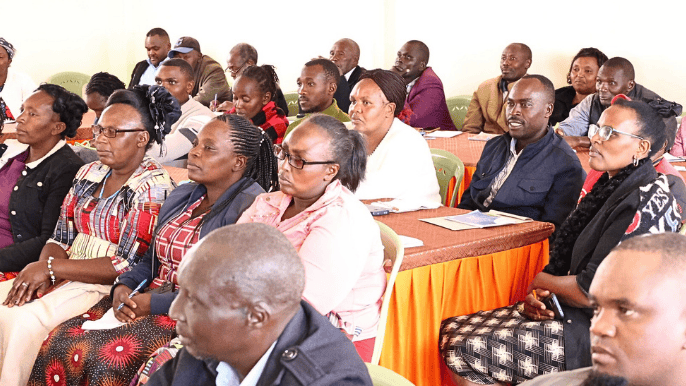
The County conducted fiduciary training for Community Driven Development Committees (CDDCs) and Social Accountability and Integrity Committees (SAICs) under the Food System Resilience Project (FSRP) at Nyahururu.
FSRP is a national government program backed by the World Bank to enhance food security, improve agricultural productivity, and strengthen community resilience against climate challenges.
The committee members handle public funds and donor resources, making them legally and ethically responsible for proper financial management. Without adequate training, they risk misappropriation.
FSRP County Coordinator, Mr Lincoln Njiru said the training aims to improve participants’ understanding and practical skills to meet the county government and donor standards.
“They have learnt prudent financial management, procurement procedures, record-keeping, documentation, internal controls, and compliance,” he stated during the training.
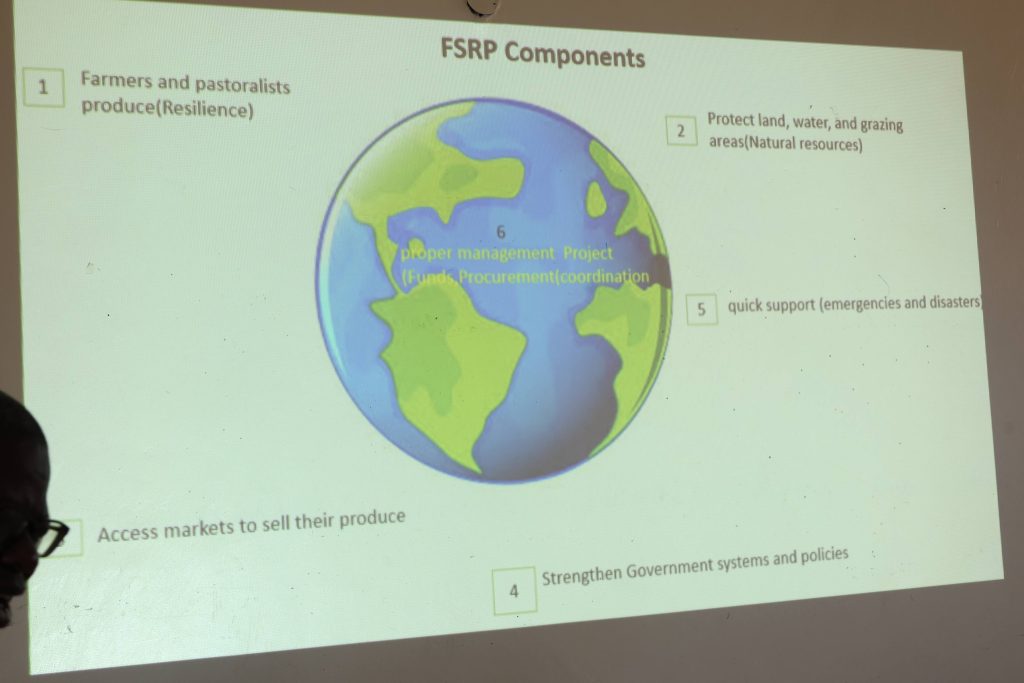
Project County Community Institutional Development Officer, Mr Nyapola Atenya, said the training would strengthen accountability and ensure effective implementation of FSRP projects at the community level.
The training brought together participants from Igwamiti, Githiga, Ol Moran, and Salama wards who mostly promote trade, climate-smart agriculture, and sustainable practices in their local communities.
The FSRP program is being implemented in 256 wards in 13 counties: Baringo, Marsabit, Wajir, Mandera, Garissa, Tana River, Lamu, West Pokot, Laikipia, Isiolo, Turkana, Samburu, and Elgeyo-Marakwet.
The project will support 300,000 small-scale crop and livestock farmers, in addition to value chain actors including extension workers, aggregators, logistics providers, and SMEs.
The government expects at least 5,000 jobs to be created through expanding farmer organisations, agri-businesses, agri-tech services, agripreneurship development, and strengthening urban-agricultural linkages.
The project prioritizes closing gender gaps by developing gender-smart agricultural value chains through integrated solutions that empower women and promote equitable participation in farming and agribusiness.
About The Author