Ruto Says Africa Must Move From AI Consumption to Ownership
By Our Correspondent
President William Ruto has challenged the global tech architecture, arguing that countries endowed with abundant renewable energy should directly host physical AI data centres rather than remaining distant consumers of intelligence.
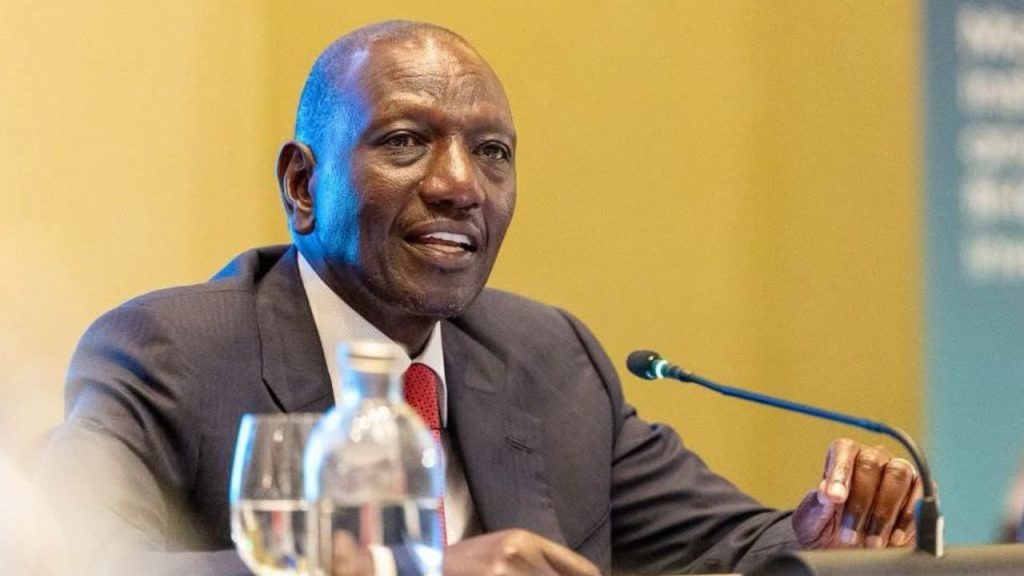
Speaking in New York earlier today during a high-level meeting of the AI Middle Powers (AIM) Coalition on the margins of the 81st United Nations General Assembly, Ruto said access to AI applications alone was insufficient for countries seeking meaningful technological sovereignty.
The President argued that computing power, data, energy and talent are becoming strategic foundations of the AI economy, leaving countries without control over those resources vulnerable to technological dependence.
“There is no Artificial Intelligence without electricity. Countries endowed with abundant renewable energy should not remain distant consumers of intelligence. They should host computing infrastructure, develop enterprises, support research, and participate more fully in the value AI creates,” he stated.
Ruto said the argument was particularly important for African countries, which possess significant renewable energy potential but risk repeating the continent’s traditional extractive economic model in the digital economy.
He said Africa should move beyond supplying the raw materials, energy, data and talent used to develop AI elsewhere, and instead build greater capacity to create and own the resulting technologies.
“We must not reproduce the old extractive economy in digital form. Africa cannot provide the minerals, energy, data, content, and talent of the AI revolution, only to import the resulting intelligence at a premium,” he added.
The remarks come as AI-driven demand for electricity and data-centre infrastructure becomes an increasingly important issue in global energy discussions. The World Energy Council said on Monday that surging electricity demand from AI, data centres and industrial electrification is colliding with infrastructure constraints and wider energy-security pressures.
Ruto linked the issue to Kenya’s own AI strategy, which he said is built around digital infrastructure, data and AI governance, and research, innovation and commercialization.
He said Kenya wants AI to deliver practical benefits in sectors including agriculture, healthcare, education, public services and financial inclusion, while creating enterprises and employment.
The President also argued that countries need to retain greater control over the systems on which their economies and societies increasingly depend.
“Our territory, our laws and our institutions remain ours. Yet more of the decisions shaping our economies, security and societies will depend on computing power we do not own, models we did not train, chips we cannot readily obtain, data systems we may not control, and standards we did not help write,” he urged.
He said no middle power could independently control every stage of the AI value chain, from critical minerals and advanced chips to data centres, frontier models and international standards.
Instead, Ruto proposed “shared sovereignty”, under which countries pool capabilities in areas where scale is necessary while retaining national control where accountability is essential.
The AIM Coalition, which Ruto is advancing with Finnish President Alexander Stubb, is intended to provide a framework for countries to combine capabilities in computing, data, research, skills and AI governance. The initiative had been identified ahead of the UN General Assembly as a central part of Kenya’s push for greater African participation in the global AI economy.
Ruto said cooperation should also extend to trusted data ecosystems, multilingual AI models and public-sector capacity, while warning that technological capability must be accompanied by safeguards.
He cited misinformation, deepfakes, cyber threats and harmful AI-generated content as risks capable of undermining public trust and democratic institutions.
“The architecture of the intelligence era is being built now. We must not become tenants in a future built from our data, powered by our resources, shaped by technologies we cannot influence and governed by rules we did not write,” he said.
The push for renewable-powered AI infrastructure comes as governments and businesses confront the growing electricity requirements of data centres. AP reported on Monday that the environmental footprint of AI and data centres had become a major issue during climate discussions in New York, with debate over whether rising demand could increase fossil-fuel use or accelerate investment in clean energy.
Ruto said Africa’s objective should be to become a participant in setting the rules and developing the infrastructure of the AI era rather than remaining a market for technologies developed elsewhere.
He also called for the United Nations to remain central to global AI governance, arguing that rules governing the technology should involve countries and communities affected by its deployment.
“The rules of the intelligence era cannot be written by a handful of governments, companies, or laboratories. Those affected by these technologies must have a meaningful hand in shaping them,” he noted.
About The Author